
- Physical Examination
- Surgical Examination
- Ophthalmology
- Clinical Skills
- Orthopedics
- Surgery Videos
- Laparoscopy
- Pediatrics
- Funny Videos
- Cardiothoracic Surgery
- Nursing Videos
- Plastic Surgery
- Otorhinolaryngology
- Histology and Histopathology
- Neurosurgery
- Dermatology
- Pediatric Surgery
- Urology
- Dentistry
- Oncology and Cancers
- Anatomy Videos
- Health and Fitness
- Radiology
- Anaesthesia
- Physical Therapy
- Pharmacology
- Interventional Radiology
- Cardiology
- Endocrinology
- Gynecology
- Emergency Medicine
- Psychiatry and Psychology
- Childbirth Videos
- General Medical Videos
- Nephrology
- Physiology
- Diet and Food Health
- Diabetes Mellitus
- Neurology
- Women Health
- Osteoporosis
- Gastroenterology
- Pulmonology
- Hematology
- Rheumatology
- Toxicology
- Nuclear Medicine
- Infectious Diseases
- Vascular Disease
- Reproductive Health
- Burns and Wound Healing
- Kidney Zone Podcast
- Other
Radiofrequency denervation (RFA) for facet joint pain
Category: Minor Procedures, Injections & Pain Relief · All minor procedures, injections & pain relief
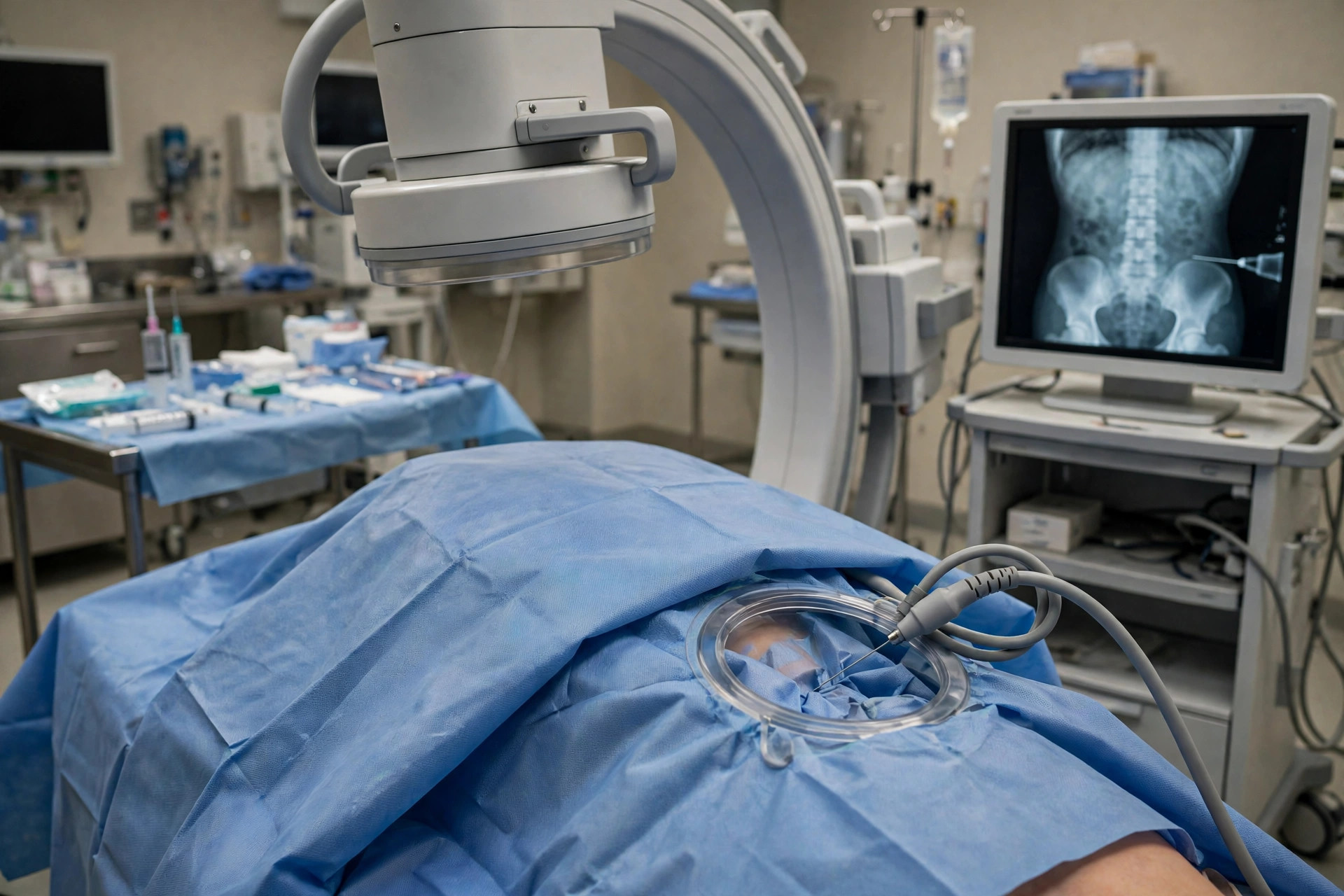
What it is
Radiofrequency denervation uses heat from a needle electrode to temporarily disable the small nerves (medial branches) that carry pain from facet joints in the neck or back. It is usually offered after diagnostic blocks confirm that the facet joint is the pain source.
Why it is done
Indications include chronic back or neck pain from facet joints that has not responded to conservative care, confirmed by two positive diagnostic blocks.
How to prepare
Blood thinners are reviewed (they may be paused). Tell the team about pacemakers (radiofrequency can interfere) and allergies. No fasting unless sedation is planned. MRI and prior block results guide the target levels.
What happens during the procedure
Under X-ray guidance with local anaesthetic (sometimes light sedation), needles are placed at the medial branch nerves; a test stimulation checks position, then the radiofrequency current heats the tip to create a small heat lesion. Each level takes about 15 minutes; several levels may be treated in one session.
Afterwards — recovery & results
You go home the same day, usually with an escort if sedated. Soreness at the needle sites for a few days is common. Benefit begins over one to three weeks as the nerve effect sets in, lasting months (often 6 to 12 months) as nerves regrow.
Risks & considerations
Risks include bleeding, infection, increased pain temporarily, and numbness or weakness (uncommon at these tiny sensory nerves). Repeating the procedure is possible when pain returns after a good response.
Frequently asked questions
Why the diagnostic blocks first?
Facet pain has no reliable scan sign; the blocks test whether numbing the nerve removes your pain. Without them, RFA is a gamble — with them, success rates are much better.
Does it damage the spine?
No — the heat affects only the tiny sensory nerve branches, not the spine's structure. The main nerve root is carefully avoided during placement.
Related procedures — Minor Procedures, Injections & Pain Relief
Browse the R section of the A–Z list or return to the Procedures & Tests hub.