
- Physical Examination
- Surgical Examination
- Ophthalmology
- Clinical Skills
- Orthopedics
- Surgery Videos
- Laparoscopy
- Pediatrics
- Funny Videos
- Cardiothoracic Surgery
- Nursing Videos
- Plastic Surgery
- Otorhinolaryngology
- Histology and Histopathology
- Neurosurgery
- Dermatology
- Pediatric Surgery
- Urology
- Dentistry
- Oncology and Cancers
- Anatomy Videos
- Health and Fitness
- Radiology
- Anaesthesia
- Physical Therapy
- Pharmacology
- Interventional Radiology
- Cardiology
- Endocrinology
- Gynecology
- Emergency Medicine
- Psychiatry and Psychology
- Childbirth Videos
- General Medical Videos
- Nephrology
- Physiology
- Diet and Food Health
- Diabetes Mellitus
- Neurology
- Women Health
- Osteoporosis
- Gastroenterology
- Pulmonology
- Hematology
- Rheumatology
- Toxicology
- Nuclear Medicine
- Infectious Diseases
- Vascular Disease
- Reproductive Health
- Burns and Wound Healing
- Kidney Zone Podcast
- Other
Spinal fusion
Category: Bone, Joint & Spine Procedures · All bone, joint & spine procedures
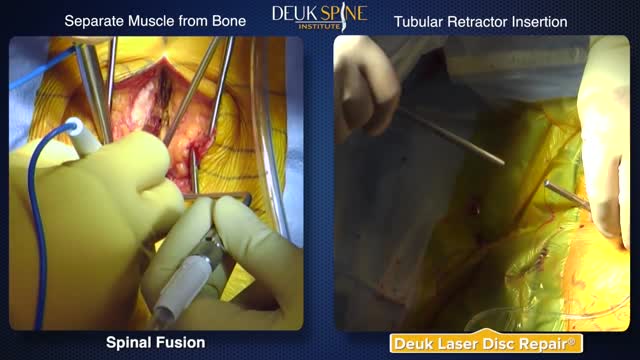
What it is
Spinal fusion permanently joins two or more vertebrae together so they heal as one bone, using screws, rods and cages with bone graft. It can be done from the back, front or side of the spine.
Why it is done
It is used for spinal instability, some deformities (such as scoliosis and spondylolisthesis), fractures, tumours, and selected cases of disc disease or stenosis where decompression alone would destabilise the spine.
How to prepare
Workup includes imaging (X-ray, CT, MRI), sometimes bone-density assessment, pre-assessment and optimisation of smoking status, diabetes and weight where possible. You fast before surgery and plan home support for the first weeks.
What happens during the procedure
Under general anaesthetic, the surgeon exposes the spine, decompresses nerves as needed, inserts screws into the vertebrae connected by rods, and places cages and bone graft between the vertebrae. Surgery takes two to five hours depending on levels.
Afterwards — recovery & results
Hospital stay is usually three to five days, with walking from day one and physiotherapy guidance. Bone fusion matures over 6 to 12 months; lifting and twisting are restricted early. Some wear a brace if the surgeon advises. Return to work varies from about six weeks (desk) to several months (manual).
Risks & considerations
Risks include infection, bleeding, blood clots, nerve injury, failure of the bones to fuse (non-union, more likely in smokers), hardware problems, and increased stress at levels above and below the fusion over the years. Your surgeon will discuss why fusion is advised in your case and the alternatives.
Watch: Spinal fusion videos
Real procedure videos from the MedicalVideos.com library. Some clinical footage is graphic — that is the nature of a medical video library.
Related guides on MedicalVideos.com
Frequently asked questions
Will my back be stiff afterwards?
You lose movement at the fused levels, but most bending comes from the hips and other levels, so many people notice less stiffness than they feared. Multi-level fusions are more noticeable.
Why does smoking matter so much?
Nicotine impairs bone healing and substantially raises non-union rates. Stopping before and after surgery is one of the most effective things you can do for a successful fusion.
Related procedures — Bone, Joint & Spine Procedures
Browse the S section of the A–Z list or return to the Procedures & Tests hub.