
- Physical Examination
- Surgical Examination
- Ophthalmology
- Clinical Skills
- Orthopedics
- Surgery Videos
- Laparoscopy
- Pediatrics
- Funny Videos
- Cardiothoracic Surgery
- Nursing Videos
- Plastic Surgery
- Otorhinolaryngology
- Histology and Histopathology
- Neurosurgery
- Dermatology
- Pediatric Surgery
- Urology
- Dentistry
- Oncology and Cancers
- Anatomy Videos
- Health and Fitness
- Radiology
- Anaesthesia
- Physical Therapy
- Pharmacology
- Interventional Radiology
- Cardiology
- Endocrinology
- Gynecology
- Emergency Medicine
- Psychiatry and Psychology
- Childbirth Videos
- General Medical Videos
- Nephrology
- Physiology
- Diet and Food Health
- Diabetes Mellitus
- Neurology
- Women Health
- Osteoporosis
- Gastroenterology
- Pulmonology
- Hematology
- Rheumatology
- Toxicology
- Nuclear Medicine
- Infectious Diseases
- Vascular Disease
- Reproductive Health
- Burns and Wound Healing
- Kidney Zone Podcast
- Other
Tattoo and lesion removal by laser (dermatology)
Category: Minor Procedures, Injections & Pain Relief · All minor procedures, injections & pain relief
What it is
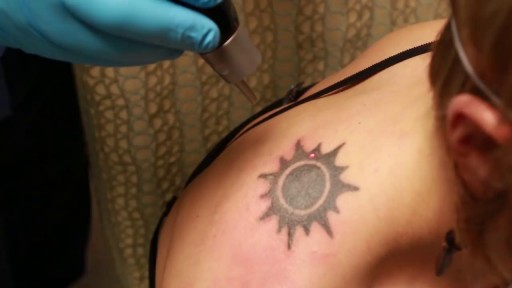
Laser removal uses short pulses of laser light matched to the target colour to break tattoo pigment (or pigmented lesions) into particles the body clears gradually. It is the standard method for unwanted tattoos and some benign pigmented lesions.
Why it is done
It is used for tattoos that are no longer wanted, and for selected pigmented lesions and birthmarks judged benign by a dermatologist. Suspicious lesions are always biopsied first, never lasered.
How to prepare
Assessment includes skin type (darker skin carries higher pigment-change risk), tattoo age and colours, and previous treatments. Tell the clinic about sun exposure, tanning, pregnancy, keloid tendency and medicines that increase light sensitivity. Avoid tanning before and after sessions.
What happens during the procedure
The laser fires short pulses over the tattoo — each pulse feels like a hot snap. Sessions take minutes to half an hour depending on size, and are spaced six to eight weeks apart. A cooling device and sometimes numbing cream are used.
Afterwards — recovery & results
The area is red, swollen and may blister for a few days; it is dressed and kept clean and sun-protected. Fading is gradual between sessions; most tattoos need six to ten sessions, and some colours (greens, blues) are stubborn. Complete clearance is not guaranteed.
Risks & considerations
Risks include pain, blistering, infection, scarring, and pigment changes (lightening or darkening, sometimes lasting). Your clinician will give realistic expectations for your tattoo's colours and your skin type.
Watch: Tattoo and lesion removal by laser (dermatology) videos
Real procedure videos from the MedicalVideos.com library. Some clinical footage is graphic — that is the nature of a medical video library.
Frequently asked questions
Why so many sessions?
Each session breaks only part of the pigment; the body then clears the fragments slowly. Sessions are spaced to allow this clearance and skin recovery.
Is laser removal painful?
Most people describe it as uncomfortable — snaps of heat. Numbing cream, cooling and breaks help; larger areas may need stronger pain relief.
Related procedures — Minor Procedures, Injections & Pain Relief
Browse the T section of the A–Z list or return to the Procedures & Tests hub.