
- Physical Examination
- Surgical Examination
- Ophthalmology
- Clinical Skills
- Orthopedics
- Surgery Videos
- Laparoscopy
- Pediatrics
- Funny Videos
- Cardiothoracic Surgery
- Nursing Videos
- Plastic Surgery
- Otorhinolaryngology
- Histology and Histopathology
- Neurosurgery
- Dermatology
- Pediatric Surgery
- Urology
- Dentistry
- Oncology and Cancers
- Anatomy Videos
- Health and Fitness
- Radiology
- Anaesthesia
- Physical Therapy
- Pharmacology
- Interventional Radiology
- Cardiology
- Endocrinology
- Gynecology
- Emergency Medicine
- Psychiatry and Psychology
- Childbirth Videos
- General Medical Videos
- Nephrology
- Physiology
- Diet and Food Health
- Diabetes Mellitus
- Neurology
- Women Health
- Osteoporosis
- Gastroenterology
- Pulmonology
- Hematology
- Rheumatology
- Toxicology
- Nuclear Medicine
- Infectious Diseases
- Vascular Disease
- Reproductive Health
- Burns and Wound Healing
- Kidney Zone Podcast
- Other
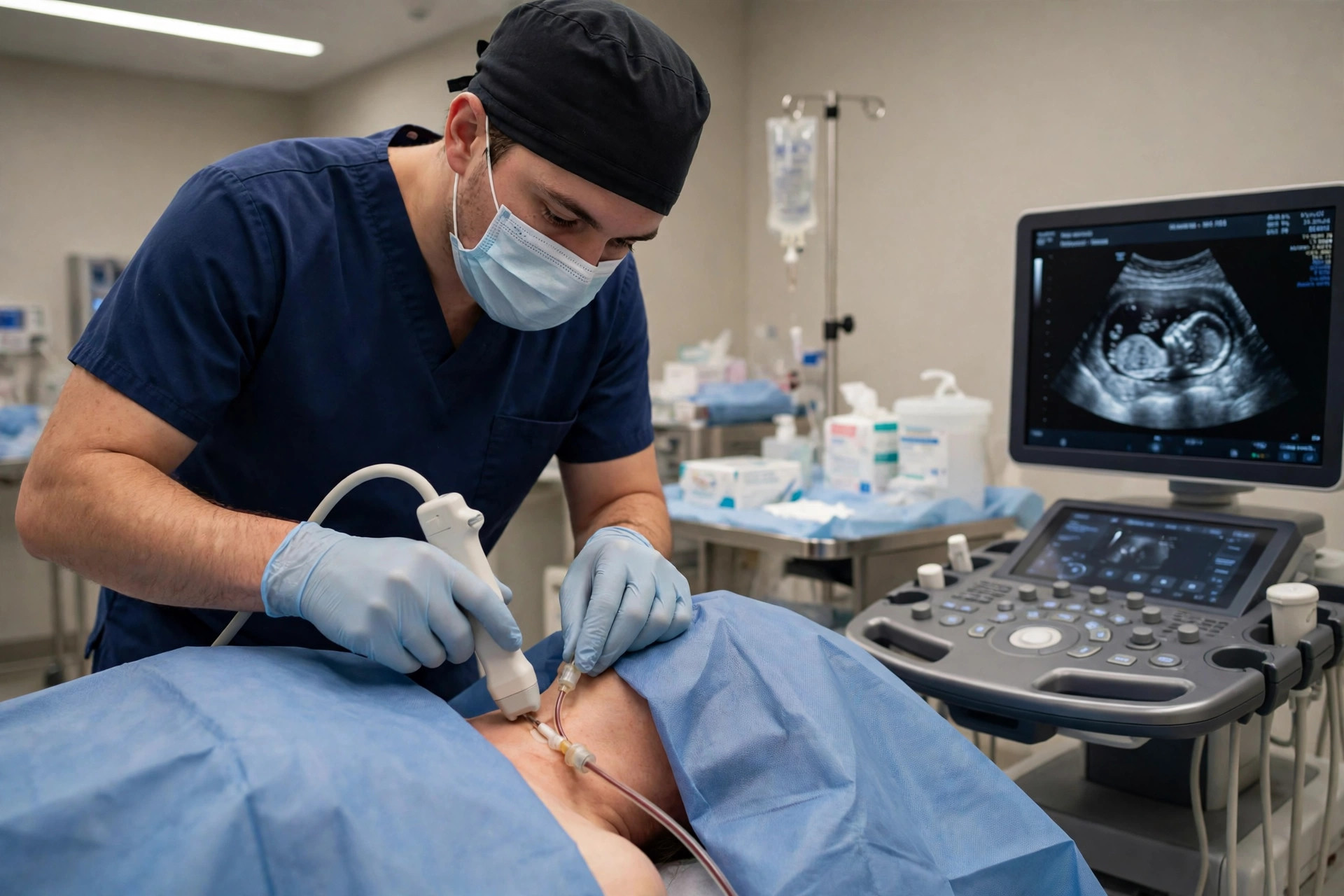
Tunnelled dialysis line insertion
Category: Kidney & Dialysis Procedures · All kidney & dialysis procedures
What it is
A tunnelled dialysis line is a soft tube placed into a large vein in the neck (sometimes groin) with its tip in the big vein near the heart. Part of the tube runs under the skin ('tunnelled') with a cuff that anchors it and reduces infection risk. It allows dialysis to start straight away.
Why it is done
It is used when dialysis is needed urgently before a fistula exists, while a fistula matures, or when other access options are not suitable.
How to prepare
You will have blood tests and a review of medicines (especially blood thinners). The insertion is usually done in a procedure room or theatre with local anaesthetic and sometimes sedation; you may need to fast if sedation is planned.
What happens during the procedure
Using ultrasound, the doctor numbs the skin, guides the tube into the vein, tunnels it under the skin to an exit site on the chest, and checks position with an X-ray. It takes about 30 to 60 minutes. The line is stitched or dressed securely.
Afterwards — recovery & results
You can usually have dialysis the same day. The line must be kept dry and its dressings changed only by trained staff or trained patients; never let anyone use it for other purposes. Report fever, redness, pain, or the line slipping out immediately — infection of the line can become serious quickly.
Risks & considerations
Risks include bleeding, infection (the main long-term risk), clotting of the line or vein, narrowing of the central veins over time, and malposition needing adjustment. For these reasons a fistula remains the goal for most long-term patients.
Related guides on MedicalVideos.com
Frequently asked questions
Why is a line not the permanent plan?
Lines have the highest infection risk of any access and can damage the big veins needed for future fistulas. They are a bridge wherever possible.
Can I shower with a line?
Only as your unit advises — the exit site and dressings must stay dry; many units recommend sponge washing or special covers. Ask your team for their exact rules.
Related procedures — Kidney & Dialysis Procedures
Browse the T section of the A–Z list or return to the Procedures & Tests hub.