
- Physical Examination
- Surgical Examination
- Ophthalmology
- Clinical Skills
- Orthopedics
- Surgery Videos
- Laparoscopy
- Pediatrics
- Funny Videos
- Cardiothoracic Surgery
- Nursing Videos
- Plastic Surgery
- Otorhinolaryngology
- Histology and Histopathology
- Neurosurgery
- Dermatology
- Pediatric Surgery
- Urology
- Dentistry
- Oncology and Cancers
- Anatomy Videos
- Health and Fitness
- Radiology
- Anaesthesia
- Physical Therapy
- Pharmacology
- Interventional Radiology
- Cardiology
- Endocrinology
- Gynecology
- Emergency Medicine
- Psychiatry and Psychology
- Childbirth Videos
- General Medical Videos
- Nephrology
- Physiology
- Diet and Food Health
- Diabetes Mellitus
- Neurology
- Women Health
- Osteoporosis
- Gastroenterology
- Pulmonology
- Hematology
- Rheumatology
- Toxicology
- Nuclear Medicine
- Infectious Diseases
- Vascular Disease
- Reproductive Health
- Burns and Wound Healing
- Kidney Zone Podcast
- Other
Corneal cross-linking: What to Expect & Recovery
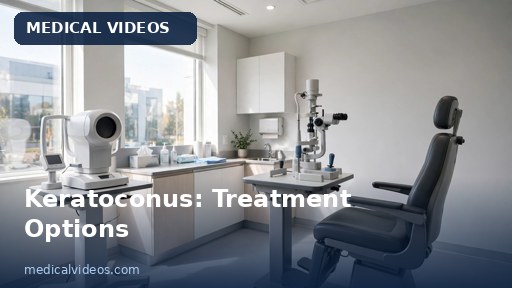
Cross-linking stiffens a weakening cornea (keratoconus) using riboflavin drops and ultraviolet light, halting progression rather than improving vision. It is a day-case treatment of about an hour, with a sore, light-sensitive eye for several days while the surface heals.
Before surgery: how to prepare
- Contact lenses must be left out for a period before measurements and treatment — follow your unit's exact instruction, as lenses distort the corneal shape being assessed.
- Arrange a lift home and a few quieter days: the eye will be sore and very light-sensitive at first, and sunglasses help.
- Understand the aim: cross-linking stabilises keratoconus and aims to stop progression; it does not reliably improve vision, and glasses or lenses are still usually needed (procedures dataset).
- Tell the team about eye allergies, cold sores (herpes simplex can reactivate in the eye) and any previous eye infections.
The day of surgery
Under anaesthetic drops, the surface layer of the cornea is removed (in the common 'epi-off' technique), riboflavin (vitamin B2) drops are soaked into the cornea, and ultraviolet light is applied for a set period. A soft bandage contact lens is placed to protect the surface while it regrows. Both eyes are occasionally treated in one session, but usually one at a time.
In hospital
Recovery timeline
Every recovery is individual, but most follow this general arc:
Warning signs: when to get help
- Worsening pain after the first couple of days, or pain that suddenly increases
- Increasing redness, discharge or swelling (infection under the bandage lens needs same-day review)
- The bandage lens falling out in the first days — contact the unit rather than reinserting it
- Vision deteriorating sharply rather than fluctuating
- New cold-sore-like eye symptoms if you have herpes history — mention it urgently
Related topics
Watch: real operation videos
From the MedicalVideos library. Some surgical videos are graphic and intended for education.
Frequently asked questions
Will my vision get better after cross-linking?
That is not its purpose. Cross-linking strengthens collagen bonds to stop keratoconus progressing — preserving the vision you have and avoiding transplant. Some eyes gain a little shape improvement over time, but plan on still needing glasses or specialist contact lenses.
Why does vision get worse before better?
Removing the surface layer and the treatment itself cause temporary haze and light scatter while the cornea remodels. This fluctuation over the first weeks to months is the known pattern; serial scans, not day-to-day sharpness, are how the team judges stabilisation.
Medically reviewed by Dr. Mohamed Ibrahim, Assistant Professor of Medicine, Transplant Nephrology, University of Maryland School of Medicine. Last reviewed: 12 November 2026.