
- Physical Examination
- Surgical Examination
- Ophthalmology
- Clinical Skills
- Orthopedics
- Surgery Videos
- Laparoscopy
- Pediatrics
- Funny Videos
- Cardiothoracic Surgery
- Nursing Videos
- Plastic Surgery
- Otorhinolaryngology
- Histology and Histopathology
- Neurosurgery
- Dermatology
- Pediatric Surgery
- Urology
- Dentistry
- Oncology and Cancers
- Anatomy Videos
- Health and Fitness
- Radiology
- Anaesthesia
- Physical Therapy
- Pharmacology
- Interventional Radiology
- Cardiology
- Endocrinology
- Gynecology
- Emergency Medicine
- Psychiatry and Psychology
- Childbirth Videos
- General Medical Videos
- Nephrology
- Physiology
- Diet and Food Health
- Diabetes Mellitus
- Neurology
- Women Health
- Osteoporosis
- Gastroenterology
- Pulmonology
- Hematology
- Rheumatology
- Toxicology
- Nuclear Medicine
- Infectious Diseases
- Vascular Disease
- Reproductive Health
- Burns and Wound Healing
- Kidney Zone Podcast
- Other
Hip fracture surgery: What to Expect & Recovery
A broken hip is fixed or replaced as an emergency, usually on the day of arrival or the next day. Recovery is a team effort — surgeons, physicians, physiotherapists, occupational therapists and family — aimed at getting you walking again from the day after surgery.
Before surgery: how to prepare
- This is emergency surgery, so preparation is about information: tell the team about medicines (especially blood thinners), allergies, previous anaesthetics, and your home situation and usual walking ability.
- Surgery usually takes place on the day of arrival or the day after (NHS) once pain is controlled and medical checks are done.
- Family can help most by bringing in glasses, hearing aids, dentures and familiar items — they reduce confusion (delirium), a common and important complication.
- Talk early with the therapy team about your home: stairs, bathroom layout and who is around — discharge planning starts on day one.
The day of surgery
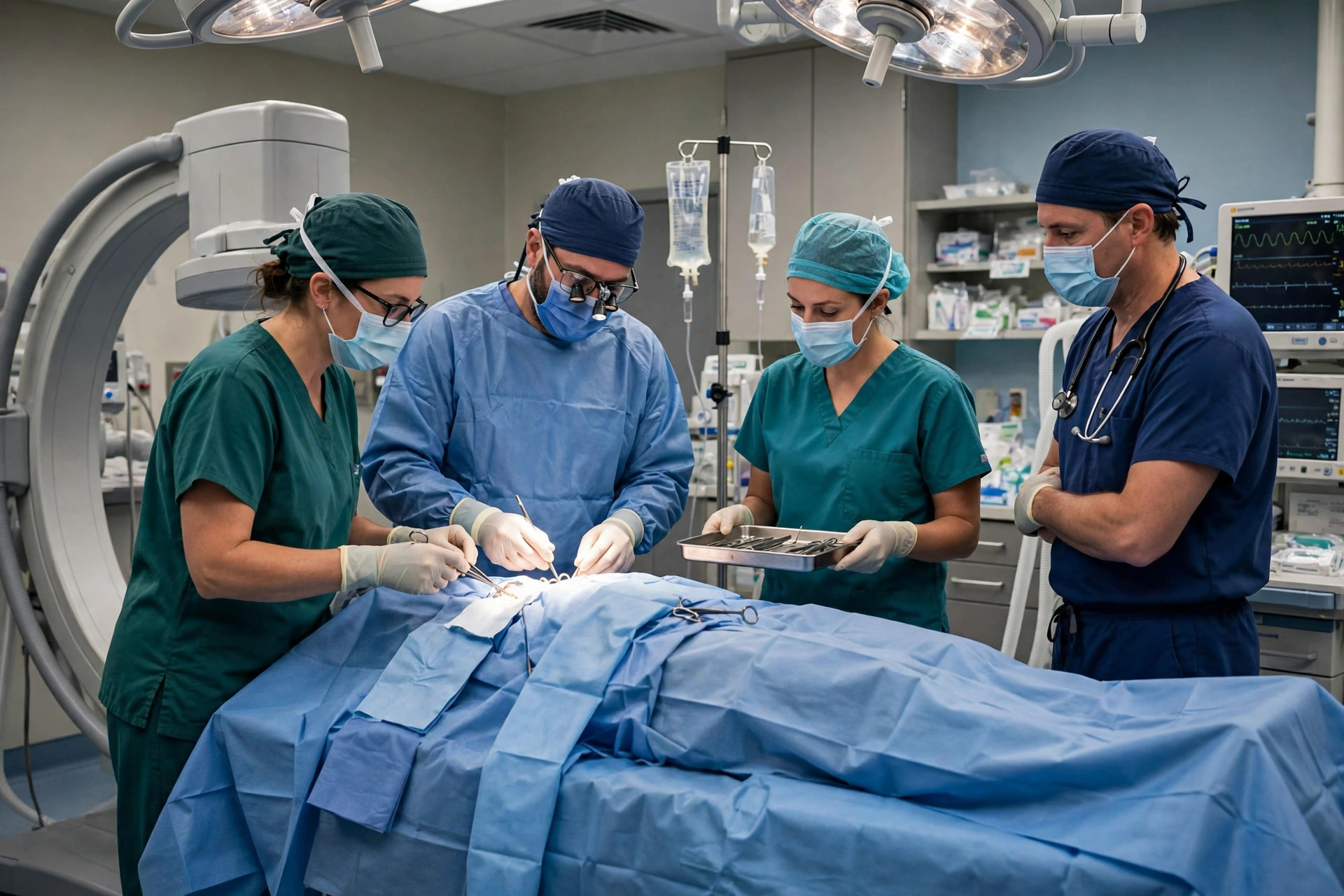
Under a spinal or general anaesthetic, the surgeon either fixes the break with screws, a plate or a rod, or replaces the broken ball (and sometimes the socket) with an artificial joint, depending on the fracture pattern. The aim of every technique is the same: a hip stable enough to put full weight on straight away.
In hospital
Recovery timeline
Every recovery is individual, but most follow this general arc:
Warning signs: when to get help
- New confusion, drowsiness or agitation (delirium or infection — needs prompt review)
- The leg becoming shorter, rotated or suddenly much more painful, or a 'clunk' from the hip (possible dislocation)
- Calf pain or swelling, chest pain or breathlessness
- Wound redness, leaking or fever
- Being unable to pass urine, or severe constipation
Related topics
Frequently asked questions
Why do I have to walk the day after surgery?
Early walking is treatment, not cruelty: it prevents chest infections, blood clots, pressure damage and rapid muscle loss, and it is the strongest predictor of regaining independence. The operation is specifically designed so the hip can take weight immediately, and pain relief is timed around therapy sessions.
Will I get back to how I was?
Many people make a satisfactory recovery, but hip fracture is a major injury in later life: walking improves for at least 6 months, and some people are left needing a walking aid or extra help. Rehabilitation effort, nutrition and treating bone health all shift the odds in your favour.
Medically reviewed by Dr. Mohamed Ibrahim, Assistant Professor of Medicine, Transplant Nephrology, University of Maryland School of Medicine. Last reviewed: 12 November 2026.