
- Physical Examination
- Surgical Examination
- Ophthalmology
- Clinical Skills
- Orthopedics
- Surgery Videos
- Laparoscopy
- Pediatrics
- Funny Videos
- Cardiothoracic Surgery
- Nursing Videos
- Plastic Surgery
- Otorhinolaryngology
- Histology and Histopathology
- Neurosurgery
- Dermatology
- Pediatric Surgery
- Urology
- Dentistry
- Oncology and Cancers
- Anatomy Videos
- Health and Fitness
- Radiology
- Anaesthesia
- Physical Therapy
- Pharmacology
- Interventional Radiology
- Cardiology
- Endocrinology
- Gynecology
- Emergency Medicine
- Psychiatry and Psychology
- Childbirth Videos
- General Medical Videos
- Nephrology
- Physiology
- Diet and Food Health
- Diabetes Mellitus
- Neurology
- Women Health
- Osteoporosis
- Gastroenterology
- Pulmonology
- Hematology
- Rheumatology
- Toxicology
- Nuclear Medicine
- Infectious Diseases
- Vascular Disease
- Reproductive Health
- Burns and Wound Healing
- Kidney Zone Podcast
- Other
Manual vacuum aspiration (MVA): What to Expect & Recovery
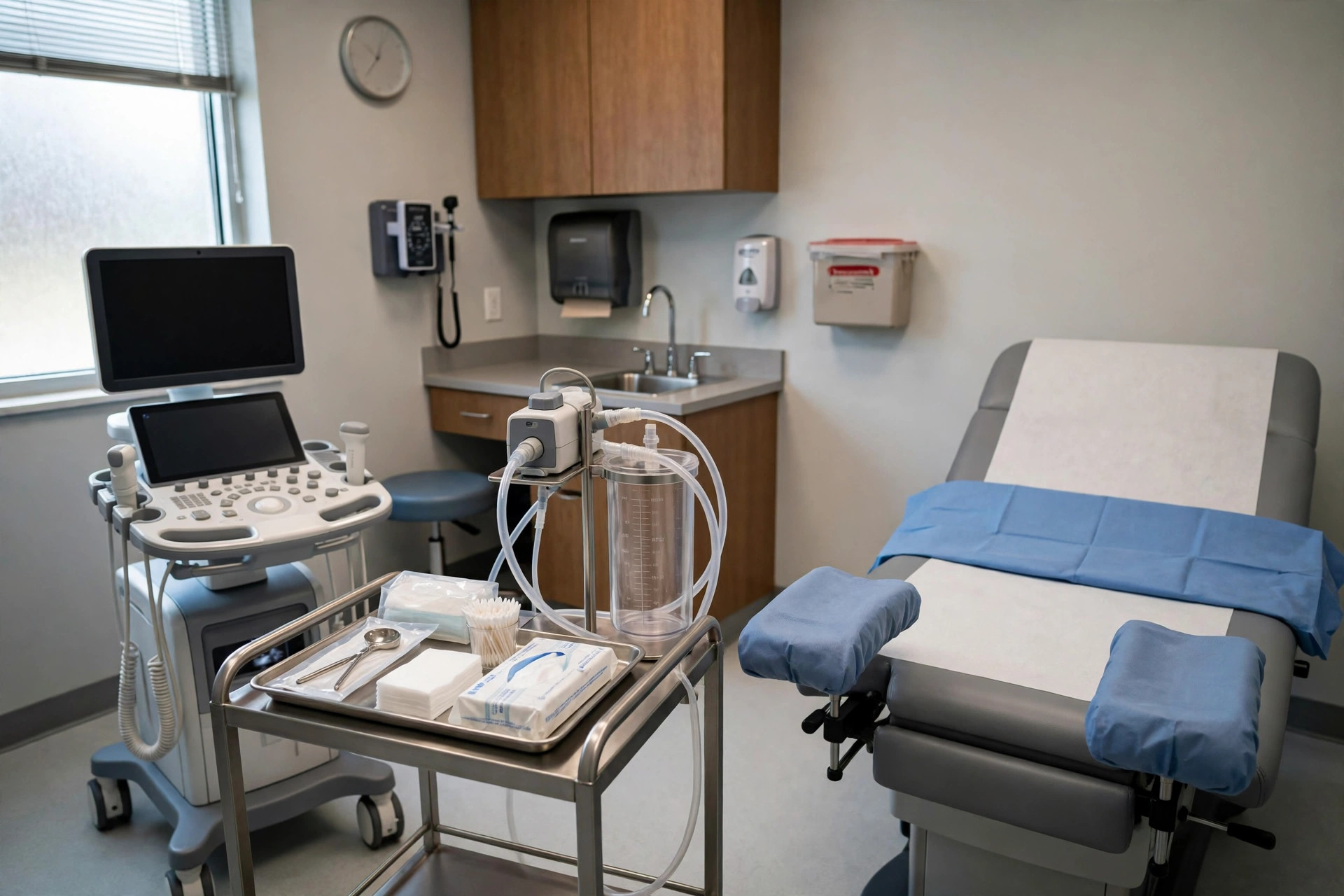
MVA empties the womb with a handheld suction device, used for early pregnancy care including miscarriage management and termination. It is a clinic procedure, often with local anaesthetic, and most people go home within an hour or so — physically recovered in days.
Before surgery: how to prepare
- You will be offered pain relief and sometimes medication to soften the cervix beforehand — follow the clinic's timing instructions.
- An escort home is recommended, especially if you have sedation. You cannot drive after sedation.
- Bring pads for afterwards and plan a quiet rest of the day.
- You will be given contraception advice and follow-up instructions, including a pregnancy test in a few weeks if advised (procedures dataset).
The day of surgery
Usually under local anaesthetic (sometimes with sedation), the cervix is gently opened and a small tube attached to a hand-held syringe applies gentle suction to empty the womb. It takes about 10 to 15 minutes. Cramping during and just after is normal and settles quickly; staff monitor you briefly before discharge.
In hospital
Recovery timeline
Every recovery is individual, but most follow this general arc:
Warning signs: when to get help
- Heavy bleeding — soaking two pads an hour for consecutive hours, or large clots
- Severe pain not eased by painkillers
- Fever, or offensive-smelling discharge (infection)
- Continuing pregnancy symptoms beyond the time your clinic advised, or a positive test at the follow-up interval (possible incomplete procedure)
- Feeling faint or unwell
Related topics
Frequently asked questions
How will I know it worked?
The clinic checks the tissue removed and, where advised, a urine pregnancy test at a set interval afterwards (usually a few weeks) confirms completion. Ongoing pregnancy symptoms plus a strongly positive test at that point need review — incomplete emptying occasionally needs a further procedure.
Does MVA affect future pregnancies?
MVA has a long safety record in early pregnancy care and is not expected to affect future fertility. Rare risks include infection, incomplete emptying and, very rarely, perforation of the womb (procedures dataset).
Medically reviewed by Dr. Mohamed Ibrahim, Assistant Professor of Medicine, Transplant Nephrology, University of Maryland School of Medicine. Last reviewed: 12 November 2026.