- Physical Examination
- Surgical Examination
- Ophthalmology
- Clinical Skills
- Orthopedics
- Surgery Videos
- Laparoscopy
- Pediatrics
- Funny Videos
- Cardiothoracic Surgery
- Nursing Videos
- Plastic Surgery
- Otorhinolaryngology
- Histology and Histopathology
- Neurosurgery
- Dermatology
- Pediatric Surgery
- Urology
- Dentistry
- Oncology and Cancers
- Anatomy Videos
- Health and Fitness
- Radiology
- Anaesthesia
- Physical Therapy
- Pharmacology
- Interventional Radiology
- Cardiology
- Endocrinology
- Gynecology
- Emergency Medicine
- Psychiatry and Psychology
- Childbirth Videos
- General Medical Videos
- Nephrology
- Physiology
- Diet and Food Health
- Diabetes Mellitus
- Neurology
- Women Health
- Osteoporosis
- Gastroenterology
- Pulmonology
- Hematology
- Rheumatology
- Toxicology
- Nuclear Medicine
- Infectious Diseases
- Vascular Disease
- Reproductive Health
- Burns and Wound Healing
- Kidney Zone Podcast
- Other
Uterus
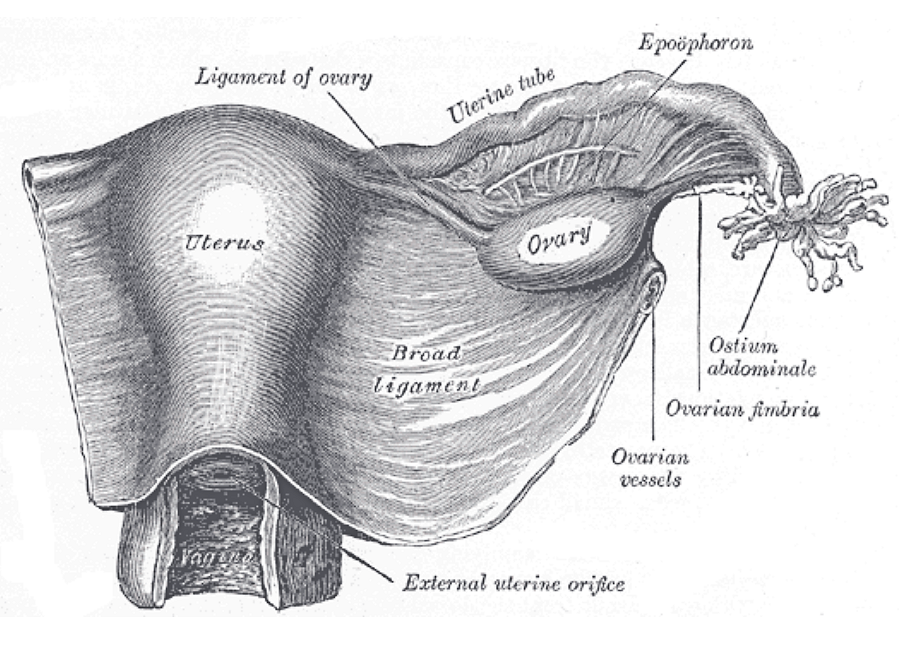
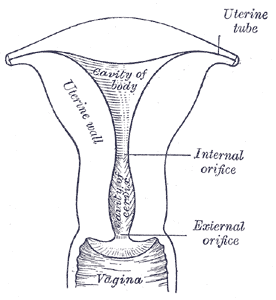
Gray's Anatomy (1918) plate, public domain
The uterus (womb) is a muscular, pear-shaped organ in the pelvis, about 8 cm long outside pregnancy, where a fertilised egg implants and a baby grows. Its wall has three layers: an outer coat, the thick myometrium muscle that contracts during labour, and the inner endometrium lining that thickens each cycle and sheds as a period if pregnancy does not occur. It is held in place by ligaments while remaining mobile.
Key facts
- The myometrium is among the strongest muscles in the body relative to its task, generating the contractions of labour.
- During pregnancy the uterus grows from about 70 g to over a kilogram, and its blood flow rises dramatically.
- The endometrium is one of the few tissues that regularly sheds and regrows without scarring.
- Most uteruses tilt forward; a backward-tilting (retroverted) uterus is a common normal variant.
What can go wrong
Common uterine conditions include fibroids (benign muscle growths causing heavy periods and pressure), adenomyosis (lining tissue within the muscle wall), polyps of the lining, and prolapse where support fails. Cancer of the endometrium typically presents with bleeding after the menopause, which should always be checked. The uterus is assessed by pelvic ultrasound and, when needed, hysteroscopy — a camera inspection of its cavity.
Related conditions
Related procedures & tests
- Hysteroscopy
- Pelvic ultrasound
- Hysterectomy (abdominal / vaginal / laparoscopic)
- Myomectomy (fibroid removal)
Related symptoms
Watch: related videos
Frequently asked questions
How does the uterus change in pregnancy?
Its muscle cells enlarge, its blood supply expands and it rises out of the pelvis, growing to hold the baby, placenta and fluid before contracting powerfully in labour.
What are fibroids?
Benign growths of the uterine muscle that are very common; many cause no symptoms, while others cause heavy periods, pressure or fertility problems depending on size and position.
Educational information only. This atlas explains normal anatomy and describes conditions in general terms; it is not medical advice and does not replace assessment by a qualified clinician. If you have symptoms that worry you, seek medical care.