
- Physical Examination
- Surgical Examination
- Ophthalmology
- Clinical Skills
- Orthopedics
- Surgery Videos
- Laparoscopy
- Pediatrics
- Funny Videos
- Cardiothoracic Surgery
- Nursing Videos
- Plastic Surgery
- Otorhinolaryngology
- Histology and Histopathology
- Neurosurgery
- Dermatology
- Pediatric Surgery
- Urology
- Dentistry
- Oncology and Cancers
- Anatomy Videos
- Health and Fitness
- Radiology
- Anaesthesia
- Physical Therapy
- Pharmacology
- Interventional Radiology
- Cardiology
- Endocrinology
- Gynecology
- Emergency Medicine
- Psychiatry and Psychology
- Childbirth Videos
- General Medical Videos
- Nephrology
- Physiology
- Diet and Food Health
- Diabetes Mellitus
- Neurology
- Women Health
- Osteoporosis
- Gastroenterology
- Pulmonology
- Hematology
- Rheumatology
- Toxicology
- Nuclear Medicine
- Infectious Diseases
- Vascular Disease
- Reproductive Health
- Burns and Wound Healing
- Kidney Zone Podcast
- Other
Nephrostomy insertion: What to Expect & Recovery
A nephrostomy drains urine directly from a blocked kidney through a fine tube in the back into a bag — often an urgent, kidney-saving procedure. Recovery is about the underlying blockage improving and learning to live with the tube for as long as it is needed.
Before surgery: how to prepare
- Tell the team about blood thinners and allergies, especially to contrast dye or local anaesthetics.
- You will usually be asked not to eat for a few hours if sedation is planned.
- Ask what the longer plan is: a nephrostomy is usually a bridge — the blockage (stone, narrowing, tumour) still needs definitive treatment, and the tube is removed or changed once that happens.
- A nurse will show you bag emptying and tube care before discharge — a family member learning alongside you helps.
The day of surgery
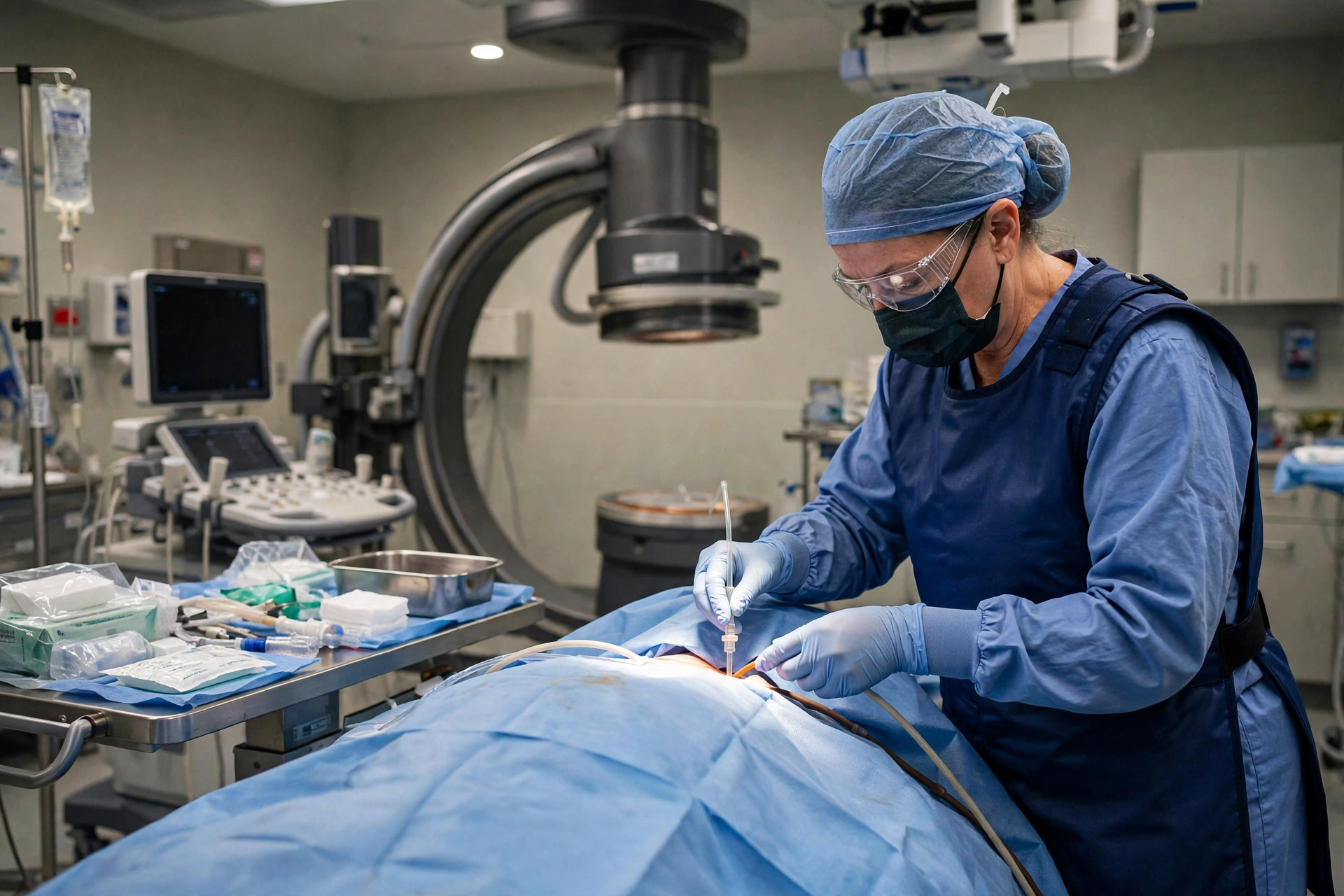
Under local anaesthetic with sedation, lying on your front, the radiologist or surgeon uses ultrasound and X-ray guidance to pass a fine needle through the back into the kidney's drainage system, then threads a soft tube that coils inside the kidney. It connects to a drainage bag strapped to your leg or waist.
In hospital
Recovery timeline
Every recovery is individual, but most follow this general arc:
Warning signs: when to get help
- Drainage stopping, the tube falling out or leaking heavily around the site — contact the team the same day
- Fever, shivering or loin pain (infection)
- Heavy blood in the bag or clots
- The site becoming red, swollen or very sore
- Passing much less urine overall, or feeling unwell and drowsy
Related topics
Frequently asked questions
Can I shower and sleep normally with a nephrostomy?
Showering is usually fine once the site has settled — your team will advise on dressings and keeping connections secure. Sleep on the opposite side or on your back to avoid kinking or pulling the tube, and keep the bag below kidney level so urine drains freely.
How long will the tube stay in?
Until the blockage is treated or bypassed — days to weeks for a stone, longer for complex problems. If it must stay, it is exchanged every few months in a short day procedure to prevent blockage and infection.
Medically reviewed by Dr. Mohamed Ibrahim, Assistant Professor of Medicine, Transplant Nephrology, University of Maryland School of Medicine. Last reviewed: 12 November 2026.
← More Urology & Kidney Surgery · All surgery recovery guides