- Physical Examination
- Surgical Examination
- Ophthalmology
- Clinical Skills
- Orthopedics
- Surgery Videos
- Laparoscopy
- Pediatrics
- Funny Videos
- Cardiothoracic Surgery
- Nursing Videos
- Plastic Surgery
- Otorhinolaryngology
- Histology and Histopathology
- Neurosurgery
- Dermatology
- Pediatric Surgery
- Urology
- Dentistry
- Oncology and Cancers
- Anatomy Videos
- Health and Fitness
- Radiology
- Anaesthesia
- Physical Therapy
- Pharmacology
- Interventional Radiology
- Cardiology
- Endocrinology
- Gynecology
- Emergency Medicine
- Psychiatry and Psychology
- Childbirth Videos
- General Medical Videos
- Nephrology
- Physiology
- Diet and Food Health
- Diabetes Mellitus
- Neurology
- Women Health
- Osteoporosis
- Gastroenterology
- Pulmonology
- Hematology
- Rheumatology
- Toxicology
- Nuclear Medicine
- Infectious Diseases
- Vascular Disease
- Reproductive Health
- Burns and Wound Healing
- Kidney Zone Podcast
- Other
Kidneys
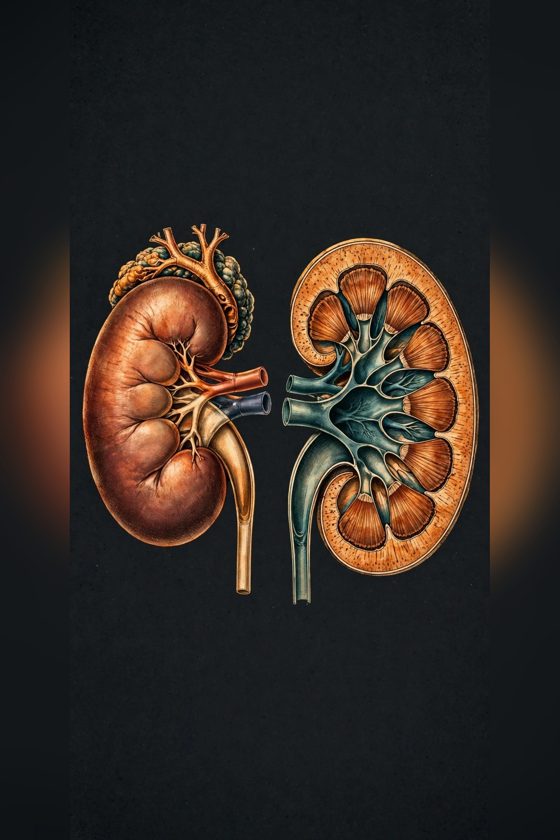
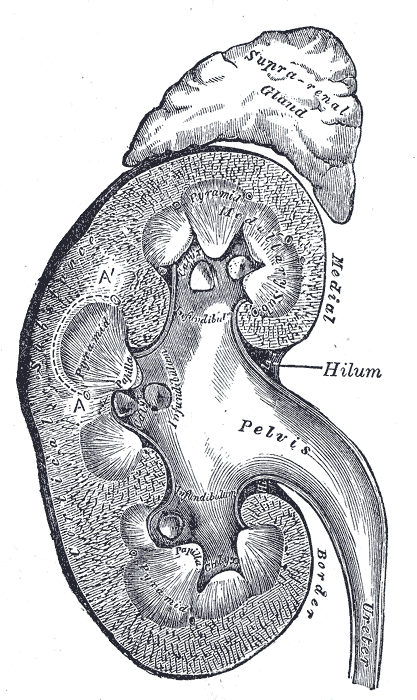
Gray's Anatomy (1918) plate, public domain
The kidneys are two bean-shaped organs, each about 11 cm long, sitting against the back of the upper abdomen on either side of the spine. They filter about 180 litres of fluid a day, reclaiming nearly all of it while excreting waste and excess water as urine. They also regulate blood pressure and acidity, activate vitamin D, and release the hormone erythropoietin that drives red blood cell production in the bone marrow.
Key facts
- Together the kidneys receive about a fifth of the heart's output despite weighing under 1% of body mass.
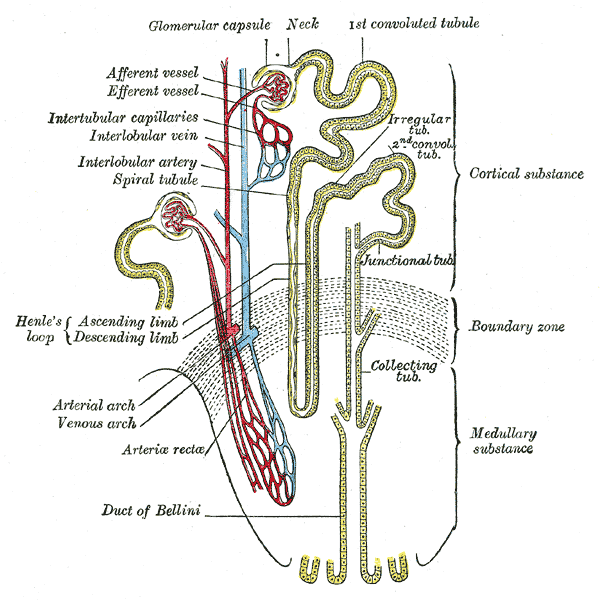
- Each contains around a million filtering units (nephrons); you are born with your full complement.
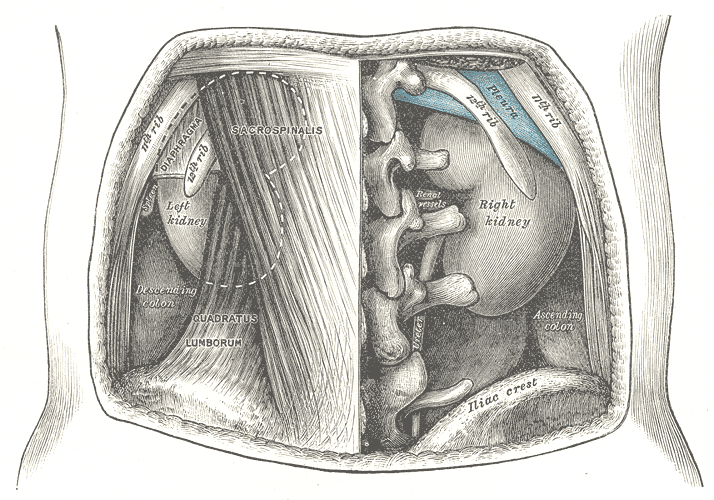
- The right kidney sits slightly lower than the left because the liver rests above it.
- Kidney tissue itself feels little pain — kidney pain usually comes from stretching of its capsule or blockage of urine flow.
What can go wrong
Kidney disease is often silent until advanced, which is why blood and urine tests matter. Problems include stones obstructing flow, infections ascending from the bladder, inflammation of the filters (glomerulonephritis — including IgA nephropathy), damage from diabetes and high blood pressure, cysts, and cancers. Failing kidneys affect nearly every system, and severe failure is managed with dialysis or transplantation.
Related conditions
Related procedures & tests
Related symptoms
Watch: related videos
Frequently asked questions
Can you live with one kidney?
Yes. A healthy single kidney grows slightly and handles the full workload; many people are born with one kidney or donate one and remain well.
Why do kidney problems cause ankle swelling?
Failing kidneys retain salt and water and may leak protein into the urine, lowering blood protein levels — both shift fluid into the tissues, showing first around the ankles and eyes.
Educational information only. This atlas explains normal anatomy and describes conditions in general terms; it is not medical advice and does not replace assessment by a qualified clinician. If you have symptoms that worry you, seek medical care.