
- Physical Examination
- Surgical Examination
- Ophthalmology
- Clinical Skills
- Orthopedics
- Surgery Videos
- Laparoscopy
- Pediatrics
- Funny Videos
- Cardiothoracic Surgery
- Nursing Videos
- Plastic Surgery
- Otorhinolaryngology
- Histology and Histopathology
- Neurosurgery
- Dermatology
- Pediatric Surgery
- Urology
- Dentistry
- Oncology and Cancers
- Anatomy Videos
- Health and Fitness
- Radiology
- Anaesthesia
- Physical Therapy
- Pharmacology
- Interventional Radiology
- Cardiology
- Endocrinology
- Gynecology
- Emergency Medicine
- Psychiatry and Psychology
- Childbirth Videos
- General Medical Videos
- Nephrology
- Physiology
- Diet and Food Health
- Diabetes Mellitus
- Neurology
- Women Health
- Osteoporosis
- Gastroenterology
- Pulmonology
- Hematology
- Rheumatology
- Toxicology
- Nuclear Medicine
- Infectious Diseases
- Vascular Disease
- Reproductive Health
- Burns and Wound Healing
- Kidney Zone Podcast
- Other
A joint that locks or gives way
Category: Muscles, Bones & Joints · All muscles & joints symptoms
What it can feel like
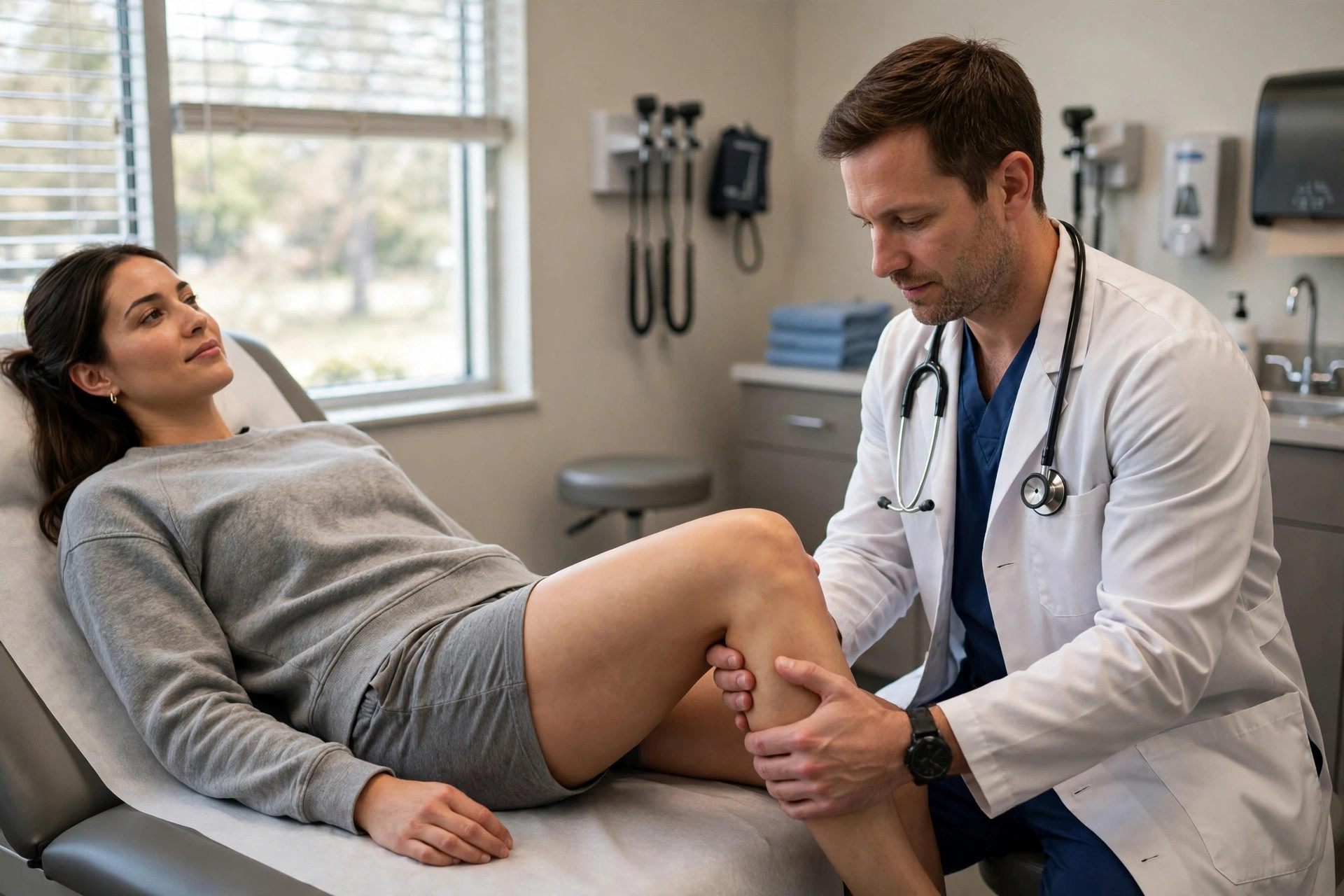
A joint that locks cannot be fully straightened or bent, as if something is jammed inside it; a joint that gives way suddenly buckles under you. True locking — a mechanical block — is different from the joint being too painful to move, and both patterns point inside the joint rather than at the muscles around it.
Possible causes
A symptom can have many causes, and most are not serious. The lists below group conditions this symptom can be associated with — common causes first. They are possibilities to discuss with a clinician, not a diagnosis.
Common causes
Locking and giving way can be associated with torn cartilage (meniscus) fragments catching in the knee, loose pieces of bone or cartilage floating in a joint, ligament injuries making the joint unstable, and the kneecap slipping out of its groove.
Other possible causes
Recurrent giving way after injury can be associated with cruciate ligament rupture; locking in several joints, or with swelling and warmth, can reflect inflammatory joint disease. A locked jaw or a hip that gives way in a child needs its own pathways.
Red flags — when to seek help promptly
- A locked knee that cannot be straightened after injury — prompt assessment
- Giving way that causes falls or injuries
- Locking with a hot, swollen joint and fever
- A child whose hip or knee gives way, with a limp
What a clinician may do
A clinician will test the joint's movement and stability and compare with the other side. MRI is the usual next step for suspected internal derangement; arthroscopy (keyhole surgery) can both confirm and treat meniscus tears and loose bodies.
Related guides on MedicalVideos.com
Frequently asked questions
What's the difference between locking and stiffness?
Stiffness is gradual resistance through the range, easing with movement. Locking is a sudden, hard stop at a particular angle, often with a clunk as it releases — a physical block inside the joint, classically a torn meniscus flap caught between the bones.
Why does my knee give way if the ligaments feel strong?
Giving way is not always instability — pain and swelling reflexively switch off the thigh muscle mid-step (called reflex inhibition), and the leg buckles. Treating swelling and rebuilding quadriceps strength fixes this pattern without surgery.
Related symptoms — Muscles, Bones & Joints
Browse the A section of the A–Z list or return to the Symptoms A–Z hub.