
- Physical Examination
- Surgical Examination
- Ophthalmology
- Clinical Skills
- Orthopedics
- Surgery Videos
- Laparoscopy
- Pediatrics
- Funny Videos
- Cardiothoracic Surgery
- Nursing Videos
- Plastic Surgery
- Otorhinolaryngology
- Histology and Histopathology
- Neurosurgery
- Dermatology
- Pediatric Surgery
- Urology
- Dentistry
- Oncology and Cancers
- Anatomy Videos
- Health and Fitness
- Radiology
- Anaesthesia
- Physical Therapy
- Pharmacology
- Interventional Radiology
- Cardiology
- Endocrinology
- Gynecology
- Emergency Medicine
- Psychiatry and Psychology
- Childbirth Videos
- General Medical Videos
- Nephrology
- Physiology
- Diet and Food Health
- Diabetes Mellitus
- Neurology
- Women Health
- Osteoporosis
- Gastroenterology
- Pulmonology
- Hematology
- Rheumatology
- Toxicology
- Nuclear Medicine
- Infectious Diseases
- Vascular Disease
- Reproductive Health
- Burns and Wound Healing
- Kidney Zone Podcast
- Other
Painful periods
Category: Women's Health · All women's health symptoms
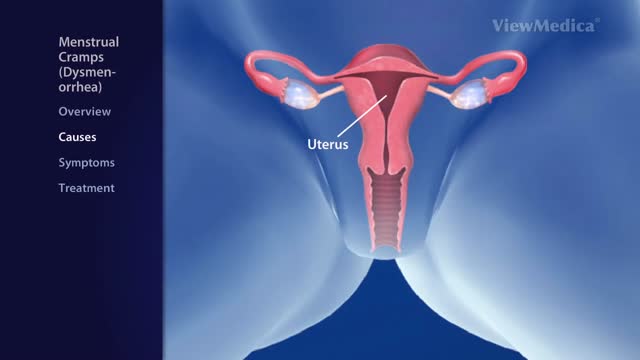
What it can feel like
Painful periods means cramping pain in the lower abdomen (sometimes spreading to the back and thighs) around the time of bleeding, sometimes with nausea, headache and diarrhoea. Primary period pain begins within a year or two of periods starting; new or worsening pain later in life suggests a pelvic cause that should be looked for.
Possible causes
A symptom can have many causes, and most are not serious. The lists below group conditions this symptom can be associated with — common causes first. They are possibilities to discuss with a clinician, not a diagnosis.
Common causes
Period pain can be associated with the womb's own contractions driven by prostaglandins (primary dysmenorrhoea) — more likely when periods are heavy and in those who have not had children — and it often eases with age and after childbirth.
Other possible causes
Pain that starts later, worsens progressively, or joins deep pain with sex and bowel symptoms can be associated with endometriosis, adenomyosis, fibroids, pelvic infection, or an ovarian cyst.
Red flags — when to seek help promptly
- Period pain so severe it repeatedly stops work, school or sleep despite usual measures
- Period pain that is new in your thirties or forties, or clearly worsening year by year
- Pain with deep pain during sex, pain opening the bowels during periods, or difficulty conceiving
- Sudden severe pelvic pain with vomiting or fainting (possible cyst accident) — urgent
What a clinician may do
A clinician will take the pain's timeline — when it started in life, how it has changed, what accompanies it — and examine the pelvis. Ultrasound is the first imaging step; hormonal treatments are often trialled; persistent or suspicious cases are referred for consideration of keyhole surgery (laparoscopy), the definitive test for endometriosis.
Watch: related videos
Examination and clinical videos from the MedicalVideos.com library relevant to this symptom. Some clinical footage is graphic — that is the nature of a medical video library.
Related guides on MedicalVideos.com
Frequently asked questions
Why does late-starting period pain matter?
Primary period pain declares itself early and behaves itself — stable pattern, responds to usual treatment. Pain that is new after 25, progressive, or paired with deep sexual pain and bowel symptoms suggests endometriosis or adenomyosis instead — conditions whose average diagnosis delay is measured in years, so naming the pattern matters.
Do anti-inflammatory painkillers work better than paracetamol for periods?
For period pain specifically, yes — they block the prostaglandins driving the contractions, whereas paracetamol does not. Taken at the first sign (or just before a predictable period) they work best. Your clinician or pharmacist can advise what is safe for you.
Related symptoms — Women's Health
Browse the P section of the A–Z list or return to the Symptoms A–Z hub.