- Physical Examination
- Surgical Examination
- Ophthalmology
- Clinical Skills
- Orthopedics
- Surgery Videos
- Laparoscopy
- Pediatrics
- Funny Videos
- Cardiothoracic Surgery
- Nursing Videos
- Plastic Surgery
- Otorhinolaryngology
- Histology and Histopathology
- Neurosurgery
- Dermatology
- Pediatric Surgery
- Urology
- Dentistry
- Oncology and Cancers
- Anatomy Videos
- Health and Fitness
- Radiology
- Anaesthesia
- Physical Therapy
- Pharmacology
- Interventional Radiology
- Cardiology
- Endocrinology
- Gynecology
- Emergency Medicine
- Psychiatry and Psychology
- Childbirth Videos
- General Medical Videos
- Nephrology
- Physiology
- Diet and Food Health
- Diabetes Mellitus
- Neurology
- Women Health
- Osteoporosis
- Gastroenterology
- Pulmonology
- Hematology
- Rheumatology
- Toxicology
- Nuclear Medicine
- Infectious Diseases
- Vascular Disease
- Reproductive Health
- Burns and Wound Healing
- Kidney Zone Podcast
- Other
Abducens Nerve
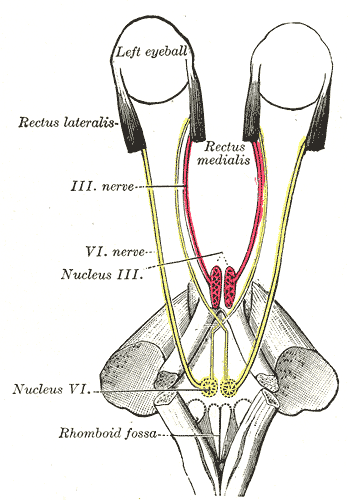
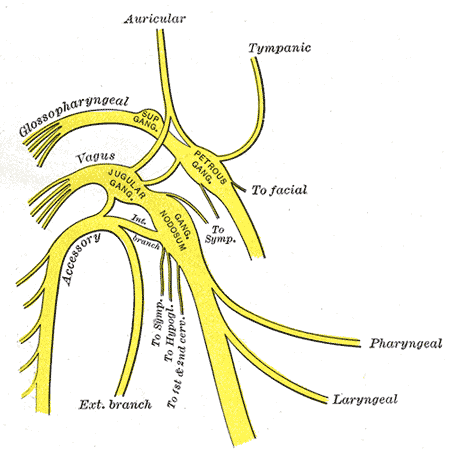
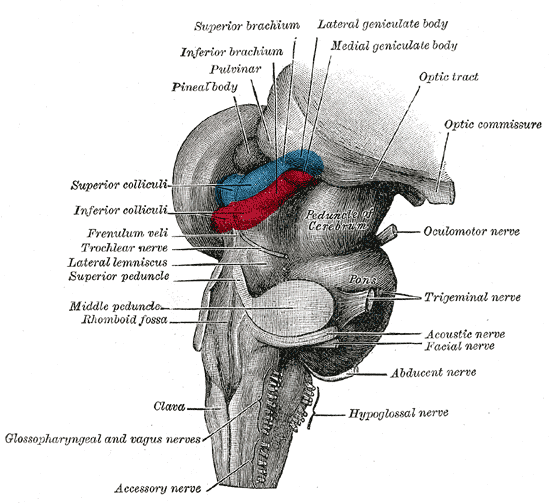
Gray's Anatomy (1918) plate, public domain
The abducens nerve (cranial nerve VI) supplies a single muscle, the lateral rectus, which pulls the eye outwards (abducts it) — hence the nerve's name. It has a long course up the skull base and through the cavernous sinus, which makes it a sensitive early indicator of raised pressure inside the skull.
Key facts
- It supplies only the lateral rectus muscle.
- It is the nerve that looks the eye outwards, towards the ear.
- Its long skull-base course makes it vulnerable to stretch from raised intracranial pressure.
- It travels through the cavernous sinus beside the carotid artery.
- Its nucleus in the pons also coordinates the other eye looking inwards.
What can go wrong
A sixth nerve palsy prevents the eye turning out fully, causing horizontal double vision that worsens when looking towards the affected side. Because the nerve can be stretched by raised pressure anywhere in the skull, a new sixth nerve palsy can be a 'false localising sign' of pressure rather than a local problem.
Related symptoms
Frequently asked questions
What is a false localising sign?
A sign that seems to point to a problem at one spot but actually reflects pressure from elsewhere — the abducens nerve's long course makes it the classic example, stretched by raised pressure from a distant cause.
How is a sixth nerve palsy tested?
By following a finger to the side: the affected eye lags and fails to reach the outer corner, and the double vision is worst in that direction of gaze.
Educational information only. This atlas explains normal anatomy and describes conditions in general terms; it is not medical advice and does not replace assessment by a qualified clinician. If you have symptoms that worry you, seek medical care.