- Physical Examination
- Surgical Examination
- Ophthalmology
- Clinical Skills
- Orthopedics
- Surgery Videos
- Laparoscopy
- Pediatrics
- Funny Videos
- Cardiothoracic Surgery
- Nursing Videos
- Plastic Surgery
- Otorhinolaryngology
- Histology and Histopathology
- Neurosurgery
- Dermatology
- Pediatric Surgery
- Urology
- Dentistry
- Oncology and Cancers
- Anatomy Videos
- Health and Fitness
- Radiology
- Anaesthesia
- Physical Therapy
- Pharmacology
- Interventional Radiology
- Cardiology
- Endocrinology
- Gynecology
- Emergency Medicine
- Psychiatry and Psychology
- Childbirth Videos
- General Medical Videos
- Nephrology
- Physiology
- Diet and Food Health
- Diabetes Mellitus
- Neurology
- Women Health
- Osteoporosis
- Gastroenterology
- Pulmonology
- Hematology
- Rheumatology
- Toxicology
- Nuclear Medicine
- Infectious Diseases
- Vascular Disease
- Reproductive Health
- Burns and Wound Healing
- Kidney Zone Podcast
- Other
Brain
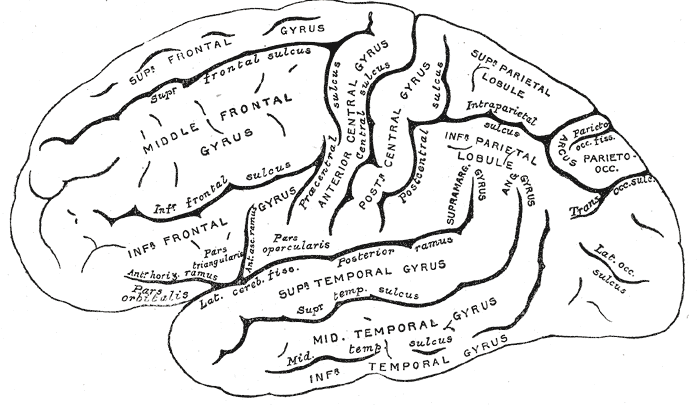
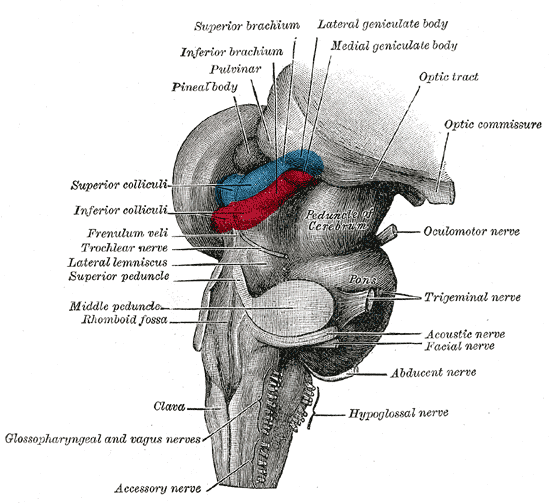
Gray's Anatomy (1918) plate, public domain
The brain is the body's control centre — about 1.4 kilograms of folded neural tissue inside the cranium. Its largest part, the cerebrum, is divided into two hemispheres and handles thought, memory, language and voluntary movement; the cerebellum fine-tunes movement and balance; and the brainstem controls breathing, heart rate and consciousness. It consumes about a fifth of the body's energy.
Key facts
- The brain contains around 86 billion neurons.
- It uses roughly 20% of the body's oxygen and glucose at rest.
- The two hemispheres communicate through a band of fibres, the corpus callosum.
- It floats in cerebrospinal fluid inside the skull, which cushions it.
- The brain itself has no pain receptors — headaches arise from surrounding structures.
What can go wrong
The brain can be harmed by interrupted blood flow (stroke), bleeding, head injury, infection and tumours — the effects depending on which area is affected. Some conditions, such as dementia, involve gradual loss of brain tissue over years. Sudden weakness, speech change or facial droop are emergency signs of stroke.
Related conditions
Related procedures & tests
Related symptoms
Watch: related videos
Frequently asked questions
Why does the brain have so many folds?
Folding packs a large sheet of cortex — the thinking layer — into the skull. More surface area means more neurons for complex processing; an unfolded human cortex would cover roughly four sheets of A4 paper.
Can the brain feel pain?
Not directly: brain tissue has no pain receptors, so neurosurgery can be done with the patient awake. Headache pain comes from the membranes, blood vessels and muscles around the brain.
Educational information only. This atlas explains normal anatomy and describes conditions in general terms; it is not medical advice and does not replace assessment by a qualified clinician. If you have symptoms that worry you, seek medical care.