- Physical Examination
- Surgical Examination
- Ophthalmology
- Clinical Skills
- Orthopedics
- Surgery Videos
- Laparoscopy
- Pediatrics
- Funny Videos
- Cardiothoracic Surgery
- Nursing Videos
- Plastic Surgery
- Otorhinolaryngology
- Histology and Histopathology
- Neurosurgery
- Dermatology
- Pediatric Surgery
- Urology
- Dentistry
- Oncology and Cancers
- Anatomy Videos
- Health and Fitness
- Radiology
- Anaesthesia
- Physical Therapy
- Pharmacology
- Interventional Radiology
- Cardiology
- Endocrinology
- Gynecology
- Emergency Medicine
- Psychiatry and Psychology
- Childbirth Videos
- General Medical Videos
- Nephrology
- Physiology
- Diet and Food Health
- Diabetes Mellitus
- Neurology
- Women Health
- Osteoporosis
- Gastroenterology
- Pulmonology
- Hematology
- Rheumatology
- Toxicology
- Nuclear Medicine
- Infectious Diseases
- Vascular Disease
- Reproductive Health
- Burns and Wound Healing
- Kidney Zone Podcast
- Other
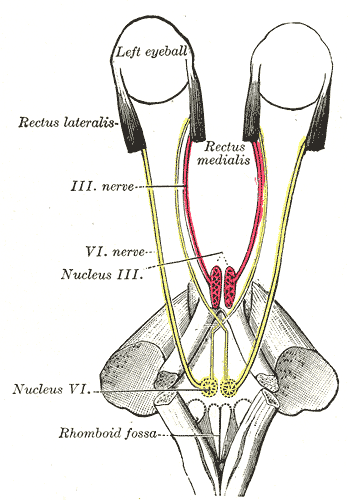
Brainstem
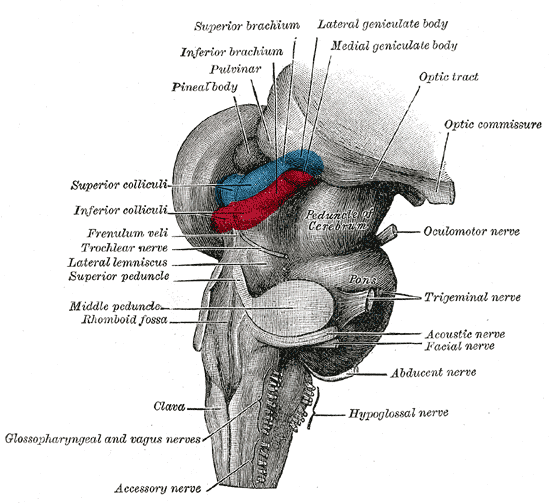
Gray's Anatomy (1918) plate, public domain
The brainstem is the stalk of the brain connecting the cerebrum to the spinal cord. From top to bottom it comprises the midbrain, the pons (a bridge of fibres to the cerebellum) and the medulla. It carries every signal between brain and body, contains the circuits controlling breathing, heart rate, blood pressure, swallowing and wakefulness, and gives origin to most of the cranial nerves.
Key facts
- The brainstem is about the size of a thumb, yet carries all brain-body traffic.
- The medulla's centres set the basic rhythm of breathing and heart rate.
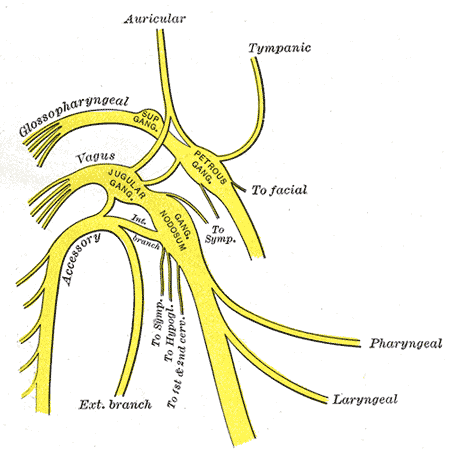
- Ten of the twelve cranial nerves arise from the brainstem.
- The reticular formation within it regulates consciousness and sleep-wake cycles.
- Signals cross sides here — which is why brainstem strokes can produce crossed symptoms.
What can go wrong
Because the brainstem is compact, even a small stroke or bleed there can have major effects — weakness, double vision, swallowing failure or disturbed consciousness. Pressure on the brainstem from swelling elsewhere in the skull is one of the most dangerous events in head injury and stroke care.
Related conditions
Related symptoms
Frequently asked questions
Why is the brainstem called the most vital part of the brain?
It houses the non-negotiable functions — breathing drive, heart and blood-pressure control, and the arousal system for consciousness. Severe damage here is incompatible with independent life, which is why brainstem testing is central to confirming death.
What is the pons?
The bulging middle segment of the brainstem — Latin for 'bridge' — which links the two sides of the cerebellum and relays signals between the cerebrum and cerebellum.
Educational information only. This atlas explains normal anatomy and describes conditions in general terms; it is not medical advice and does not replace assessment by a qualified clinician. If you have symptoms that worry you, seek medical care.