- Physical Examination
- Surgical Examination
- Ophthalmology
- Clinical Skills
- Orthopedics
- Surgery Videos
- Laparoscopy
- Pediatrics
- Funny Videos
- Cardiothoracic Surgery
- Nursing Videos
- Plastic Surgery
- Otorhinolaryngology
- Histology and Histopathology
- Neurosurgery
- Dermatology
- Pediatric Surgery
- Urology
- Dentistry
- Oncology and Cancers
- Anatomy Videos
- Health and Fitness
- Radiology
- Anaesthesia
- Physical Therapy
- Pharmacology
- Interventional Radiology
- Cardiology
- Endocrinology
- Gynecology
- Emergency Medicine
- Psychiatry and Psychology
- Childbirth Videos
- General Medical Videos
- Nephrology
- Physiology
- Diet and Food Health
- Diabetes Mellitus
- Neurology
- Women Health
- Osteoporosis
- Gastroenterology
- Pulmonology
- Hematology
- Rheumatology
- Toxicology
- Nuclear Medicine
- Infectious Diseases
- Vascular Disease
- Reproductive Health
- Burns and Wound Healing
- Kidney Zone Podcast
- Other
Brachial Plexus
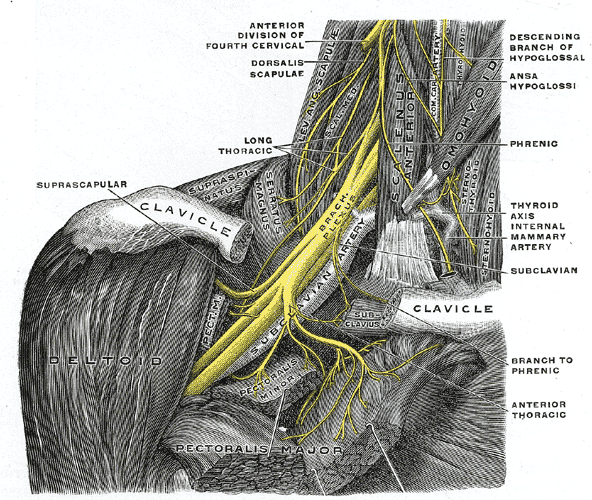
Gray's Anatomy (1918) plate, public domain
The brachial plexus is the braided network of nerves formed from the lower neck spinal roots (C5-T1) that supplies the whole arm. Roots emerge between the neck muscles, form trunks, divisions and cords around the armpit artery, and end as the major arm nerves — musculocutaneous, axillary, radial, median and ulnar. This woven design means most muscles receive fibres from several roots, protecting function if one root is injured.
Key facts
- The plexus is remembered by generations of students with the mnemonic of its parts: Roots, Trunks, Divisions, Cords, Branches.
- Its cords are named by their relation to the axillary artery (lateral, posterior, medial).
- The phrenic nerve (to the diaphragm) arises nearby from C3-5 — summarised as 'C3, 4, 5 keep the diaphragm alive'.
- Anaesthetists block the plexus at several points to numb the whole arm for surgery.
What can go wrong
Plexus injuries follow trauma — motorcycle accidents stretching the neck-shoulder angle, or difficult births (Erb's palsy in newborns) — causing weakness and numbness in patterns spanning several nerves. Inflammation (brachial neuritis/Parsonage-Turner syndrome) causes severe shoulder pain followed by weakness. Compression where the plexus exits the chest (thoracic outlet syndrome) can give arm pain, tingling and colour changes. Tumours of the lung apex can invade it.
Related conditions
Related procedures & tests
Related symptoms
Related muscles
Watch: related videos
Frequently asked questions
What is Erb's palsy?
Weakness from injury to the upper plexus roots (C5-6), classically in newborns after shoulder dystocia or in adults after trauma, affecting shoulder and elbow movements.
Why does the plexus weave instead of running straight?
Limb buds rotate and elongate during development, dragging the nerves into a braid; the mixing also gives most muscles a multi-root supply as a safety margin.
Educational information only. This atlas explains normal anatomy and describes conditions in general terms; it is not medical advice and does not replace assessment by a qualified clinician. If you have symptoms that worry you, seek medical care.