- Physical Examination
- Surgical Examination
- Ophthalmology
- Clinical Skills
- Orthopedics
- Surgery Videos
- Laparoscopy
- Pediatrics
- Funny Videos
- Cardiothoracic Surgery
- Nursing Videos
- Plastic Surgery
- Otorhinolaryngology
- Histology and Histopathology
- Neurosurgery
- Dermatology
- Pediatric Surgery
- Urology
- Dentistry
- Oncology and Cancers
- Anatomy Videos
- Health and Fitness
- Radiology
- Anaesthesia
- Physical Therapy
- Pharmacology
- Interventional Radiology
- Cardiology
- Endocrinology
- Gynecology
- Emergency Medicine
- Psychiatry and Psychology
- Childbirth Videos
- General Medical Videos
- Nephrology
- Physiology
- Diet and Food Health
- Diabetes Mellitus
- Neurology
- Women Health
- Osteoporosis
- Gastroenterology
- Pulmonology
- Hematology
- Rheumatology
- Toxicology
- Nuclear Medicine
- Infectious Diseases
- Vascular Disease
- Reproductive Health
- Burns and Wound Healing
- Kidney Zone Podcast
- Other
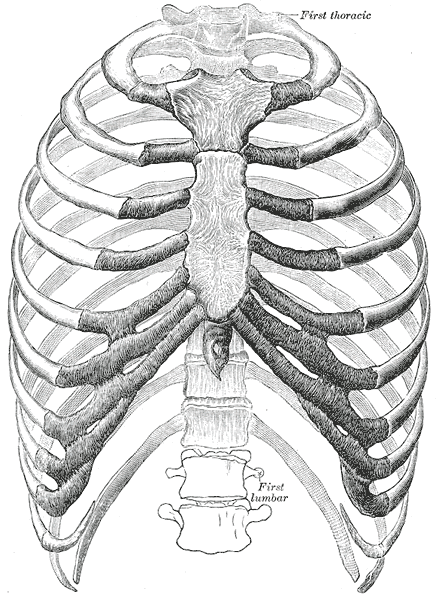
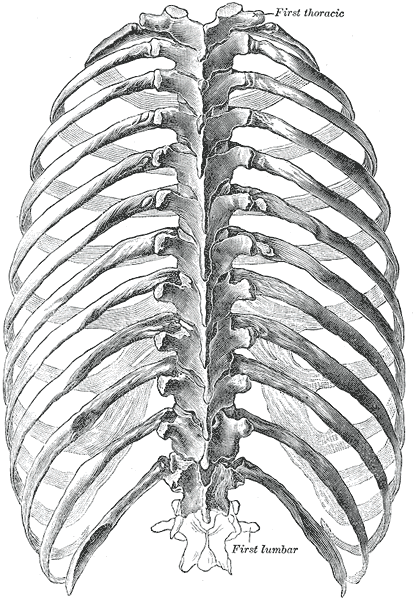
Ribs
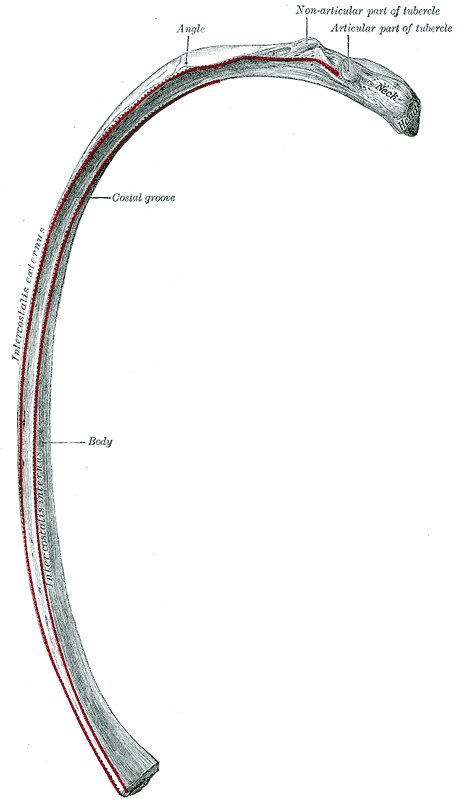
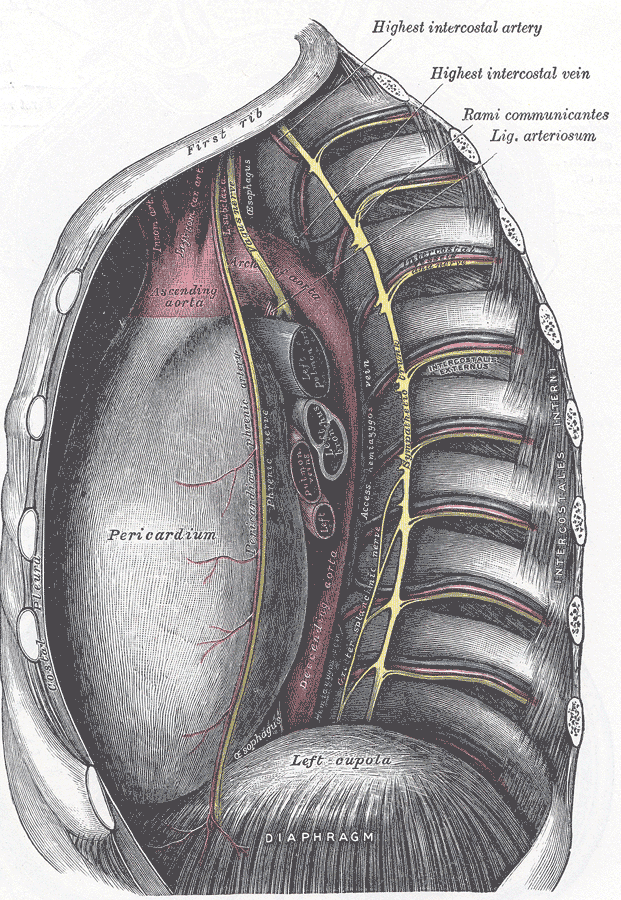
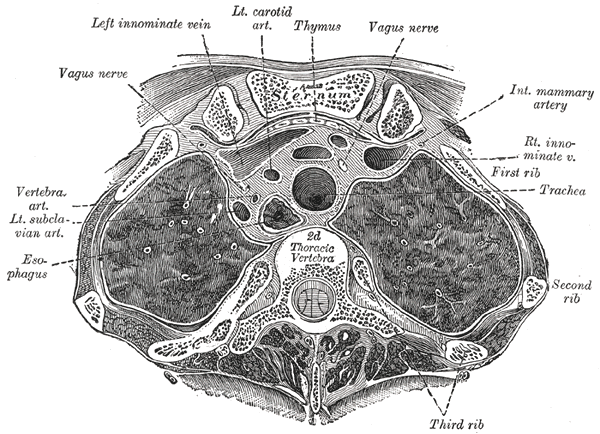
Gray's Anatomy (1918) plate, public domain
There are normally 12 pairs of ribs, curving from the spine around to the front of the chest. The top seven pairs ('true ribs') reach the breastbone through their own cartilage; the next three share cartilage with the rib above ('false ribs'); and the last two ('floating ribs') end freely in the abdominal wall. Between the ribs run the intercostal muscles, vessels and nerves.
Key facts
- Most people have 12 pairs of ribs; a few have 11 or 13.
- A typical rib has a head (at the spine), a neck, a tubercle, an angle and a shaft.
- The first rib is the shortest, most curved and most protected.
- Nerves and vessels run in a groove under each rib's lower edge.
- Ribs move chiefly at their spinal joints, lifting the breastbone as we breathe in.
What can go wrong
Rib fractures cause sharp, localised pain on breathing and coughing; multiple fractures in a row can make a segment of chest wall move paradoxically (flail chest), a serious injury. The lowest ribs overlie the liver, spleen and kidneys, which is why flank blows are taken seriously. Rib pain without injury sometimes comes from inflammation where rib meets cartilage.
Related procedures & tests
Related symptoms
Related muscles
Frequently asked questions
Why are some ribs called floating?
The 11th and 12th ribs have no attachment at the front — their tips end freely in the muscles of the abdominal wall, so they appear to 'float' compared with the ribs bound into the breastbone's cartilage framework.
Can you break a rib by coughing?
Occasionally, yes — a violent coughing bout can fracture a rib, most often in older adults or where bone is thinned. New rib pain after heavy coughing that is sharply localised is worth having examined.
Educational information only. This atlas explains normal anatomy and describes conditions in general terms; it is not medical advice and does not replace assessment by a qualified clinician. If you have symptoms that worry you, seek medical care.