- Physical Examination
- Surgical Examination
- Ophthalmology
- Clinical Skills
- Orthopedics
- Surgery Videos
- Laparoscopy
- Pediatrics
- Funny Videos
- Cardiothoracic Surgery
- Nursing Videos
- Plastic Surgery
- Otorhinolaryngology
- Histology and Histopathology
- Neurosurgery
- Dermatology
- Pediatric Surgery
- Urology
- Dentistry
- Oncology and Cancers
- Anatomy Videos
- Health and Fitness
- Radiology
- Anaesthesia
- Physical Therapy
- Pharmacology
- Interventional Radiology
- Cardiology
- Endocrinology
- Gynecology
- Emergency Medicine
- Psychiatry and Psychology
- Childbirth Videos
- General Medical Videos
- Nephrology
- Physiology
- Diet and Food Health
- Diabetes Mellitus
- Neurology
- Women Health
- Osteoporosis
- Gastroenterology
- Pulmonology
- Hematology
- Rheumatology
- Toxicology
- Nuclear Medicine
- Infectious Diseases
- Vascular Disease
- Reproductive Health
- Burns and Wound Healing
- Kidney Zone Podcast
- Other
Thoracic Cavity
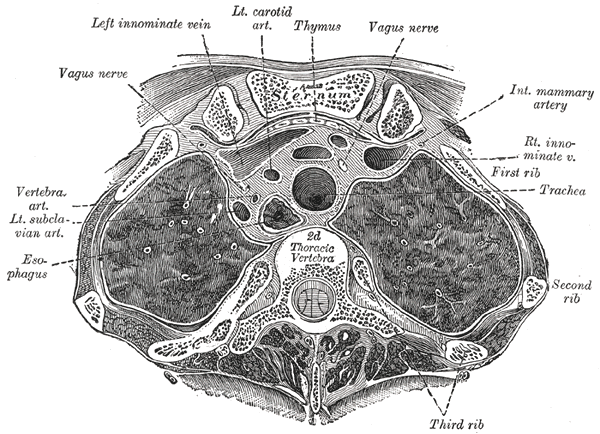
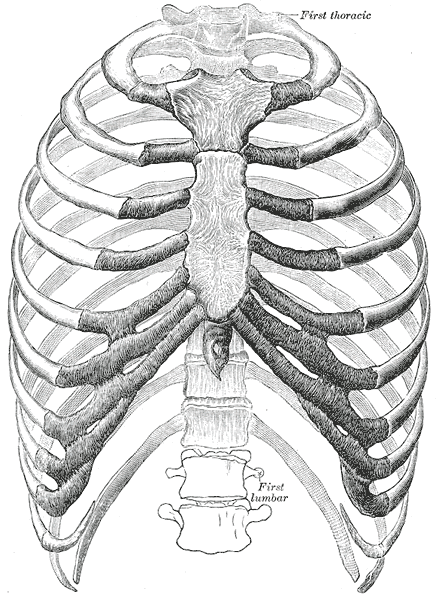
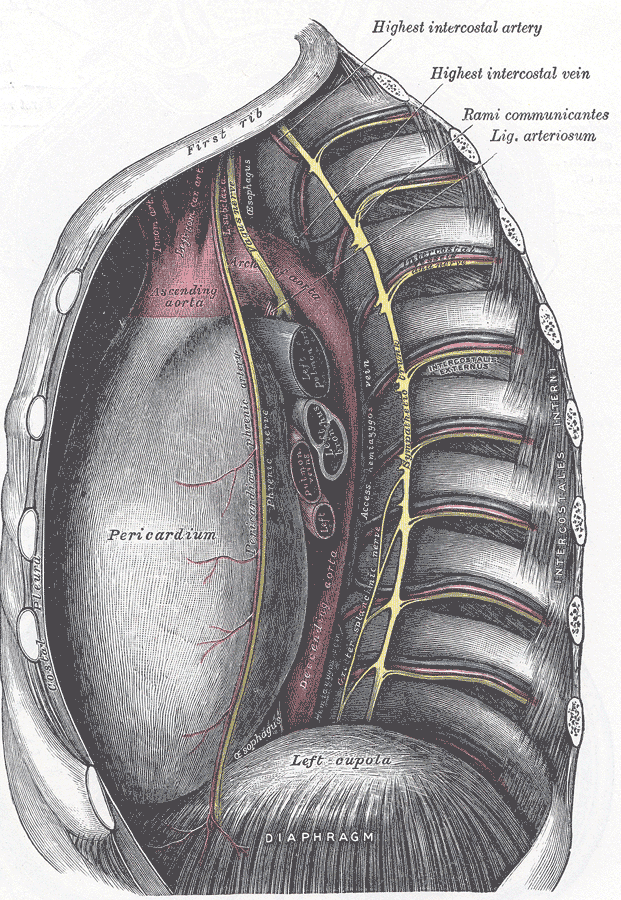
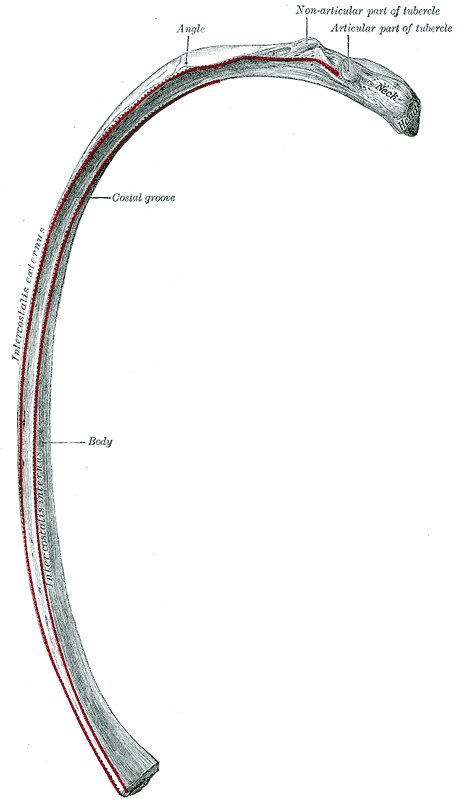
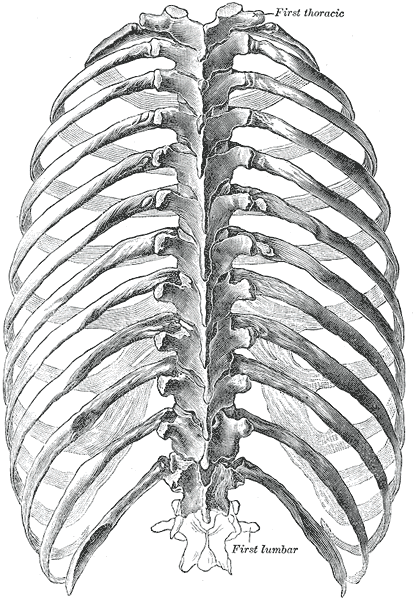
Gray's Anatomy (1918) plate, public domain
The thoracic cavity is the chamber enclosed by the rib cage, sternum, thoracic spine and diaphragm. It holds the two pleural cavities with the lungs on either side and the mediastinum between them with the heart. Its volume changes constantly: the diaphragm flattens and the ribs swing up and out to draw air in. Though protected by bone, it houses vital structures in close quarters, so penetrating injury here is particularly dangerous.
Key facts
- The cavity is functionally three compartments: two pleural sacs and the central mediastinum.
- Its pressure is slightly below atmospheric at rest — the 'negative pressure' that keeps the lungs inflated.
- The diaphragm forms its floor but bulges up so high (to about the 5th rib) that upper abdominal organs shelter under the lower ribs.
- The thoracic inlet at the top is a narrow gateway crowded with vessels, nerves, the windpipe and the food pipe.
What can go wrong
Loss of the cavity's negative pressure — from a punctured chest wall or a leaking lung — collapses the lung (pneumothorax). Blood collecting in a pleural cavity (haemothorax) and infection (empyema) are other space-occupying emergencies. Fractured ribs can injure the structures beneath, and severe chest trauma can disrupt the diaphragm or great vessels. Imaging and chest drains are the mainstays of assessment and treatment.
Related procedures & tests
Related symptoms
Related muscles
Frequently asked questions
Why do the lungs stay inflated?
Because the pleural space's slight vacuum couples the lung surface to the chest wall; when the wall expands, the lung must follow, drawing air in.
What is a tension pneumothorax?
A one-way air leak that traps increasing air in the pleural cavity, compressing the lung and then the heart's filling — a life-threatening emergency relieved by urgent decompression.
Educational information only. This atlas explains normal anatomy and describes conditions in general terms; it is not medical advice and does not replace assessment by a qualified clinician. If you have symptoms that worry you, seek medical care.