- Physical Examination
- Surgical Examination
- Ophthalmology
- Clinical Skills
- Orthopedics
- Surgery Videos
- Laparoscopy
- Pediatrics
- Funny Videos
- Cardiothoracic Surgery
- Nursing Videos
- Plastic Surgery
- Otorhinolaryngology
- Histology and Histopathology
- Neurosurgery
- Dermatology
- Pediatric Surgery
- Urology
- Dentistry
- Oncology and Cancers
- Anatomy Videos
- Health and Fitness
- Radiology
- Anaesthesia
- Physical Therapy
- Pharmacology
- Interventional Radiology
- Cardiology
- Endocrinology
- Gynecology
- Emergency Medicine
- Psychiatry and Psychology
- Childbirth Videos
- General Medical Videos
- Nephrology
- Physiology
- Diet and Food Health
- Diabetes Mellitus
- Neurology
- Women Health
- Osteoporosis
- Gastroenterology
- Pulmonology
- Hematology
- Rheumatology
- Toxicology
- Nuclear Medicine
- Infectious Diseases
- Vascular Disease
- Reproductive Health
- Burns and Wound Healing
- Kidney Zone Podcast
- Other
Sternum

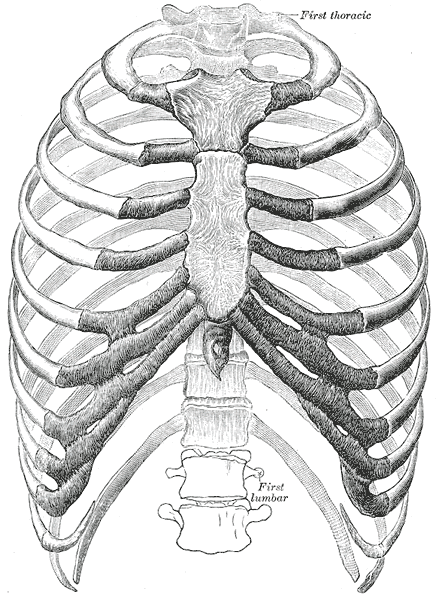
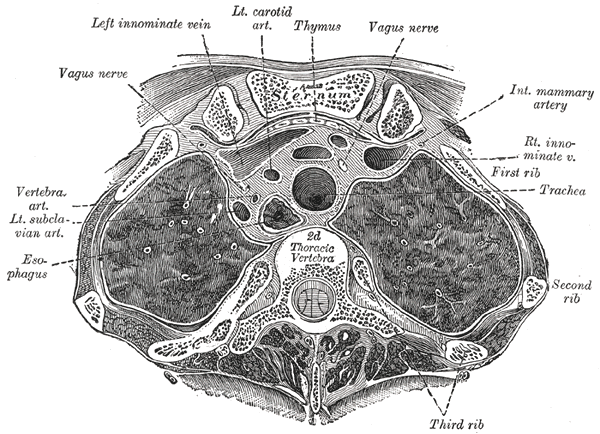
Gray's Anatomy (1918) plate, public domain
The sternum, or breastbone, is the flat bone down the centre of the front of the chest. It has three parts: the broad manubrium at the top (which meets the collarbones), the blade-like body, and the small xiphoid process at the bottom. The first seven costal cartilages attach along its sides, completing the front of the rib cage.
Key facts
- The sternum has three parts: manubrium, body and xiphoid process.
- The notch at its top (jugular notch) can be felt between the collarbones.
- The joint between manubrium and body forms a slight ridge — the sternal angle — used to count ribs.
- Chest compressions in CPR are delivered on the lower half of its body.
- Its marrow is one of the sites used for bone-marrow sampling.
What can go wrong
The sternum can fracture in chest impacts, classically from a steering wheel or seatbelt in a road collision, and is assessed together with the heart and lungs behind it. Surgeons divide the sternum to reach the heart (sternotomy) and wire it back afterwards. Inflammation where the rib cartilages meet the sternum causes the chest-wall pain called costochondritis.
Related procedures & tests
Related symptoms
Related muscles
Watch: related videos
Frequently asked questions
Why does CPR push on the sternum?
The heart lies directly behind the lower sternum, sandwiched against the spine. Pressing the sternum squeezes blood out of the heart; releasing lets it refill — an external pump substituting for the heart's own beat.
What is the sternal angle and why does it matter?
The slight horizontal ridge where the manubrium meets the body. It lines up with the second rib's cartilage, so clinicians start there when counting ribs and intercostal spaces on the chest.
Educational information only. This atlas explains normal anatomy and describes conditions in general terms; it is not medical advice and does not replace assessment by a qualified clinician. If you have symptoms that worry you, seek medical care.