
- Procedures & Tests
- Symptoms A-Z
- Symptom Checker
- Kidney Diet
- First Aid
- Anatomy Atlas
- Ask MedicalVideos
- Drug Guide
- Lab Values
- Vital Signs
- Muscles A–Z
- Clinical Signs
- Medical Abbreviations
- Medical Terminology
- Physical Examination
- Surgical Examination
- Ophthalmology
- Clinical Skills
- Orthopedics
- Surgery Videos
- Laparoscopy
- Pediatrics
- Medical Humor
- Cardiothoracic Surgery
- Nursing Videos
- Plastic Surgery
- Otorhinolaryngology
- Histology and Histopathology
- Neurosurgery
- Dermatology
- Pediatric Surgery
- Urology
- Dentistry
- Oncology and Cancers
- Anatomy Videos
- Health and Fitness
- Radiology
- Anaesthesia
- Physical Therapy
- Pharmacology
- Interventional Radiology
- Cardiology
- Endocrinology
- Gynecology
- Emergency Medicine
- Psychiatry and Psychology
- Childbirth Videos
- General Medical Videos
- Nephrology
- Physiology
- Diet and Food Health
- Diabetes Mellitus
- Neurology
- Women Health
- Osteoporosis
- Gastroenterology
- Pulmonology
- Hematology
- Rheumatology
- Toxicology
- Nuclear Medicine
- Infectious Diseases
- Vascular Disease
- Reproductive Health
- Burns and Wound Healing
- Kidney Zone Podcast
- Other
What Is a Diaphragmatic Hernia?
What a diaphragmatic hernia is, how it differs from a hiatal hernia, how it is found, and how surgery repairs the opening.
11/08/26 • 43 Views


One muscle, two storeys
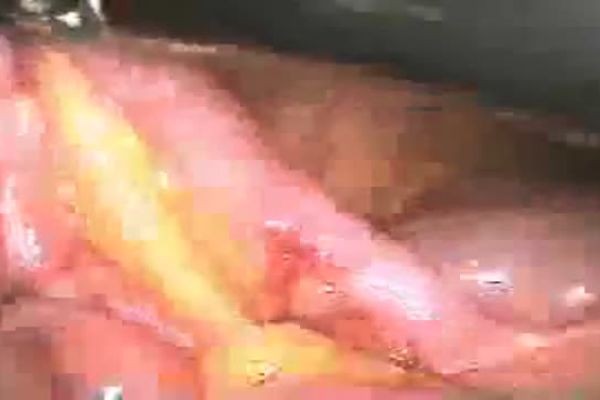
Think of the diaphragm as a broad, domed shelf of muscle with the chest on the floor above it and the abdomen on the floor below. Every breath you take, that shelf flattens and rises again. A diaphragmatic hernia is what happens when the shelf develops an opening it shouldn't have, and something from the floor below — a loop of bowel, part of the stomach, sometimes other abdominal organs — slips up through it into the chest. The short video at the top of this page, just under two minutes long, shows exactly that from the inside: its description calls it a laparoscopic view of the diaphragmatic hernia, filmed through a keyhole camera during surgery, so you are looking at the problem the way the operating team sees it. This guide explains how the condition arises, how it differs from the much commoner hernia it is confused with, and how it is repaired.
Three ways the opening gets there
Not every diaphragmatic hernia arrives by the same route, and the route changes who is affected and how urgently it matters. Some people are born with the opening: during development, the diaphragm forms from several pieces that fuse together, and if a gap is left — most often towards the back and side, sometimes at the front — abdominal organs can move into the chest before birth. That is congenital diaphragmatic hernia, a newborn condition we return to below. Other openings are acquired later in life. A severe injury — a road accident, a fall, a wound that reaches the diaphragm — can tear the muscle, and the tear may only declare itself months or years afterwards as organs gradually work their way through. Still other defects widen slowly with age and pressure. What all three share is the mechanics: the chest runs at lower pressure than the abdomen, so each breath quietly encourages abdominal contents to drift upwards through any gap. Our hernia hub sets this condition alongside the other hernia types, with the videos and guides for each.
The neighbour it gets confused with: hiatal hernia
If you've heard either name, you've probably heard them muddled, so it is worth separating them cleanly. A hiatal hernia is also an opening in the diaphragm — but a very specific one: the hiatus, the small, normal passage the food pipe uses to reach the stomach. In a hiatal hernia, the top of the stomach slides up through that existing doorway. It is extremely common, often causes nothing more than reflux, and we cover it in its own guide to hiatal hernia, where you can also watch a short hiatal hernia video of just over a minute. A diaphragmatic hernia in the stricter sense is different: the opening is somewhere it was never meant to be — a birth defect in the sheet of the diaphragm itself, or a tear — and what passes through it is often bowel rather than just the stomach's top. Same muscle, two quite different problems, and frequently two quite different levels of urgency.
What it can feel like — and why it is often found by accident
Here's the surprising part: in adults, a diaphragmatic hernia may cause no symptoms at all, and a good number are spotted incidentally on a chest X-ray or scan done for something else. When symptoms do appear, they tend to borrow from both storeys. From the chest side: breathlessness, especially after meals or when lying flat, chest discomfort, and occasionally repeated chest infections if the lung on that side can't expand fully. From the abdomen side: upper abdominal pain, a sense of fullness after small meals, reflux-like burning, nausea, or altered bowel habit if a loop of bowel sits in the chest. The symptoms that change the conversation are the sudden ones — severe chest or abdominal pain, vomiting, being unable to pass wind or stool, or marked breathlessness — because they can mean bowel has become trapped or twisted in the opening, which is an emergency rather than a clinic discussion. If that picture ever fits you, treat it the way our general guide to hernias and how they are repaired advises for any hernia that suddenly becomes painful and irreducible: get assessed the same day.
The newborn version is a different story
Congenital diaphragmatic hernia deserves its own paragraph because it behaves nothing like the adult condition. When the diaphragm fails to close during development, bowel and other organs occupy part of the chest while the baby is still growing, and the lung on that side has less room to develop. It is usually picked up on a routine pregnancy ultrasound, and babies are typically delivered at a specialist centre so that breathing support and surgery can begin promptly after birth. The operation, done once the baby is stable enough, gently returns the organs to the abdomen and closes the gap. This is specialist neonatal care from start to finish — if it is your baby's diagnosis, the team scanning you is the right source for what happens next, and general reading like this page is only background.
How the diagnosis is confirmed
Because the symptoms overlap with so many other conditions, imaging does the confirming. A plain chest X-ray is often where the first clue appears — bowel gas patterns or abdominal organs visible where only lung should be. A CT scan of the chest and abdomen is the usual next step: it maps the size and position of the opening, shows exactly which organs have moved up, and helps the surgical team plan the repair. Occasionally a contrast study of the upper gut adds detail about the stomach's position. In pregnancy, as noted above, the congenital form is usually an ultrasound finding, sometimes followed by more detailed fetal imaging. By the time a repair is offered, the team should be able to show you on your own scans where the opening is and what has passed through it — asking to see that picture is a reasonable request at any surgical consultation.
Repair: putting things back and closing the gap
The definitive treatment is an operation. The goals are the same whatever the route in: bring the displaced organs back into the abdomen, remove any hernia sac, and close the opening in the diaphragm securely. Small defects can often be stitched directly; larger ones, or tissue that won't come together without tension, may be reinforced or bridged with a mesh patch. The approach varies with the size and position of the defect and the patient's history — surgeons may work from the abdomen or the chest, openly or with keyhole techniques. The video at the top of this page is a laparoscopic one: through small abdominal incisions, the camera shows the hernia from below as the team works. Keyhole repair isn't suitable for every case — a large tear, dense scarring from previous surgery, or an emergency involving damaged bowel can all argue for an open operation — and which route suits you is a judgement your surgeon makes from your scans. Recovery follows the pattern of other abdominal or chest surgery: a hospital stay measured in days, a gradual return to eating and activity, and follow-up imaging if the team wants to check the repair. As with any hernia, a repair can occasionally fail or the hernia can return, which is one reason new symptoms after surgery are worth reporting rather than assuming everything is settled.
References & further reading
- MedlinePlus Medical Encyclopedia — Diaphragmatic hernia: https://medlineplus.gov/ency/article/001135.htm
- MedlinePlus — Hernia: https://medlineplus.gov/hernia.html
- MedlinePlus Medical Encyclopedia — Hiatal hernia: https://medlineplus.gov/ency/article/001137.htm
- NHS — Hiatus hernia: https://www.nhs.uk/conditions/hiatus-hernia/
MedicalVideos.com has published trusted medical videos since 2007. The site was founded by Dr. Mohamed Ibrahim, MD, PhD — physician-scientist.
Frequently Asked Questions
What is the difference between a diaphragmatic hernia and a hiatal hernia?
A hiatal hernia is the stomach's top sliding up through the hiatus, the diaphragm's normal opening for the food pipe. A diaphragmatic hernia uses an opening that shouldn't exist — a birth defect or a tear elsewhere in the diaphragm — and often involves bowel as well as stomach. The hiatal form is far more common.
Can a diaphragmatic hernia heal on its own?
No. An opening in the diaphragm does not close by itself, and abdominal contents tend to drift further through it over time because the chest runs at lower pressure than the abdomen. Whether and when to repair it is a surgical discussion based on your scans and symptoms.
Is diaphragmatic hernia always an emergency?
No — many found in adults are incidental and are assessed as planned cases. It becomes an emergency if bowel trapped in the chest becomes obstructed or loses its blood supply, which typically causes severe pain, vomiting, and an inability to pass wind or stool. Those symptoms need same-day urgent assessment.
How is a diaphragmatic hernia in a newborn treated?
Babies are delivered at a specialist centre, stabilised with breathing support, and then have an operation to return the abdominal organs from the chest and close the gap in the diaphragm. It is managed entirely by neonatal and paediatric surgical teams.
Will I need mesh in the repair?
Sometimes. Small openings in healthy tissue can be closed with stitches alone; larger defects or tissue under tension may be reinforced with a mesh patch. Your surgeon decides from the size and position of the defect seen on your scans and at operation.
This article is for general education only and is not medical advice. It does not replace consultation with a qualified clinician. Severe chest or abdominal pain, vomiting, inability to pass wind or stool, or sudden marked breathlessness should be assessed urgently.
Ibrahim MM. What Is a Diaphragmatic Hernia? MedicalVideos.com; 2026 Nov 8 [cited 2026 Nov 24]. Available from: https://www.medicalvideos.com/articles/read/what-is-a-diaphragmatic-hernia_332.html
Ibrahim, M. M. (2026, November 8). What Is a Diaphragmatic Hernia? MedicalVideos.com. https://www.medicalvideos.com/articles/read/what-is-a-diaphragmatic-hernia_332.html
Ibrahim, Mohamed Magdy. “What Is a Diaphragmatic Hernia?” MedicalVideos.com, 8 Nov. 2026, https://www.medicalvideos.com/articles/read/what-is-a-diaphragmatic-hernia_332.html. Accessed 24 Nov. 2026.
@article{medicalvideos2026_article332,
  author = {Ibrahim, Mohamed Magdy},
  title = {What Is a Diaphragmatic Hernia?},
  journal = {MedicalVideos.com},
  year = {2026},
  month = {11},
  url = {https://www.medicalvideos.com/articles/read/what-is-a-diaphragmatic-hernia_332.html},
  urldate = {2026-11-24}
}Vancouver (NLM) is the manuscript standard for medical journals. RIS imports into EndNote, Zotero and Mendeley.
Related Articles




Medical Videos
Free medical and surgery videos for patients, students and professionals — trusted since 2007.
Founded by Dr. Mohamed Ibrahim, MD, PhD — physician-scientist.
Follow us on Facebook · Instagram