
- Physical Examination
- Surgical Examination
- Ophthalmology
- Clinical Skills
- Orthopedics
- Surgery Videos
- Laparoscopy
- Pediatrics
- Funny Videos
- Cardiothoracic Surgery
- Nursing Videos
- Plastic Surgery
- Otorhinolaryngology
- Histology and Histopathology
- Neurosurgery
- Dermatology
- Pediatric Surgery
- Urology
- Dentistry
- Oncology and Cancers
- Anatomy Videos
- Health and Fitness
- Radiology
- Anaesthesia
- Physical Therapy
- Pharmacology
- Interventional Radiology
- Cardiology
- Endocrinology
- Gynecology
- Emergency Medicine
- Psychiatry and Psychology
- Childbirth Videos
- General Medical Videos
- Nephrology
- Physiology
- Diet and Food Health
- Diabetes Mellitus
- Neurology
- Women Health
- Osteoporosis
- Gastroenterology
- Pulmonology
- Hematology
- Rheumatology
- Toxicology
- Nuclear Medicine
- Infectious Diseases
- Vascular Disease
- Reproductive Health
- Burns and Wound Healing
- Kidney Zone Podcast
- Other
Cardiology Codes (ECG, Echo & Catheterisation)
Cardiology codes are the CPT codes for heart tests and heart procedures — ECGs, stress tests, heart monitors, echocardiograms, and catheter-based treatments. They are split between two parts of the code book: the diagnostic tests sit in the Medicine section, and the catheter procedures sit in the surgery section under the cardiovascular system.
✓ Medically reviewed by Dr. Mohamed Ibrahim, MD, PhD — physician-scientist · Last reviewed: November 2026
Watch: Cardiology Codes (ECG, Echo & Catheterisation) videos
 Cardiac Catheterization Steps37,390 views
 Cardiac Catheterization15,098 views
 Cardiac Catheterization Video14,229 views
 Transthoracic Echocardiogram General6,822 views
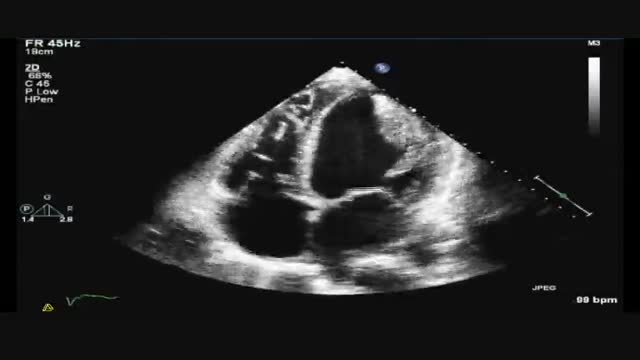 Transesophageal Echocardiogram of a Giant Thrombus in the Left Ventricle6,595 views
 Basic Transthoracic Echocardiogram5,840 views
Guide
What this family is
Cardiology has no single section of its own; its codes live in two places. The tests — ECGs, stress tests, rhythm monitors, and echocardiograms — sit in the Medicine section of the book (the 90000s), organised by test type. The procedures — catheterisations, angioplasty, stents, pacemakers — sit in the surgery section's cardiovascular range. Heart tests also illustrate the split-service idea clearly: an ECG is a recording plus an interpretation, and the code set offers a combined code for when one practice does both, and separate codes for the tracing and the reading when different organisations do them.
The codes in plain language
The cardiology codes patients meet most often:
| Code | In plain language |
|---|---|
| 93000 | A routine 12-lead ECG, including both the recording and the doctor's reading, as one service. |
| 93005 | The ECG recording (tracing) only — used when the tracing and the reading are billed separately. |
| 93010 | The doctor's reading and written report of an ECG only, without the recording part. |
| 93015 | A complete exercise stress test — the test itself, supervision, tracings, and report together. |
| 93224 | Holter monitoring for up to 48 hours: wearing a recorder that captures every heartbeat, including the review afterwards. |
| 93306 | A complete echocardiogram (heart ultrasound) including Doppler and colour-flow imaging. |
| 93308 | A limited or follow-up echocardiogram — a shorter study focused on one question. |
| 93458 | Catheterisation of the left side of the heart, with dye injections and pictures of the coronary arteries. |
| 92928 | Opening a narrowed coronary artery with a balloon and placing a stent to hold it open, via catheter. |
How it shows up on a bill
Heart tests often split into parts on a bill: an ECG may appear as one line, or as separate tracing and reading lines if the hospital and the reading doctor bill apart. An echocardiogram billed by a hospital and read by an outside cardiologist shows the same split, using modifiers 26 and TC. A catheterisation usually generates several lines — the catheter work, the imaging supervision, and any intervention such as a stent — plus the facility's own charges.
Common questions
Why are there complete and limited echocardiogram codes?
A complete study answers the full set of questions — chamber sizes, valve function, pumping strength — while a limited study is a shorter, focused check on one question, often following up a known finding. The limited version has its own code because the work is smaller.
What is the difference between 93000, 93005, and 93010?
93000 covers the whole service in one line. When the machine and the reader belong to different organisations, the parts are split: 93005 for producing the tracing and 93010 for the doctor's interpretation and report.
Why does a catheterisation have so many possible codes?
Heart catheterisation codes describe which chambers were entered, which vessels were injected with dye, and whether an intervention such as a stent was performed. The combination is chosen from the procedure report, which is why one cath lab visit can generate several related codes.
Where can I learn what these heart tests show?
Our ECG & Heart Rhythms section explains the common tracings and rhythm patterns in plain language, and Imaging Explained covers the echocardiogram itself. The codes on your bill tell you which test to look up.
More in Procedures & Treatment
Related
Sources
- CPT® code 93000 lookup (AAPC Codify)
- CPT® codes overview (American Medical Association)
- Physician Fee Schedule (Centers for Medicare & Medicaid Services)
This guide is general information about how medical services are coded, not billing advice and not medical advice. Coding rules change every year and vary between insurers; for a question about your own bill, contact the billing office that sent it or your insurance company, and for coding work, use the current official code books. Cardiology procedures are often billed with the imaging and catheterisation parts described by more than one code; the procedure report is the source document.
CPT® is a registered trademark of the American Medical Association (AMA). The descriptions on this page are plain-language summaries written by MedicalVideos.com in its own words; the official CPT® code descriptions are published by the AMA in the current CPT® code book.