
- Physical Examination
- Surgical Examination
- Ophthalmology
- Clinical Skills
- Orthopedics
- Surgery Videos
- Laparoscopy
- Pediatrics
- Funny Videos
- Cardiothoracic Surgery
- Nursing Videos
- Plastic Surgery
- Otorhinolaryngology
- Histology and Histopathology
- Neurosurgery
- Dermatology
- Pediatric Surgery
- Urology
- Dentistry
- Oncology and Cancers
- Anatomy Videos
- Health and Fitness
- Radiology
- Anaesthesia
- Physical Therapy
- Pharmacology
- Interventional Radiology
- Cardiology
- Endocrinology
- Gynecology
- Emergency Medicine
- Psychiatry and Psychology
- Childbirth Videos
- General Medical Videos
- Nephrology
- Physiology
- Diet and Food Health
- Diabetes Mellitus
- Neurology
- Women Health
- Osteoporosis
- Gastroenterology
- Pulmonology
- Hematology
- Rheumatology
- Toxicology
- Nuclear Medicine
- Infectious Diseases
- Vascular Disease
- Reproductive Health
- Burns and Wound Healing
- Kidney Zone Podcast
- Other
Office Visit Codes (99202–99215)
Office visit codes are the CPT codes a clinic uses to bill for a face-to-face appointment with a doctor or other qualified clinician. The family runs from 99202 to 99215 and splits in two: one set for people the practice has not seen recently (new patients) and one for people it already knows (established patients).
✓ Medically reviewed by Dr. Mohamed Ibrahim, MD, PhD — physician-scientist · Last reviewed: November 2026
Watch: Office Visit Codes (99202–99215) videos
 abdomen physical examination163,971 views
 Physical Examination of the abdomen61,842 views
 General Physical Examination25,592 views
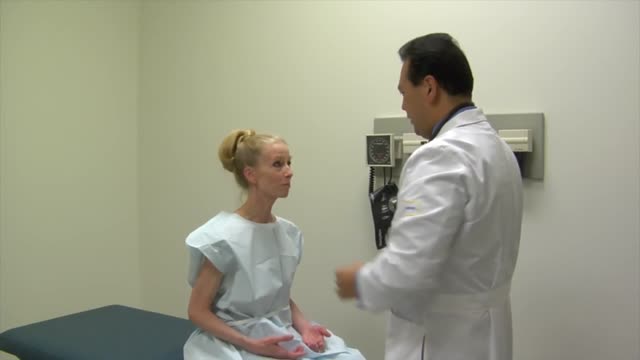 Comprehensive physical examination13,765 views
 Neurology Physical Examination Lecture10,514 views
 Heart and Blood Vessels Physical Examination10,398 views
Guide
What this family is
Almost every appointment in a doctor's office, clinic, or telehealth visit is reported with one of these codes. A patient counts as new if they have not received professional services from that practice (same specialty) in the past three years; everyone else is established. Since 2021, the level within the set is chosen in one of two ways: by the medical decision making involved — how complicated the problems, records, and risks were — or by the total time the clinician spent on the visit that day. The old system of counting history and examination bullet points no longer decides the level, although a medically appropriate history and examination are still part of the visit.
The codes in plain language
The two sets climb the same ladder from a brief, simple problem to a long, complex one. In plain language, the rungs look like this:
| Code | In plain language |
|---|---|
| 99202 | A straightforward first visit with a new patient, for a simple problem. |
| 99203 | A low-complexity first visit with a new patient. |
| 99204 | A moderately complex first visit with a new patient, such as several problems or new records to review. |
| 99205 | The most complex first visit with a new patient — serious or multiple problems needing detailed decisions. |
| 99211 | A very brief established-patient visit that may not need the doctor in the room, such as a nurse-led check. |
| 99212 | A short, straightforward visit for an established patient. |
| 99213 | A mid-level established-patient visit — for example, reviewing a stable ongoing problem or a new minor one. |
| 99214 | A more detailed established-patient visit, such as managing a worsening condition or starting a new treatment plan. |
| 99215 | The most complex established-patient visit — high-level decisions, significant risk, or a long appointment. |
How it shows up on a bill
On a bill or EOB, an office visit appears as a single line with the five-digit code, the date, and the place of service. If the visit included a separate procedure — an injection, a minor procedure, a vaccination — that has its own code on its own line, sometimes with a modifier such as 25 attached to the visit code to show the visit was separate from the procedure. Two lines for one appointment are normal when two distinct services happened.
Common questions
Why was my short visit billed at a high level?
Since 2021 the level can be set by medical decision making rather than minutes, so a short visit about a serious or complicated problem can legitimately be coded higher than a long visit about a simple one. The clinician's note has to support the level chosen.
What is the difference between a new and an established patient?
A new patient has not received professional services from that clinician, or another clinician of the same specialty in the same practice, within the past three years. Everyone else is an established patient, and the established-patient codes generally describe slightly shorter visits at each level.
Can an office visit code be used for a video or phone visit?
Yes — office visit codes are also used for many telehealth appointments, with the claim marked to show the visit happened remotely. Which remote visits qualify depends on the insurer's current rules, which have changed several times in recent years.
Why are there two codes on my bill for one appointment?
One line is usually the visit itself and the other a separate service done the same day, such as a test, injection, or minor procedure. Each distinct service has its own code, and a modifier may be added to show the visit stood on its own.
More in Everyday Visits
Related
Sources
- CPT® code 99213 lookup (AAPC Codify)
- CPT® codes overview (American Medical Association)
- Physician Fee Schedule (Centers for Medicare & Medicaid Services)
- Health Insurance (MedlinePlus)
This guide is general information about how medical services are coded, not billing advice and not medical advice. Coding rules change every year and vary between insurers; for a question about your own bill, contact the billing office that sent it or your insurance company, and for coding work, use the current official code books. The level billed for any specific visit depends on the clinician's documentation and the insurer's current rules.
CPT® is a registered trademark of the American Medical Association (AMA). The descriptions on this page are plain-language summaries written by MedicalVideos.com in its own words; the official CPT® code descriptions are published by the AMA in the current CPT® code book.