
- Physical Examination
- Surgical Examination
- Ophthalmology
- Clinical Skills
- Orthopedics
- Surgery Videos
- Laparoscopy
- Pediatrics
- Funny Videos
- Cardiothoracic Surgery
- Nursing Videos
- Plastic Surgery
- Otorhinolaryngology
- Histology and Histopathology
- Neurosurgery
- Dermatology
- Pediatric Surgery
- Urology
- Dentistry
- Oncology and Cancers
- Anatomy Videos
- Health and Fitness
- Radiology
- Anaesthesia
- Physical Therapy
- Pharmacology
- Interventional Radiology
- Cardiology
- Endocrinology
- Gynecology
- Emergency Medicine
- Psychiatry and Psychology
- Childbirth Videos
- General Medical Videos
- Nephrology
- Physiology
- Diet and Food Health
- Diabetes Mellitus
- Neurology
- Women Health
- Osteoporosis
- Gastroenterology
- Pulmonology
- Hematology
- Rheumatology
- Toxicology
- Nuclear Medicine
- Infectious Diseases
- Vascular Disease
- Reproductive Health
- Burns and Wound Healing
- Kidney Zone Podcast
- Other
Heart Block (AV Block)
Heart block is a delay or interruption of the electrical signal between the heart's upper and lower chambers, graded from first-degree to complete. This page explains how each degree looks on an ECG, what causes it, and when a pacemaker is considered, in plain language with videos.
✓ Medically reviewed by Dr. Mohamed Ibrahim, MD, PhD — physician-scientist · Last reviewed: November 2026
Watch: Heart Block (AV Block) videos
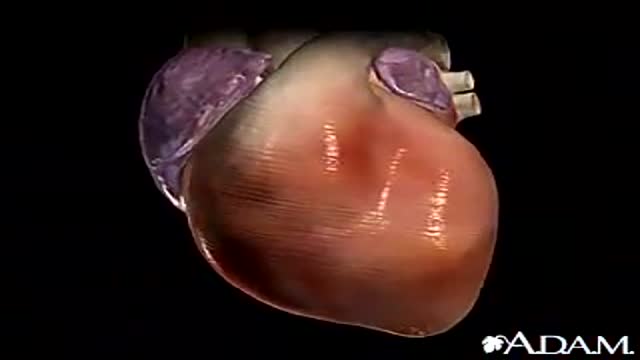 Cardiac Arrhythmia17,801 views
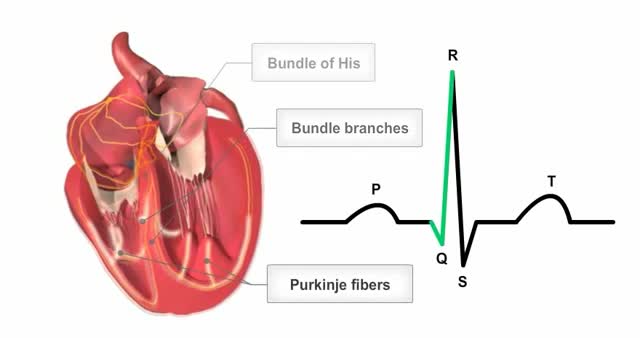 Cardiac conduction system and ECG12,984 views
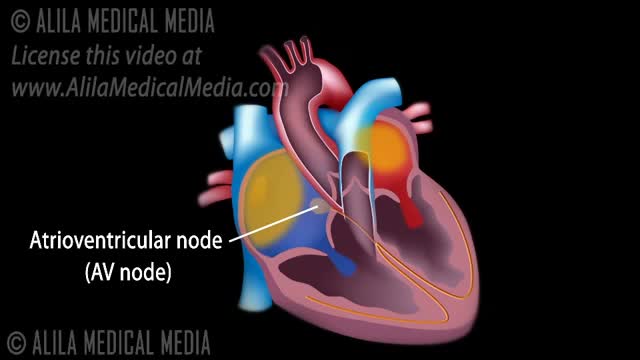 Cardiac Conduction System8,120 views
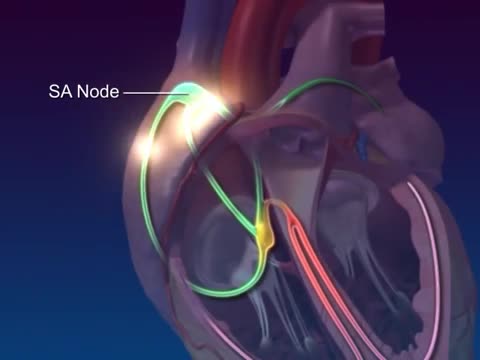 Heart Conduction System8,072 views
Guide
What it is
Heart block means the electrical signal from the upper chambers is delayed or stopped on its way through the AV node, the junction that normally passes each impulse to the lower chambers. It is graded by how much gets through. In first-degree block every signal arrives, just late. In second-degree block some signals fail to get through, so beats are dropped. In third-degree — complete — heart block, nothing gets through, and the lower chambers rely on a slow backup rhythm of their own. Despite the name, it has nothing to do with blocked arteries.
What the tracing shows
First-degree block is the simplest pattern: the PR interval measures longer than 0.20 seconds, but every P wave is still followed by a QRS. In second-degree block, some P waves are not followed by a QRS at all — beats are dropped. In one pattern the PR gap lengthens beat by beat until a beat drops (Mobitz type I, or Wenckebach); in another the beats drop suddenly without warning (Mobitz type II). In third-degree, or complete, heart block no signals get through: P waves and QRS complexes march on independently at their own rates, and the pulse is slow.
What it can mean
The degree of block guides what happens next. First-degree block, without symptoms, often needs no treatment, though the cause is checked. Some second-degree patterns — especially Mobitz type II — are watched closely or treated with a pacemaker because they can progress without warning. Complete heart block usually needs a pacemaker, because relying on slow backup rhythms risks fainting and worse. At any degree, the team looks for causes: medicines that slow conduction, low or high blood salts, an underactive thyroid, or damage from a heart attack.
When it is urgent
Heart block with fainting, severe dizziness, breathlessness, or chest pain is an emergency, and complete heart block usually needs hospital treatment and pacing. Even without symptoms, newly found Mobitz type II or complete block should be assessed urgently rather than at a routine appointment. If you take rate-slowing medicines and develop new dizziness or fainting, seek advice the same day. Carry an up-to-date medicine list — it is one of the first things the team will check when heart block appears on a tracing.
Common questions
What is first-degree heart block on an ECG?
First-degree block is a PR interval longer than 0.20 seconds — every signal still gets through, just delayed. Alone, and without symptoms, it often needs no treatment, though it is recorded and sometimes monitored.
What is the difference between Mobitz type I and type II?
Mobitz type II is the concerning form of second-degree block because the dropped beats occur suddenly, without the PR interval lengthening first, and it can progress to complete block. It usually needs specialist assessment and often a pacemaker.
How is complete heart block treated?
Complete heart block is usually treated with a pacemaker, which takes over pacing the lower chambers reliably. Temporary pacing may be used first in an emergency.
Can medicines cause heart block?
Yes. Beta blockers, some calcium-channel blockers, and digoxin can slow conduction through the AV node and cause or worsen block. Doctors review medicines whenever heart block is found — do not stop them on your own.
More in Blocks & Conduction
Related
Sources
- Heart block (MedlinePlus Medical Encyclopedia)
- Heart block (NHS)
- Pacemakers and Implantable Defibrillators (MedlinePlus)
- Heart Arrhythmia (MedlinePlus)
This guide is general information, not medical advice, and does not replace advice from your own clinician. ECG patterns should always be interpreted in context by a trained professional. If you have chest pain, severe breathlessness, fainting or a racing heartbeat that will not settle, seek urgent medical care. Heart block found on an ECG needs clinical assessment; whether it needs treatment depends on the degree, symptoms, and cause.