
- Physical Examination
- Surgical Examination
- Ophthalmology
- Clinical Skills
- Orthopedics
- Surgery Videos
- Laparoscopy
- Pediatrics
- Funny Videos
- Cardiothoracic Surgery
- Nursing Videos
- Plastic Surgery
- Otorhinolaryngology
- Histology and Histopathology
- Neurosurgery
- Dermatology
- Pediatric Surgery
- Urology
- Dentistry
- Oncology and Cancers
- Anatomy Videos
- Health and Fitness
- Radiology
- Anaesthesia
- Physical Therapy
- Pharmacology
- Interventional Radiology
- Cardiology
- Endocrinology
- Gynecology
- Emergency Medicine
- Psychiatry and Psychology
- Childbirth Videos
- General Medical Videos
- Nephrology
- Physiology
- Diet and Food Health
- Diabetes Mellitus
- Neurology
- Women Health
- Osteoporosis
- Gastroenterology
- Pulmonology
- Hematology
- Rheumatology
- Toxicology
- Nuclear Medicine
- Infectious Diseases
- Vascular Disease
- Reproductive Health
- Burns and Wound Healing
- Kidney Zone Podcast
- Other
Bundle Branch Blocks (RBBB and LBBB)
Bundle branch blocks happen when one of the heart's two electrical lanes to the ventricles is delayed, widening the QRS complex in a recognisable pattern. This page explains right and left bundle branch block, what they look like on an ECG, and when they matter, in plain language with videos.
✓ Medically reviewed by Dr. Mohamed Ibrahim, MD, PhD — physician-scientist · Last reviewed: November 2026
Watch: Bundle Branch Blocks (RBBB and LBBB) videos
 How to read ECG Part 176,124 views
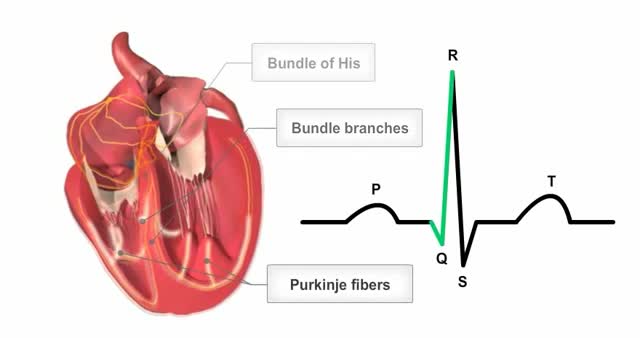 Cardiac conduction system and ECG12,984 views
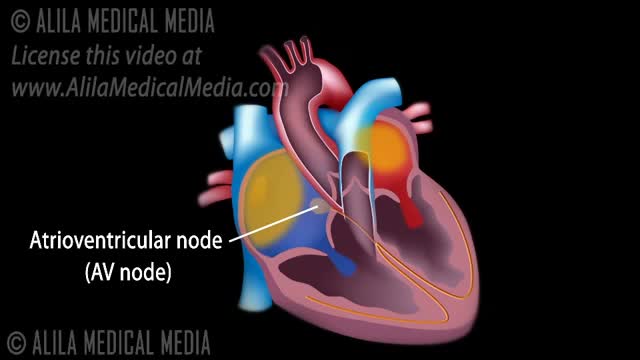 Cardiac Conduction System8,120 views
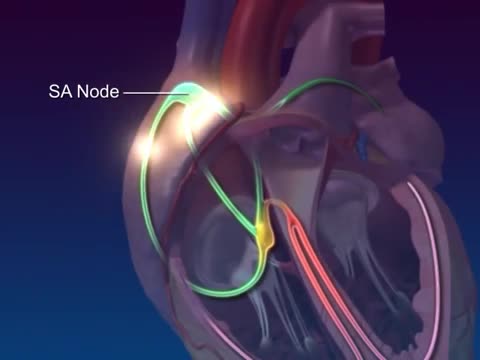 Heart Conduction System8,072 views
Guide
What it is
Below the AV node, the electrical signal normally splits into two fast lanes — the right and left bundle branches — so both ventricles activate together. If one lane is blocked or slow, its ventricle has to be activated the slow way, cell by cell from the other side, which takes longer and changes the ECG pattern. A block in the right lane is right bundle branch block (RBBB); in the left lane, left bundle branch block (LBBB). The signal still gets through — this is a detour, not a dead end.
What the tracing shows
In both blocks the QRS complex measures 0.12 seconds or wider. Beyond that, the shapes differ. In right bundle branch block, lead V1 typically shows a distinctive double-peaked pattern, sometimes described as rabbit ears, because the right ventricle finishes last. In left bundle branch block the QRS is broad and notched in the side leads, and the ST segment and T wave point in the opposite direction to the main QRS deflection — an expected part of the pattern, not necessarily damage. Clinicians identify which block it is from the combination of width and shape across the leads.
What it can mean
The two blocks are not equal. Right bundle branch block is a common incidental finding in healthy people and often needs nothing beyond documentation. Left bundle branch block is more often associated with underlying heart disease — high blood pressure, coronary disease, valve disease, or a weakened heart muscle — so it usually triggers further assessment, such as an echocardiogram. A brand-new bundle branch block appearing with chest pain is treated seriously, and left bundle branch block can also make heart-attack patterns harder to read on the ECG.
When it is urgent
Seek urgent help for a new bundle branch block found alongside chest pain, severe breathlessness, or fainting — the combination can signal a heart attack or serious heart disease. If a bundle branch block is reported on a routine tracing and you feel well, it still deserves timely follow-up rather than being filed away, particularly left bundle branch block or a pattern that is new compared with older tracings. Mention it at future medical encounters, including before operations, because it changes how later ECGs are interpreted.
Common questions
Is right bundle branch block serious?
Right bundle branch block is often an incidental finding in otherwise healthy people and may need no treatment. Left bundle branch block is more often linked with underlying heart disease, so it usually prompts further assessment.
Why does left bundle branch block matter in heart failure?
In left bundle branch block the left ventricle is activated late and out of sequence, which can make the heart's pumping less coordinated. In people with heart failure, a special pacemaker that paces both ventricles can help resynchronise them.
Why does the QRS get wide in bundle branch block?
Bundle branch block widens the QRS complex to 0.12 seconds or more, because one ventricle is activated cell-to-cell instead of through the fast conduction fibres. The wider the delay, the wider the complex.
Can bundle branch block hide a heart attack on the ECG?
Yes. Left bundle branch block changes the whole ECG pattern so much that the usual ST-segment signs of heart attack are hidden. Clinicians use additional criteria and blood tests, and treat suspicious symptoms on their merits.
More in Blocks & Conduction
Related
Sources
- Heart block (MedlinePlus Medical Encyclopedia)
- Heart block (NHS)
- Heart Arrhythmia (MedlinePlus)
- Electrocardiogram (MedlinePlus Medical Encyclopedia)
This guide is general information, not medical advice, and does not replace advice from your own clinician. ECG patterns should always be interpreted in context by a trained professional. If you have chest pain, severe breathlessness, fainting or a racing heartbeat that will not settle, seek urgent medical care. A bundle branch block is an ECG pattern with several possible causes; its significance depends on symptoms, heart health, and whether it is new.