- Physical Examination
- Surgical Examination
- Ophthalmology
- Clinical Skills
- Orthopedics
- Surgery Videos
- Laparoscopy
- Pediatrics
- Funny Videos
- Cardiothoracic Surgery
- Nursing Videos
- Plastic Surgery
- Otorhinolaryngology
- Histology and Histopathology
- Neurosurgery
- Dermatology
- Pediatric Surgery
- Urology
- Dentistry
- Oncology and Cancers
- Anatomy Videos
- Health and Fitness
- Radiology
- Anaesthesia
- Physical Therapy
- Pharmacology
- Interventional Radiology
- Cardiology
- Endocrinology
- Gynecology
- Emergency Medicine
- Psychiatry and Psychology
- Childbirth Videos
- General Medical Videos
- Nephrology
- Physiology
- Diet and Food Health
- Diabetes Mellitus
- Neurology
- Women Health
- Osteoporosis
- Gastroenterology
- Pulmonology
- Hematology
- Rheumatology
- Toxicology
- Nuclear Medicine
- Infectious Diseases
- Vascular Disease
- Reproductive Health
- Burns and Wound Healing
- Kidney Zone Podcast
- Other
Chemicals in the Eye — First Aid
What to do
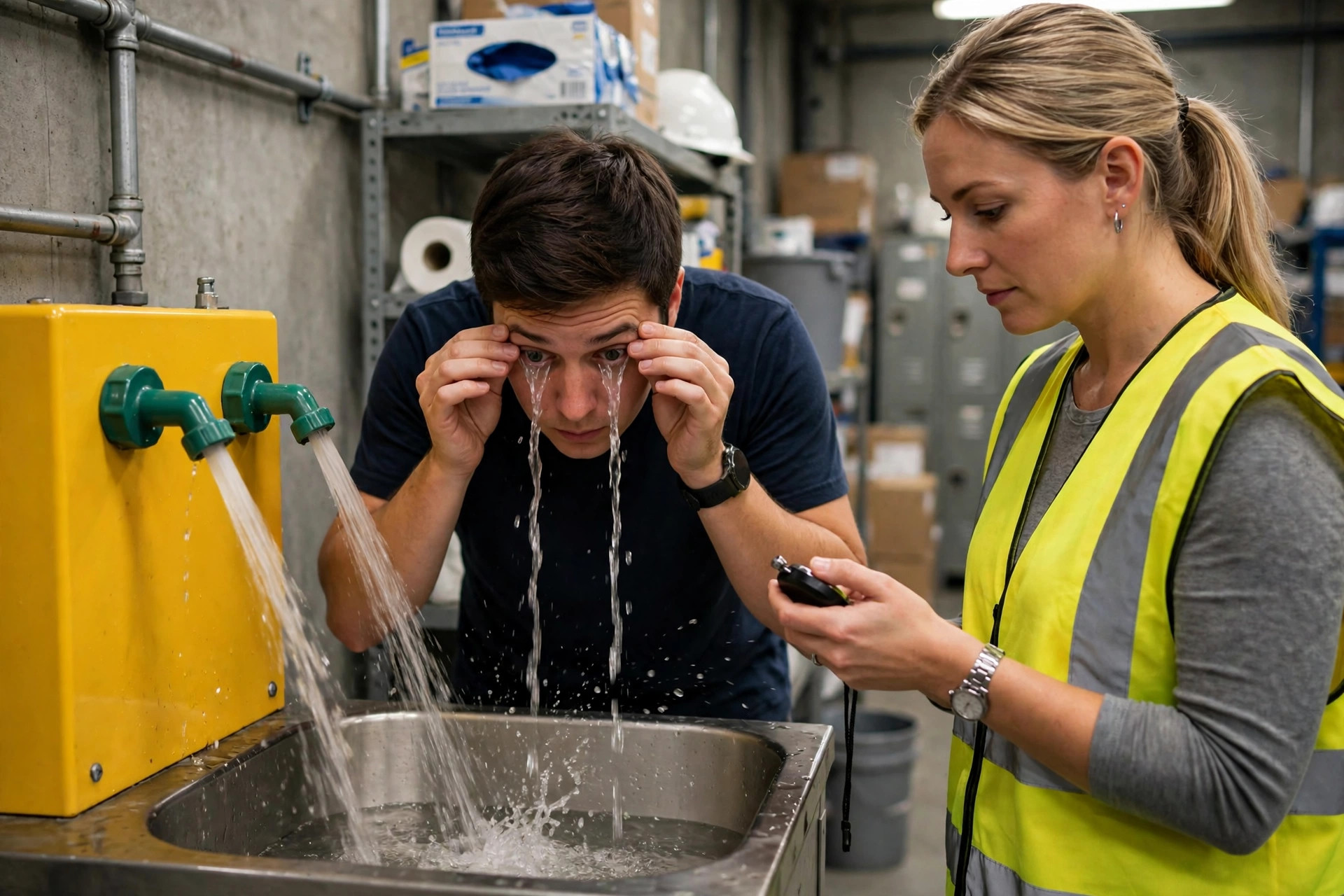
- Start rinsing immediately — seconds count. Hold the eyelids open and pour or run clean, lukewarm water over the eye continuously for at least 15 to 20 minutes. At work, use the eyewash station.
- Direct the flow so water runs from the inner corner of the eye outwards and away from the uninjured eye, so you do not wash chemical across.
- Remove contact lenses during rinsing if they come out easily — do not delay starting the water to remove them.
- Call 911 or arrange emergency transport while rinsing continues; if someone else is present, have them call. Take the chemical container or its name with you if safe.
- Keep rinsing during transport if you can do so safely (a bottle of water or saline held over the eye).
- Do not try to neutralise the chemical with another substance, and do not rub the eye.
What NOT to do
- Do not delay rinsing to find special solutions — tap water is fine and fastest.
- Do not stop rinsing after a minute or two — chemical eye burns need prolonged irrigation.
- Do not let the person rub or squeeze the eye shut against the water flow.
- Do not apply eye drops or ointments unless directed by medical staff.
When to get medical care
Every chemical eye injury needs emergency assessment after rinsing, especially alkalis (oven cleaner, cement, plaster, ammonia) which penetrate deeply, and any injury with pain, redness, blurred vision or light sensitivity. Call 911 or go straight to emergency care — take the product details with you.
Related symptoms
Frequently asked questions
How long should I rinse a chemical out of an eye?
At least 15 to 20 minutes of continuous gentle flow, and longer for strong chemicals — hospital teams often continue irrigation and check the eye's pH. Longer rinsing at the scene genuinely improves outcomes, so do not cut it short.
Is tap water safe for rinsing eyes?
Yes. In an emergency, clean tap water or sterile saline are both appropriate; speed matters more than the exact fluid. Lukewarm water is most comfortable, which helps the person keep the eye open and rinsing continue.
In an emergency, call 911 (or your local emergency number) first — do not delay a call to read a guide. These pages are educational first-aid information in general terms; they are not a substitute for emergency services, first-aid training, or assessment by a qualified clinician.