- Physical Examination
- Surgical Examination
- Ophthalmology
- Clinical Skills
- Orthopedics
- Surgery Videos
- Laparoscopy
- Pediatrics
- Funny Videos
- Cardiothoracic Surgery
- Nursing Videos
- Plastic Surgery
- Otorhinolaryngology
- Histology and Histopathology
- Neurosurgery
- Dermatology
- Pediatric Surgery
- Urology
- Dentistry
- Oncology and Cancers
- Anatomy Videos
- Health and Fitness
- Radiology
- Anaesthesia
- Physical Therapy
- Pharmacology
- Interventional Radiology
- Cardiology
- Endocrinology
- Gynecology
- Emergency Medicine
- Psychiatry and Psychology
- Childbirth Videos
- General Medical Videos
- Nephrology
- Physiology
- Diet and Food Health
- Diabetes Mellitus
- Neurology
- Women Health
- Osteoporosis
- Gastroenterology
- Pulmonology
- Hematology
- Rheumatology
- Toxicology
- Nuclear Medicine
- Infectious Diseases
- Vascular Disease
- Reproductive Health
- Burns and Wound Healing
- Kidney Zone Podcast
- Other
Head Injury and Concussion — First Aid
What to do
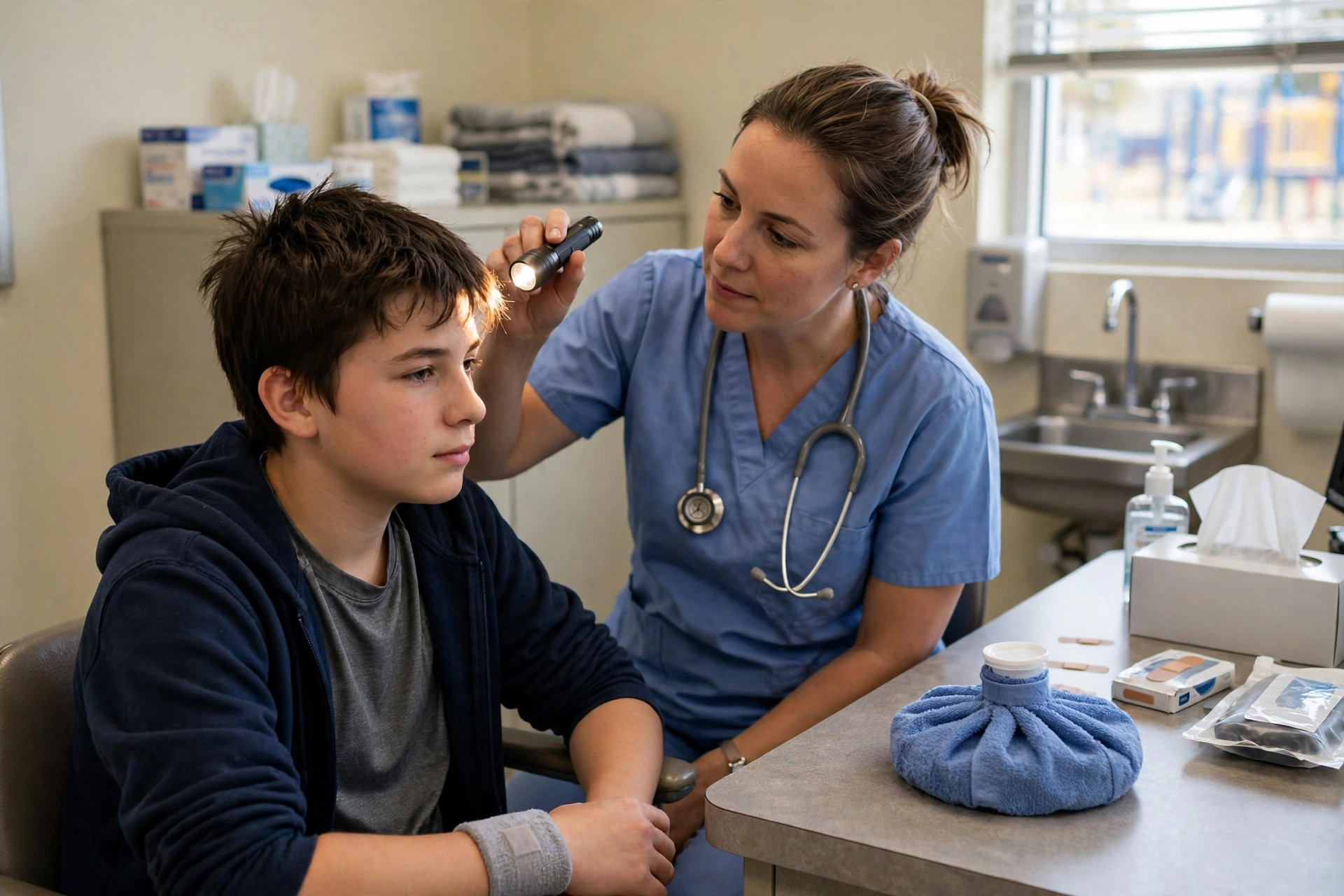
- Stop the activity at once. Anyone with a suspected concussion must come out of play and not return the same day.
- Call 911 if the person was knocked out, is drowsy or confused, vomits repeatedly, has a seizure, a worsening headache, slurred speech, weakness, unequal pupils, clear fluid from the nose or ear, or the injury involved a major force.
- If they are unresponsive but breathing, place them in the recovery position (protecting the neck if a spinal injury is possible) and monitor breathing. If not breathing normally, start CPR.
- Treat any scalp wound with firm pressure from a clean dressing — scalp wounds bleed heavily (see Scalp and Head Wounds). Apply a wrapped cold pack to a bump for short periods.
- Rest the person quietly. Someone responsible should stay with them for the next 24 hours, waking them if advised by medical staff, and watch for worsening symptoms — head injuries can deteriorate over hours.
- For the first day or two, favour rest, regular simple pain relief as directed on the packet, and no alcohol, sedatives, driving, contact sport or screens that worsen symptoms.
What NOT to do
- Do not send a person with a head injury off alone or let them drive.
- Do not let a concussed player return to the game 'to see how they feel'.
- Do not give sedatives or sleeping tablets unless prescribed — they mask deterioration.
- Do not ignore worsening symptoms because the person 'seemed fine at first'.
When to get medical care
Call 911 immediately for loss of consciousness, repeated vomiting, seizure, increasing drowsiness or confusion, weakness or clumsiness, slurred speech, unequal pupils, clear fluid or blood from the nose or ears, a severe or worsening headache, or any head injury in a baby. Get same-day assessment for any significant blow, anyone on blood-thinning medication, and children under 2 with a scalp swelling or behaviour change.
Related procedures & tests
Related symptoms
Frequently asked questions
What are the signs of concussion?
Headache, dizziness, 'fogginess', nausea, balance problems, sensitivity to light or noise, difficulty concentrating, memory gaps around the event, and feeling unusually emotional or sleepy. Loss of consciousness happens in only a minority of concussions — most people stay awake.
How long should someone rest after a concussion?
After 24 to 48 hours of relative rest, a gradual return to light activity and then normal routines is usually advised, stepping back if symptoms flare. Full return to contact sport should follow a staged plan and medical clearance, especially for children and teenagers.
In an emergency, call 911 (or your local emergency number) first — do not delay a call to read a guide. These pages are educational first-aid information in general terms; they are not a substitute for emergency services, first-aid training, or assessment by a qualified clinician.