- Physical Examination
- Surgical Examination
- Ophthalmology
- Clinical Skills
- Orthopedics
- Surgery Videos
- Laparoscopy
- Pediatrics
- Funny Videos
- Cardiothoracic Surgery
- Nursing Videos
- Plastic Surgery
- Otorhinolaryngology
- Histology and Histopathology
- Neurosurgery
- Dermatology
- Pediatric Surgery
- Urology
- Dentistry
- Oncology and Cancers
- Anatomy Videos
- Health and Fitness
- Radiology
- Anaesthesia
- Physical Therapy
- Pharmacology
- Interventional Radiology
- Cardiology
- Endocrinology
- Gynecology
- Emergency Medicine
- Psychiatry and Psychology
- Childbirth Videos
- General Medical Videos
- Nephrology
- Physiology
- Diet and Food Health
- Diabetes Mellitus
- Neurology
- Women Health
- Osteoporosis
- Gastroenterology
- Pulmonology
- Hematology
- Rheumatology
- Toxicology
- Nuclear Medicine
- Infectious Diseases
- Vascular Disease
- Reproductive Health
- Burns and Wound Healing
- Kidney Zone Podcast
- Other
The Recovery Position
What to do
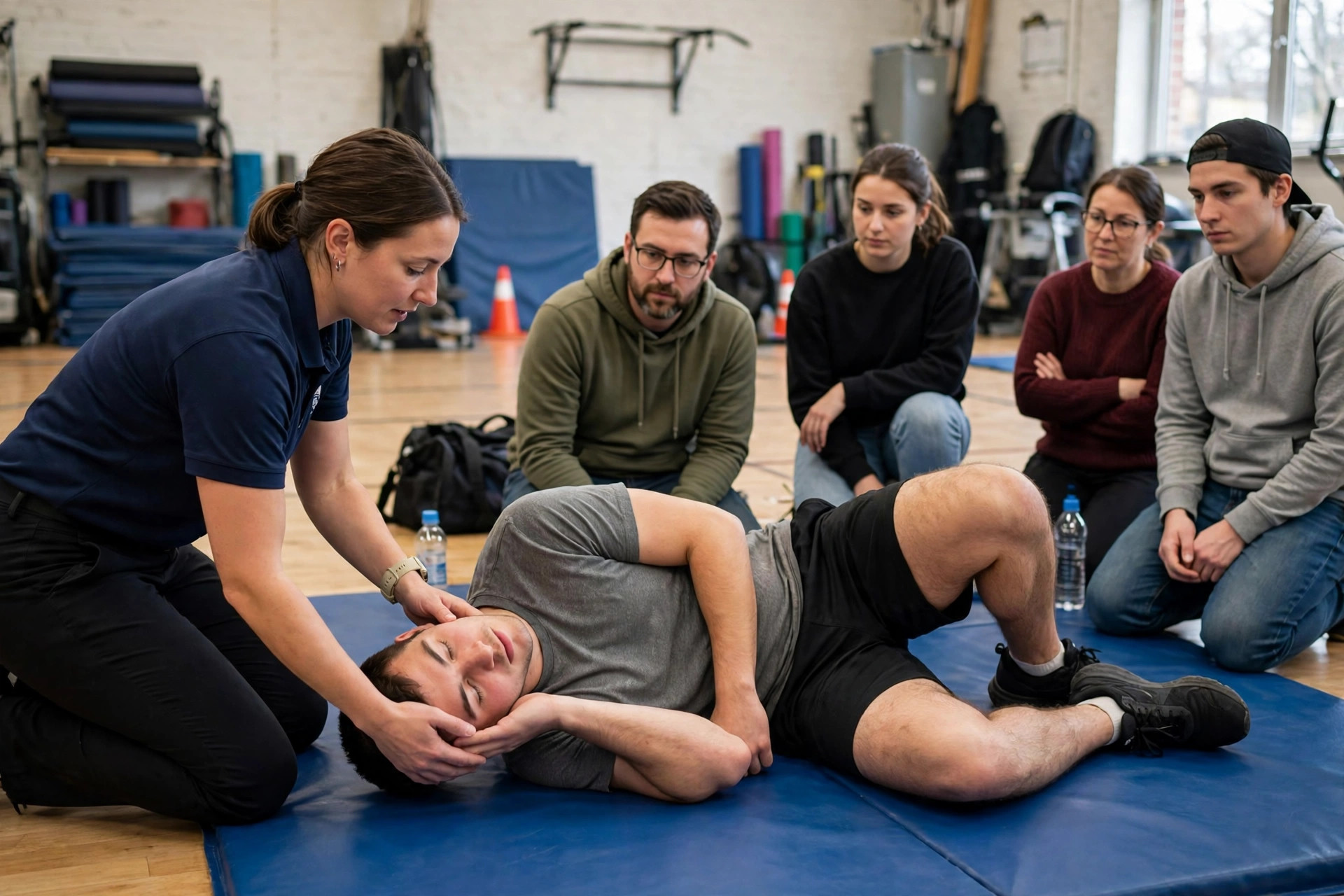
- The recovery position is for a person who is unresponsive but breathing normally. First call 911 if you have not already, and check there are no injuries that make moving them dangerous (if you suspect a spinal injury, only move them if their airway is at risk).
- Remove glasses and anything bulky from their pockets. Kneel beside them and straighten both legs.
- Place the arm nearest you at a right angle to the body, elbow bent, palm up.
- Bring the far arm across the chest and hold the back of their hand against the cheek nearest you.
- With your other hand, pull the far knee up so the foot is flat on the ground, then roll the person towards you onto their side, keeping their hand pressed to their cheek.
- Tilt the head back slightly to keep the airway open, adjust the top leg so hip and knee are bent at right angles, and check breathing regularly until help arrives.
What NOT to do
- Do not use the recovery position for someone who is not breathing — they need CPR.
- Do not leave the person unchecked: breathing can stop, so re-check every few minutes.
- Do not place anything in the mouth or give food or drink.
- Do not delay calling 911 to arrange the position — call first or use speakerphone.
When to get medical care
Always call 911 for anyone who is unresponsive, even if they are breathing. If breathing stops or becomes abnormal at any point, roll the person onto their back and start CPR. A pregnant person in late pregnancy is best placed on their left side.
Related symptoms
Watch: related videos
Frequently asked questions
Why put someone on their side?
On their side, the tongue falls forward rather than blocking the airway, and vomit or fluid drains out of the mouth instead of into the lungs. It keeps the airway safer while you wait for help.
How often should I check on them?
Continuously watch if you can, and formally re-check breathing every few minutes. If you must leave to get help or an AED, go quickly and return straight away.
In an emergency, call 911 (or your local emergency number) first — do not delay a call to read a guide. These pages are educational first-aid information in general terms; they are not a substitute for emergency services, first-aid training, or assessment by a qualified clinician.