- Physical Examination
- Surgical Examination
- Ophthalmology
- Clinical Skills
- Orthopedics
- Surgery Videos
- Laparoscopy
- Pediatrics
- Funny Videos
- Cardiothoracic Surgery
- Nursing Videos
- Plastic Surgery
- Otorhinolaryngology
- Histology and Histopathology
- Neurosurgery
- Dermatology
- Pediatric Surgery
- Urology
- Dentistry
- Oncology and Cancers
- Anatomy Videos
- Health and Fitness
- Radiology
- Anaesthesia
- Physical Therapy
- Pharmacology
- Interventional Radiology
- Cardiology
- Endocrinology
- Gynecology
- Emergency Medicine
- Psychiatry and Psychology
- Childbirth Videos
- General Medical Videos
- Nephrology
- Physiology
- Diet and Food Health
- Diabetes Mellitus
- Neurology
- Women Health
- Osteoporosis
- Gastroenterology
- Pulmonology
- Hematology
- Rheumatology
- Toxicology
- Nuclear Medicine
- Infectious Diseases
- Vascular Disease
- Reproductive Health
- Burns and Wound Healing
- Kidney Zone Podcast
- Other
CPR for Adults
What to do
- Check the scene is safe, then check for a response: shout at the person and shake their shoulders firmly.
- If there is no response, shout for help and call 911 (or your local emergency number), or ask a bystander to call. Send someone for an AED if one is nearby.
- Open the airway: tilt the head back and lift the chin. Look, listen and feel for normal breathing for no more than 10 seconds. Occasional gasps are not normal breathing.
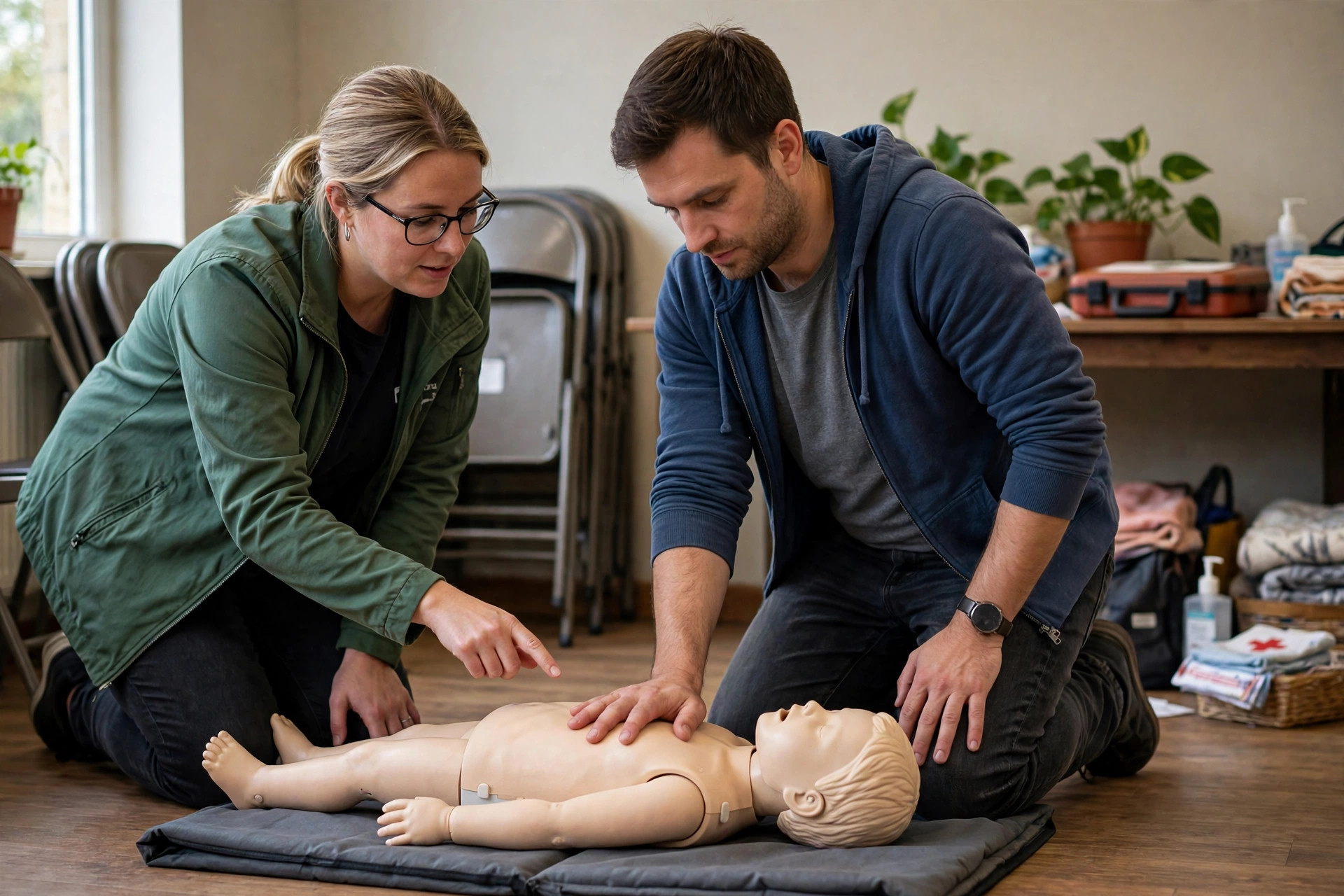
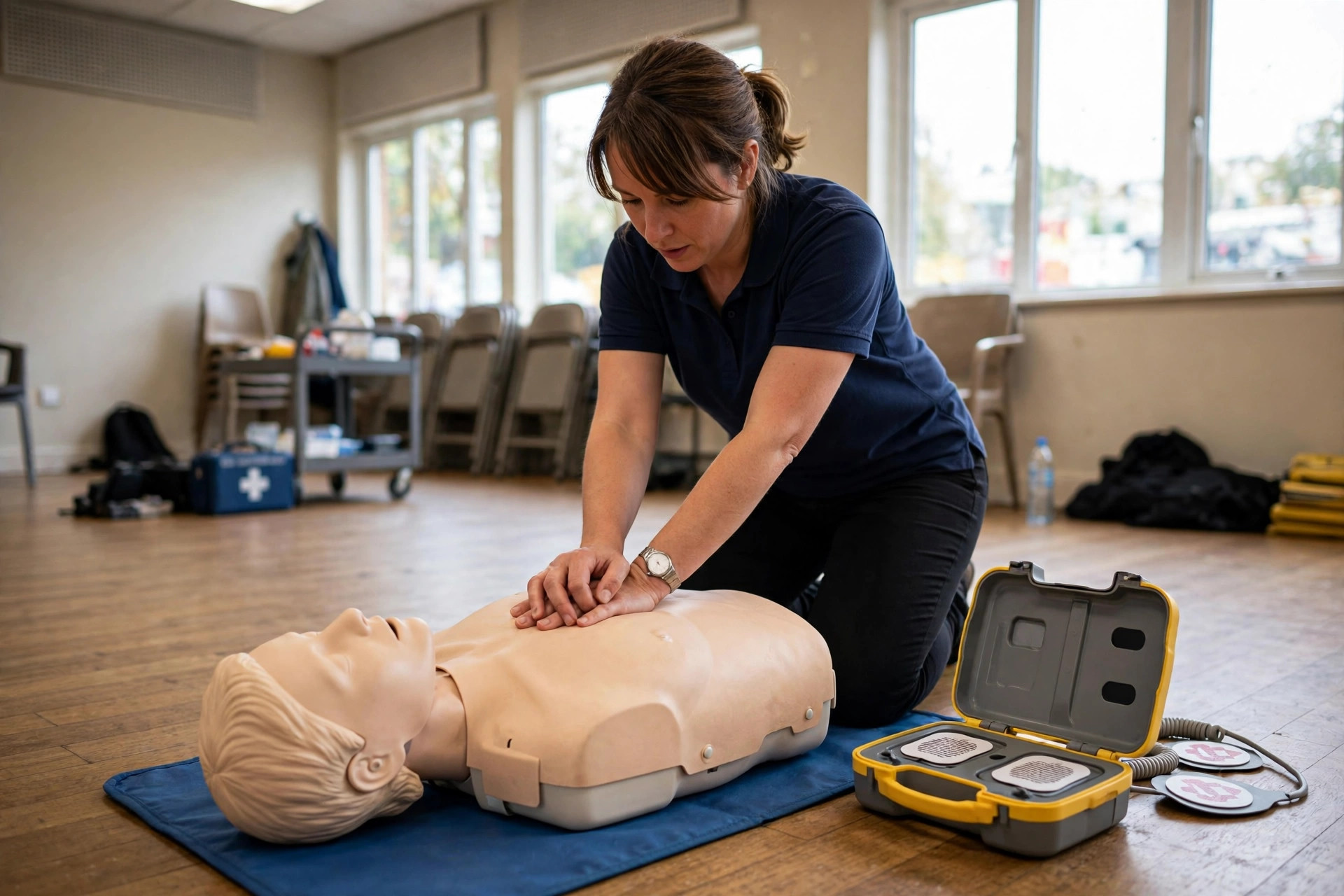
- If the person is not breathing normally, start chest compressions: kneel beside the chest, place the heel of one hand in the centre of the chest with the other hand on top, interlock your fingers, and keep your arms straight.
- Push hard and fast: press down about 2 inches (5 cm) and let the chest come fully back up, at a rate of 100 to 120 compressions a minute (roughly to the beat of 'Stayin' Alive').
- If you are trained and willing, give 2 rescue breaths after every 30 compressions. If not, continuous compressions are fine — do not stop to attempt breaths.
- Keep going until emergency help arrives and takes over, the person starts breathing normally, or you are too exhausted to continue. If an AED arrives, switch it on and follow its voice prompts.
What NOT to do
- Do not delay compressions to check a pulse — if the person is unresponsive and not breathing normally, start CPR.
- Do not stop compressions for more than a few seconds at a time.
- Do not press on the stomach or the lower tip of the breastbone — hands belong in the centre of the chest.
- Do not give up just because the person gasps occasionally — gasping is a sign to start or continue CPR.
When to get medical care
Call 911 immediately for any unresponsive adult who is not breathing normally. After any resuscitation the person needs hospital assessment, even if they seem to recover. If the person starts breathing normally before help arrives, place them in the recovery position and keep checking their breathing.
Related conditions
Related procedures & tests
Related symptoms
Watch: related videos
Frequently asked questions
How deep and fast should adult chest compressions be?
Press down about 2 inches (5 cm) on the centre of the chest and let it recoil fully, at 100 to 120 compressions per minute. Pushing hard and fast with minimal interruptions gives the person the best chance.
Can I hurt someone by doing CPR?
Broken ribs can happen with good CPR, but a person who is not breathing will not survive without it. The risk of doing nothing is far greater — start compressions and let the emergency team take over when they arrive.
In an emergency, call 911 (or your local emergency number) first — do not delay a call to read a guide. These pages are educational first-aid information in general terms; they are not a substitute for emergency services, first-aid training, or assessment by a qualified clinician.