- Physical Examination
- Surgical Examination
- Ophthalmology
- Clinical Skills
- Orthopedics
- Surgery Videos
- Laparoscopy
- Pediatrics
- Funny Videos
- Cardiothoracic Surgery
- Nursing Videos
- Plastic Surgery
- Otorhinolaryngology
- Histology and Histopathology
- Neurosurgery
- Dermatology
- Pediatric Surgery
- Urology
- Dentistry
- Oncology and Cancers
- Anatomy Videos
- Health and Fitness
- Radiology
- Anaesthesia
- Physical Therapy
- Pharmacology
- Interventional Radiology
- Cardiology
- Endocrinology
- Gynecology
- Emergency Medicine
- Psychiatry and Psychology
- Childbirth Videos
- General Medical Videos
- Nephrology
- Physiology
- Diet and Food Health
- Diabetes Mellitus
- Neurology
- Women Health
- Osteoporosis
- Gastroenterology
- Pulmonology
- Hematology
- Rheumatology
- Toxicology
- Nuclear Medicine
- Infectious Diseases
- Vascular Disease
- Reproductive Health
- Burns and Wound Healing
- Kidney Zone Podcast
- Other
Strangulation — First Aid and Why Hospital Matters

What to do
- If an assault or entrapment is still in progress, prioritise safety: call 911 (or the police/emergency number) and do not put yourself at risk.
- Remove anything still compressing the neck only if it can be done quickly and safely, taking care not to move the neck more than necessary.
- Call 911 even if the person says they feel fine — airway swelling and other injuries from neck compression can develop over hours.
- Keep the person still and calm, sitting in whatever position makes breathing easiest. Loosen anything tight around the neck.
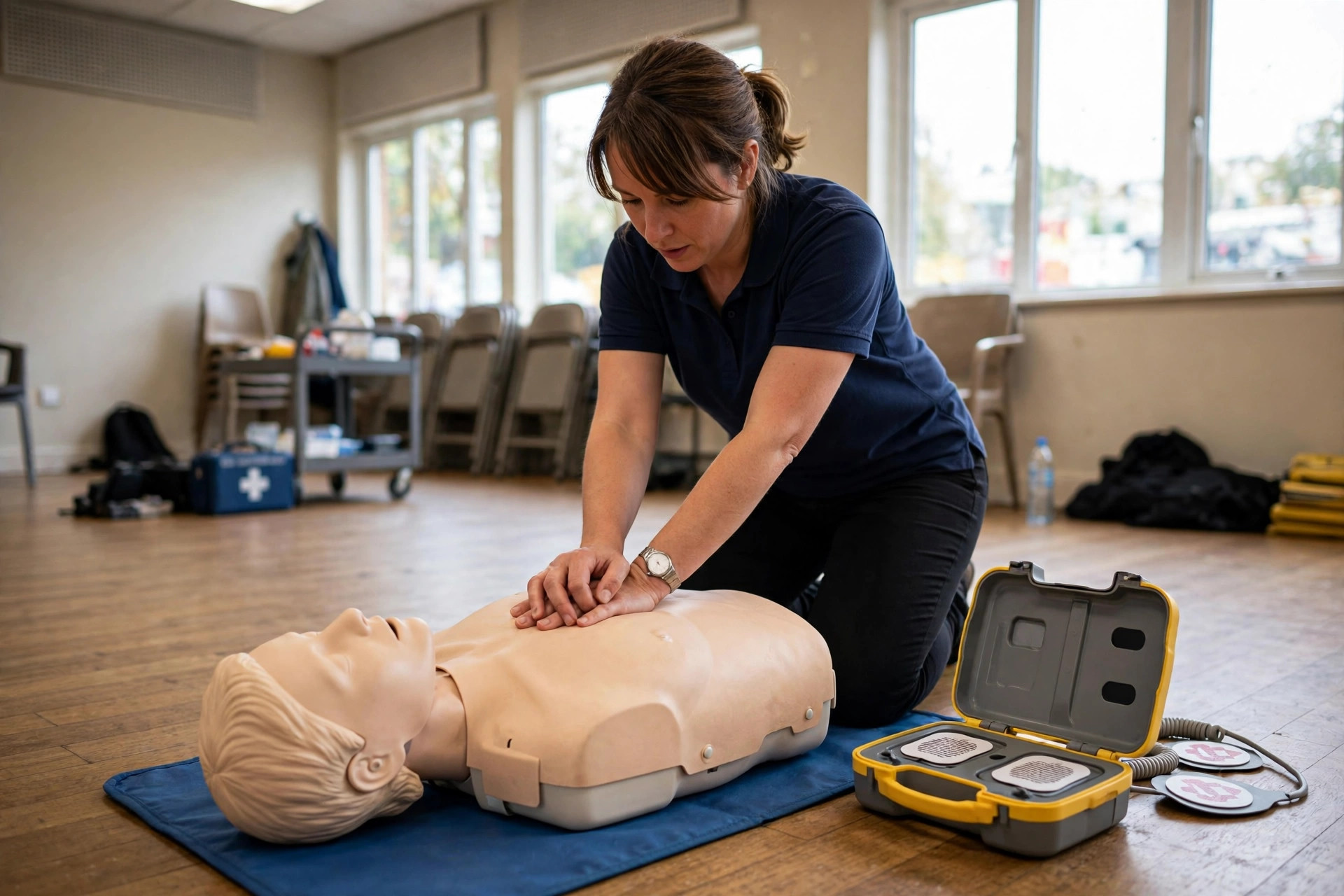
- Watch breathing closely. If they become unresponsive and stop breathing normally, start CPR.
- Stay with the person until help arrives, and tell the responders exactly what happened and for roughly how long the neck was compressed.
What NOT to do
- Do not assume 'they seem okay now' means they are safe — delayed airway swelling can be life-threatening.
- Do not press on, massage or manipulate the neck.
- Do not give food or drink — a hospital assessment, possibly including scans, comes first.
- Do not leave the person alone while waiting for help.
When to get medical care
Anyone who has been strangled — by hands, a ligature, clothing caught in machinery, or any other neck compression — needs emergency assessment the same day, even with no visible marks and no symptoms. Seek help immediately for hoarseness, difficulty breathing or swallowing, neck pain or swelling, confusion, or loss of consciousness at any point. If the strangulation was an assault, medical staff can also document injuries and connect the person with support services.
Related procedures & tests
Related symptoms
Frequently asked questions
Why does strangulation need a hospital check if the person feels fine?
Pressure on the neck can injure the windpipe, blood vessels and soft tissues in ways that swell or worsen over several hours. People have died later from airway swelling after initially feeling well, so emergency assessment is essential after every episode.
What are the warning signs after strangulation?
A changing or hoarse voice, difficulty breathing or swallowing, increasing neck pain or swelling, coughing blood, confusion, fainting or worsening headache. Any of these after neck compression means call 911 at once.
In an emergency, call 911 (or your local emergency number) first — do not delay a call to read a guide. These pages are educational first-aid information in general terms; they are not a substitute for emergency services, first-aid training, or assessment by a qualified clinician.