
- Physical Examination
- Surgical Examination
- Ophthalmology
- Clinical Skills
- Orthopedics
- Surgery Videos
- Laparoscopy
- Pediatrics
- Funny Videos
- Cardiothoracic Surgery
- Nursing Videos
- Plastic Surgery
- Otorhinolaryngology
- Histology and Histopathology
- Neurosurgery
- Dermatology
- Pediatric Surgery
- Urology
- Dentistry
- Oncology and Cancers
- Anatomy Videos
- Health and Fitness
- Radiology
- Anaesthesia
- Physical Therapy
- Pharmacology
- Interventional Radiology
- Cardiology
- Endocrinology
- Gynecology
- Emergency Medicine
- Psychiatry and Psychology
- Childbirth Videos
- General Medical Videos
- Nephrology
- Physiology
- Diet and Food Health
- Diabetes Mellitus
- Neurology
- Women Health
- Osteoporosis
- Gastroenterology
- Pulmonology
- Hematology
- Rheumatology
- Toxicology
- Nuclear Medicine
- Infectious Diseases
- Vascular Disease
- Reproductive Health
- Burns and Wound Healing
- Kidney Zone Podcast
- Other
Genetic testing (diagnostic)
Category: Biopsies, Lab & Pathology Tests · All biopsies, lab & pathology tests
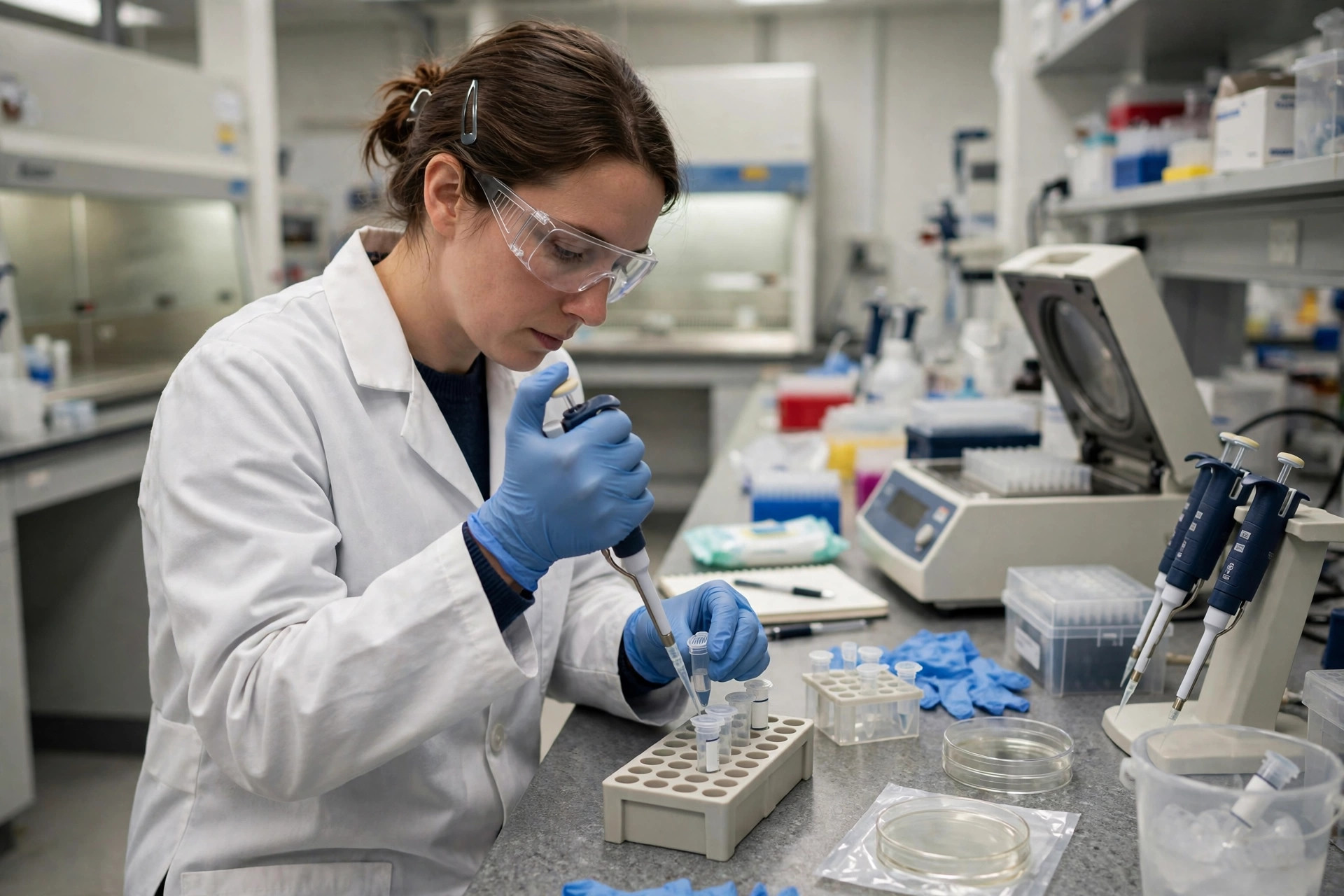
What it is
Diagnostic genetic testing analyses DNA — usually from a blood or saliva sample — to look for inherited variants that explain a condition or predict risk: examples include BRCA1/2 for hereditary breast and ovarian cancer, Lynch syndrome genes, cystic fibrosis, Huntington's disease and many rarer conditions.
Why it is done
It is offered when a condition or family pattern suggests a hereditary cause, to confirm a diagnosis, guide treatment and screening, and inform relatives who may also be at risk (cascade testing).
How to prepare
Proper counselling precedes testing: you will discuss what the test can and cannot show, possible results (positive, negative, variant of uncertain significance), implications for insurance and family members, and consent for storage and possible future re-analysis. This conversation is an essential part of the test.
What happens during the procedure
The sample itself is simply a blood draw or saliva collection. In the laboratory, targeted genes or broader panels (sometimes whole exome/genome) are sequenced and variants interpreted by clinical scientists against current evidence.
Afterwards — recovery & results
Results take weeks to months depending on the test. They are given in a genetics appointment with a plan: screening or preventive options if a variant is found, and support for informing relatives, often with clinic letters you can share.
Risks & considerations
There are no physical risks from sampling. The 'risks' are informational — uncertain results, unexpected findings (including misattributed parentage rarely, or findings unrelated to the original question), and implications for relatives. Counselling prepares you for these before you decide.
Related guides on MedicalVideos.com
Frequently asked questions
What is a 'variant of uncertain significance' (VUS)?
A DNA change whose effect is not yet known. It is not treated as an answer; management continues based on your personal and family history, and the variant may be reclassified as evidence grows.
Should I use a direct-to-consumer test instead?
Consumer tests use different methods, may miss clinically important variants and give no counselling or confirmatory testing. For medical questions, clinical genetics pathways are the reliable route.
Related procedures — Biopsies, Lab & Pathology Tests
Browse the G section of the A–Z list or return to the Procedures & Tests hub.