
- Physical Examination
- Surgical Examination
- Ophthalmology
- Clinical Skills
- Orthopedics
- Surgery Videos
- Laparoscopy
- Pediatrics
- Funny Videos
- Cardiothoracic Surgery
- Nursing Videos
- Plastic Surgery
- Otorhinolaryngology
- Histology and Histopathology
- Neurosurgery
- Dermatology
- Pediatric Surgery
- Urology
- Dentistry
- Oncology and Cancers
- Anatomy Videos
- Health and Fitness
- Radiology
- Anaesthesia
- Physical Therapy
- Pharmacology
- Interventional Radiology
- Cardiology
- Endocrinology
- Gynecology
- Emergency Medicine
- Psychiatry and Psychology
- Childbirth Videos
- General Medical Videos
- Nephrology
- Physiology
- Diet and Food Health
- Diabetes Mellitus
- Neurology
- Women Health
- Osteoporosis
- Gastroenterology
- Pulmonology
- Hematology
- Rheumatology
- Toxicology
- Nuclear Medicine
- Infectious Diseases
- Vascular Disease
- Reproductive Health
- Burns and Wound Healing
- Kidney Zone Podcast
- Other
Intravitreal injection (anti-VEGF)
Category: Eye Procedures & Tests · All eye procedures & tests
What it is
An intravitreal injection places a small amount of medicine directly into the gel (vitreous) inside the eye. Anti-VEGF medicines block abnormal blood-vessel growth and leakage in the retina; steroid implants are used for some other conditions.
Why it is done
It is the main treatment for wet age-related macular degeneration, diabetic macular oedema, retinal vein occlusion swelling and other retinal conditions where fluid leaks into the seeing part of the retina.
How to prepare
Treatment is usually a course of injections at intervals set by your eye team, guided by scans (OCT). Tell the team about eye infections, allergies and recent strokes or heart attacks. You cannot drive yourself home on the day because of the drops used.
What happens during the procedure
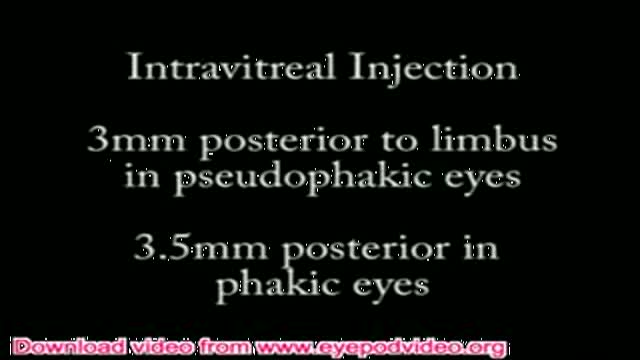
The eye is numbed with drops and cleaned with antiseptic (which can sting briefly). A tiny needle injects the medicine through the white of the eye; most people feel pressure rather than pain, and it takes only a few minutes. Antiseptic and careful sterile technique minimise infection risk.
Afterwards — recovery & results
The eye may feel gritty, look red at the injection site, and show floaters or bubbles for a day or two. You will be told the warning signs of infection — increasing pain, redness and vision loss over the following days — which need urgent same-day assessment. Keep follow-up appointments even when vision seems stable.
Risks & considerations
Risks include infection inside the eye (uncommon but serious), bleeding on the surface or inside, retinal detachment (rare), pressure rise in the eye and cataract progression. The overall safety record of these injections, given in very large numbers, is good.
Watch: Intravitreal injection (anti-VEGF) videos
Real procedure videos from the MedicalVideos.com library. Some clinical footage is graphic — that is the nature of a medical video library.
Related guides on MedicalVideos.com
Frequently asked questions
How many injections will I need?
It varies. Treatment typically starts with monthly injections, then intervals are adjusted to your scans — some people need long-term regular treatment to hold the benefit.
Does it hurt?
The numbing drops work well and most patients describe pressure or a brief scratch. Anxiety beforehand is usually worse than the event.
Related procedures — Eye Procedures & Tests
Browse the I section of the A–Z list or return to the Procedures & Tests hub.