
- Physical Examination
- Surgical Examination
- Ophthalmology
- Clinical Skills
- Orthopedics
- Surgery Videos
- Laparoscopy
- Pediatrics
- Funny Videos
- Cardiothoracic Surgery
- Nursing Videos
- Plastic Surgery
- Otorhinolaryngology
- Histology and Histopathology
- Neurosurgery
- Dermatology
- Pediatric Surgery
- Urology
- Dentistry
- Oncology and Cancers
- Anatomy Videos
- Health and Fitness
- Radiology
- Anaesthesia
- Physical Therapy
- Pharmacology
- Interventional Radiology
- Cardiology
- Endocrinology
- Gynecology
- Emergency Medicine
- Psychiatry and Psychology
- Childbirth Videos
- General Medical Videos
- Nephrology
- Physiology
- Diet and Food Health
- Diabetes Mellitus
- Neurology
- Women Health
- Osteoporosis
- Gastroenterology
- Pulmonology
- Hematology
- Rheumatology
- Toxicology
- Nuclear Medicine
- Infectious Diseases
- Vascular Disease
- Reproductive Health
- Burns and Wound Healing
- Kidney Zone Podcast
- Other
Nerve conduction studies and EMG
Category: Brain, Nerve & Sleep Tests · All brain, nerve & sleep tests
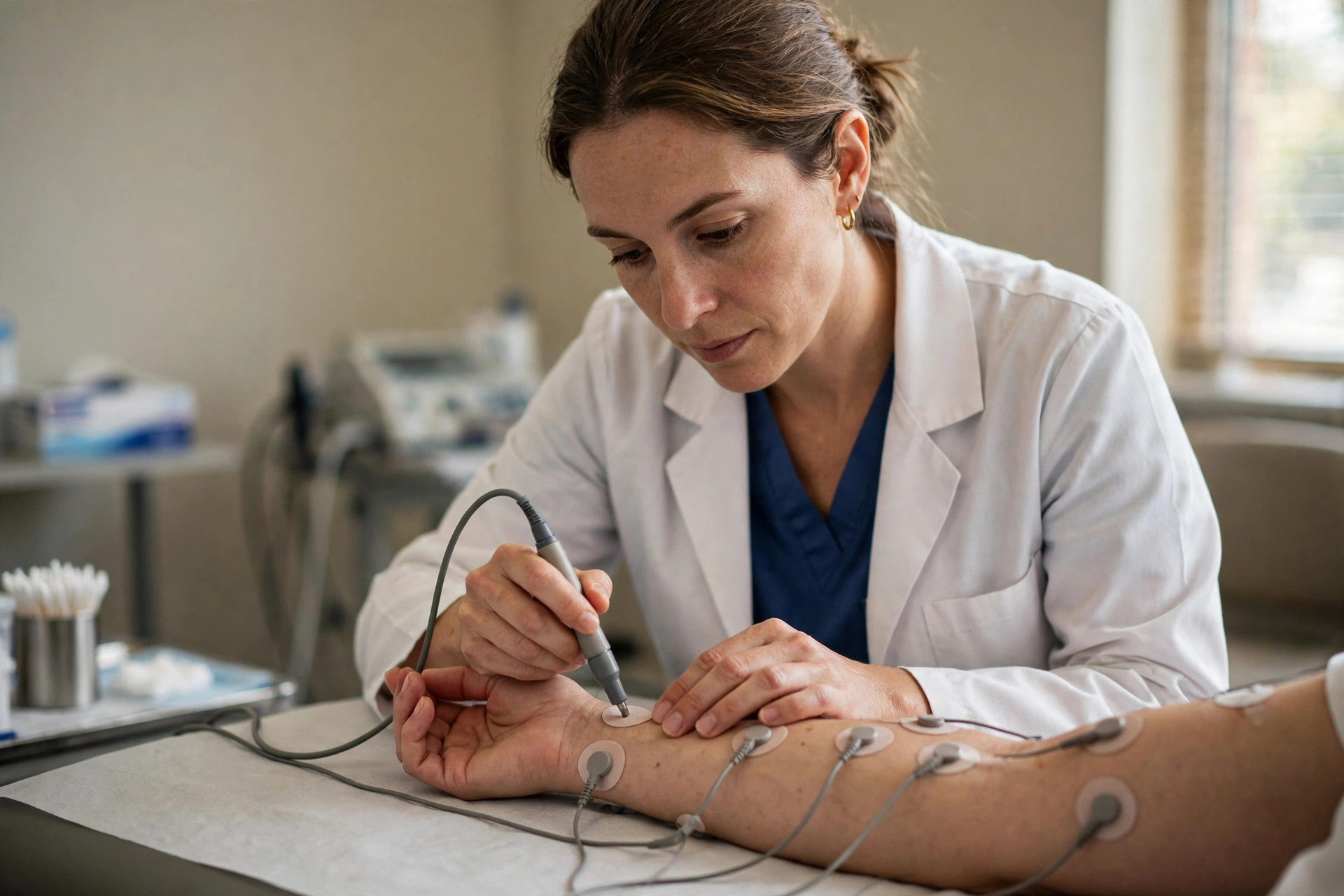
What it is
Nerve conduction studies (NCS) measure how fast and how strongly electrical signals travel along nerves, using surface electrodes and small electrical pulses. EMG (electromyography) uses a fine needle electrode in muscles to listen to their electrical activity, distinguishing nerve problems from muscle problems and pinpointing where a nerve is damaged.
Why it is done
Common uses: carpal tunnel syndrome and other trapped nerves, peripheral neuropathy (for example from diabetes), radiculopathy (pinched nerve roots), facial weakness, and muscle diseases such as myositis or motor neurone disease assessment.
How to prepare
Keep hands and feet warm (cold slows nerves and the team may warm them). Avoid skin creams on the areas to be tested. Tell the team about pacemakers/ICDs, blood thinners (relevant for EMG needles) and any bleeding disorders. Take medicines as usual.
What happens during the procedure
For NCS, small pads are taped to the skin and brief electrical pulses are delivered — felt as taps or tingles, sometimes startling but tolerable. For EMG, a fine needle is inserted into selected muscles while you rest and then contract them gently; you hear the muscle activity through a speaker. The combined appointment takes about 30 to 60 minutes.
Afterwards — recovery & results
You can drive and resume normal activities immediately. EMG needle sites may ache slightly or bruise. Results are analysed and sent to the referring team, usually within a few weeks.
Risks & considerations
Risks are minimal: discomfort during the test, minor bruising from EMG, and very rare infection. Electrical stimulation is used cautiously near cardiac devices, which the team will plan around.
Related guides on MedicalVideos.com
Frequently asked questions
Does EMG hurt?
The needle is very fine — most people describe brief discomfort with insertion and when contracting the muscle. It is usually less unpleasant than expected.
Will this tell me why I have numb feet?
Often yes in pattern terms: it can confirm a length-dependent neuropathy, estimate severity and chronicity, and exclude a trapped nerve mimicking it. Blood tests usually complete the cause search.
Related procedures — Brain, Nerve & Sleep Tests
Browse the N section of the A–Z list or return to the Procedures & Tests hub.