
- Physical Examination
- Surgical Examination
- Ophthalmology
- Clinical Skills
- Orthopedics
- Surgery Videos
- Laparoscopy
- Pediatrics
- Funny Videos
- Cardiothoracic Surgery
- Nursing Videos
- Plastic Surgery
- Otorhinolaryngology
- Histology and Histopathology
- Neurosurgery
- Dermatology
- Pediatric Surgery
- Urology
- Dentistry
- Oncology and Cancers
- Anatomy Videos
- Health and Fitness
- Radiology
- Anaesthesia
- Physical Therapy
- Pharmacology
- Interventional Radiology
- Cardiology
- Endocrinology
- Gynecology
- Emergency Medicine
- Psychiatry and Psychology
- Childbirth Videos
- General Medical Videos
- Nephrology
- Physiology
- Diet and Food Health
- Diabetes Mellitus
- Neurology
- Women Health
- Osteoporosis
- Gastroenterology
- Pulmonology
- Hematology
- Rheumatology
- Toxicology
- Nuclear Medicine
- Infectious Diseases
- Vascular Disease
- Reproductive Health
- Burns and Wound Healing
- Kidney Zone Podcast
- Other
Newborn hearing screening
Category: Screening Tests · All screening tests
What it is
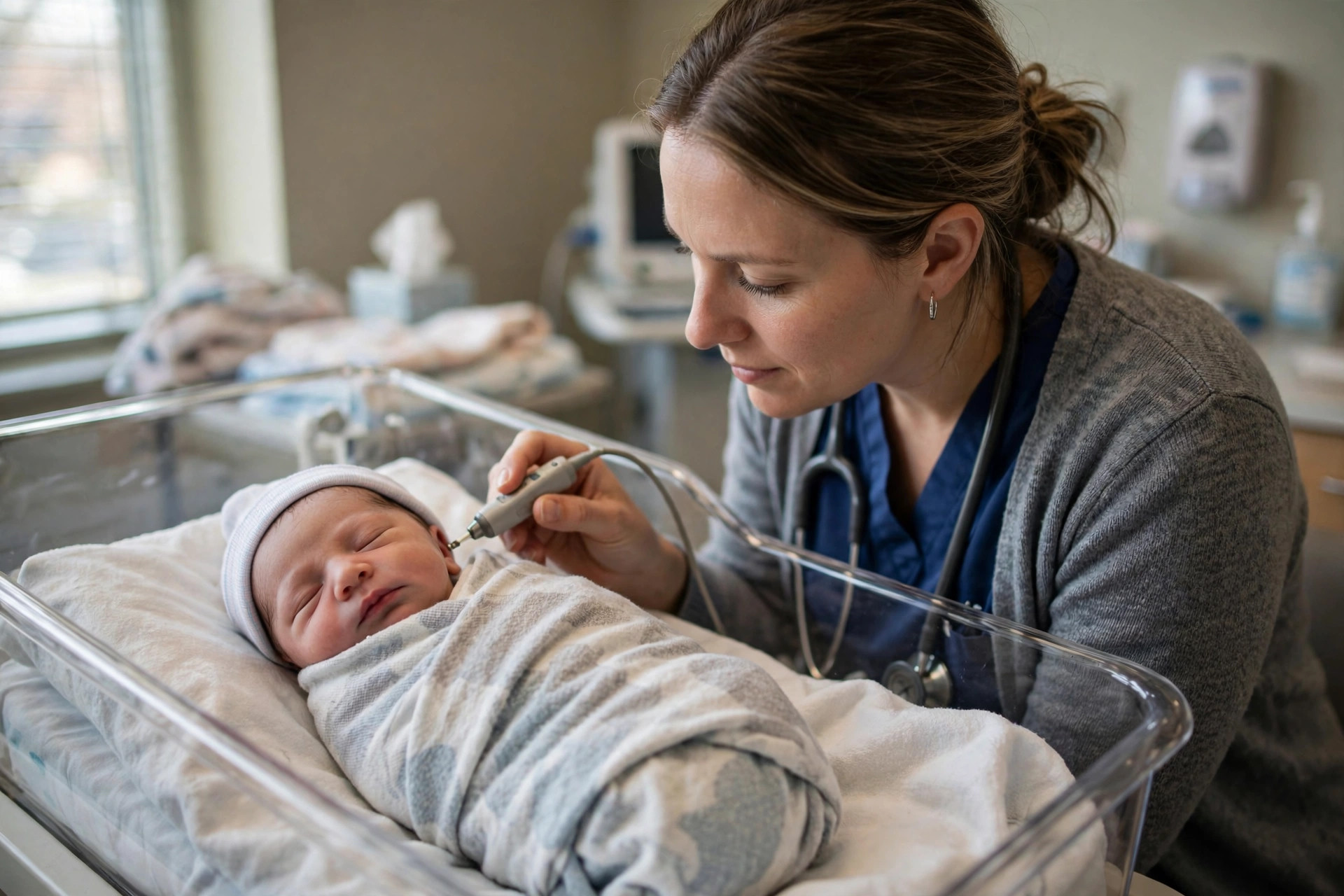
Newborn hearing screening checks a baby's hearing response in the first days or weeks of life, using soft sounds played into the ear and measuring the ear's echo (automated otoacoustic emissions) and, if needed, the brain's response to sound (automated auditory brainstem response).
Why it is done
Permanent childhood hearing impairment affects a small number of babies per thousand; finding it in the first months — rather than at age two or three — transforms language and learning outcomes with early support and technology.
How to prepare
The test is usually done before discharge from hospital or at an early clinic visit. It works best when the baby is settled or asleep, in a quiet room. Tell the screener about any family history of childhood hearing loss.
What happens during the procedure
A small soft earpiece plays clicking sounds; sensors measure the response — no response is needed from the baby and it is painless. Each ear takes a few minutes. If the first test is unclear (common, especially in the first day when fluid remains in the ear), a second test is arranged within weeks.
Afterwards — recovery & results
Most babies pass in one or both stages. Babies who do not get a clear response are referred to audiology promptly for full assessment. You will be given the result on the day and a checklist of hearing and speech milestones to watch for as your baby grows.
Risks & considerations
No risks. Early unclear results are common and usually resolve at retest; persistent referral is about thoroughness, not alarm.
Related guides on MedicalVideos.com
Frequently asked questions
My baby didn't pass in hospital — is she deaf?
Most likely not. Fluid and debris in the ear canal after birth block the test commonly. The repeat test in a few weeks usually gives a clear pass.
If she passes, can hearing problems still develop?
Yes — some losses develop later or follow infections. The milestone checklist and your observations matter; raise any concern at any age.
Related procedures — Screening Tests
Browse the N section of the A–Z list or return to the Procedures & Tests hub.