
- Physical Examination
- Surgical Examination
- Ophthalmology
- Clinical Skills
- Orthopedics
- Surgery Videos
- Laparoscopy
- Pediatrics
- Funny Videos
- Cardiothoracic Surgery
- Nursing Videos
- Plastic Surgery
- Otorhinolaryngology
- Histology and Histopathology
- Neurosurgery
- Dermatology
- Pediatric Surgery
- Urology
- Dentistry
- Oncology and Cancers
- Anatomy Videos
- Health and Fitness
- Radiology
- Anaesthesia
- Physical Therapy
- Pharmacology
- Interventional Radiology
- Cardiology
- Endocrinology
- Gynecology
- Emergency Medicine
- Psychiatry and Psychology
- Childbirth Videos
- General Medical Videos
- Nephrology
- Physiology
- Diet and Food Health
- Diabetes Mellitus
- Neurology
- Women Health
- Osteoporosis
- Gastroenterology
- Pulmonology
- Hematology
- Rheumatology
- Toxicology
- Nuclear Medicine
- Infectious Diseases
- Vascular Disease
- Reproductive Health
- Burns and Wound Healing
- Kidney Zone Podcast
- Other
Newborn screening (heel prick / blood spot)
Category: Screening Tests · All screening tests
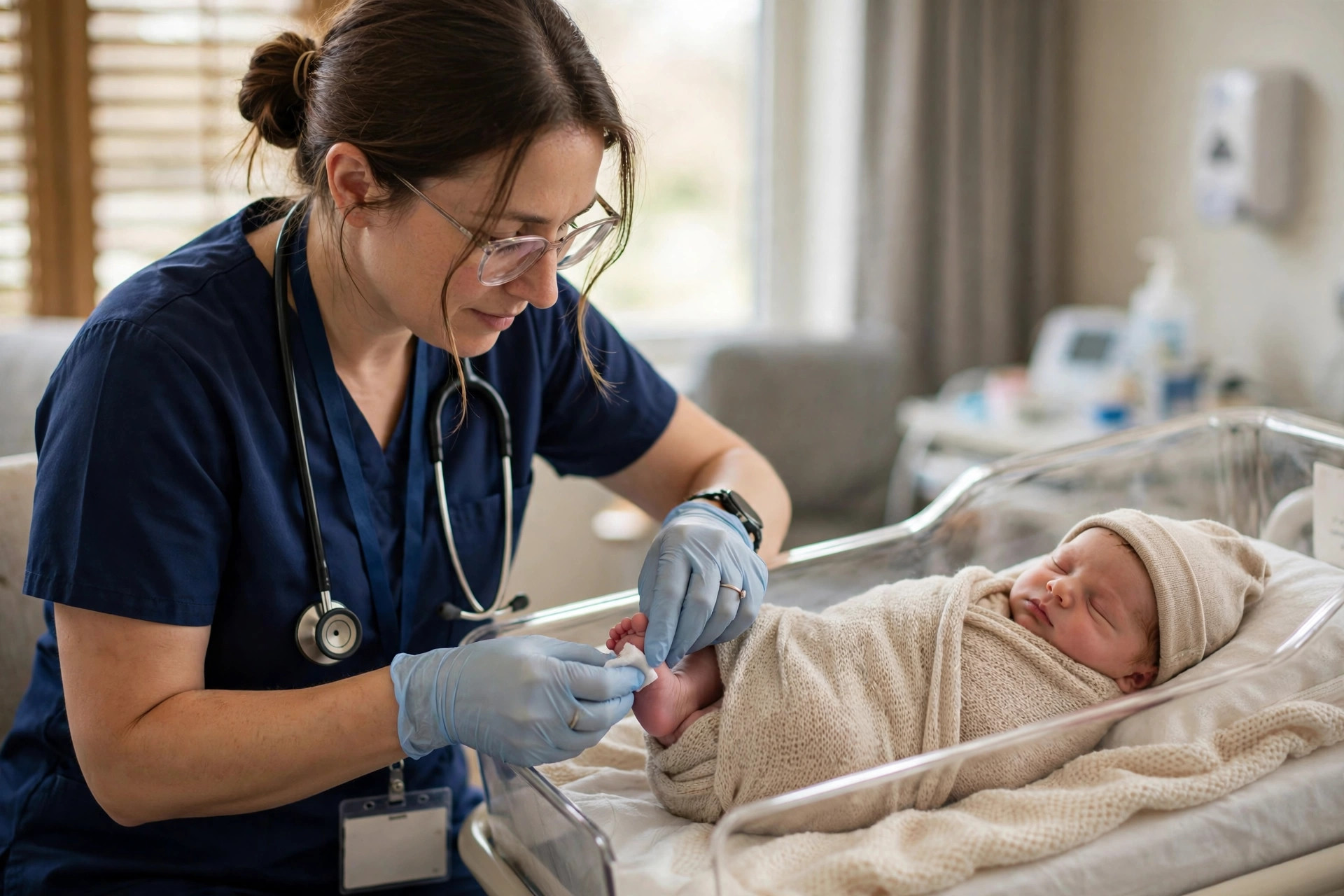
What it is
The newborn blood spot test takes a few drops of blood from the baby's heel onto a card, usually at about five days old, to screen for a panel of rare but serious conditions — including cystic fibrosis, sickle cell disease, congenital hypothyroidism, PKU and several metabolic disorders (the panel varies by country).
Why it is done
For these conditions, early treatment — before symptoms — prevents severe disability or death. Screening every baby is the only way to find affected babies in time.
How to prepare
Your midwife arranges the test, usually at a home visit or clinic. Feeding and comforting the baby during the test helps. Tell the midwife about any family history of the screened conditions and about blood transfusions the baby may have had (which can affect some results).
What happens during the procedure
The heel is warmed and cleaned, a small lancet prick is made, and drops of blood fill circles on the card. It takes a few minutes; babies usually cry briefly and settle with a cuddle or feed.
Afterwards — recovery & results
Results are usually available by the time of the six-to-eight-week check; you are contacted sooner if a result needs action. Most results are normal. A 'screen positive' result means further diagnostic tests are needed urgently — it is not yet a diagnosis — and the specialist team contacts you directly with a plan.
Risks & considerations
The prick causes brief pain and a tiny bruise occasionally. False positives cause temporary parental anxiety but are preferable to missed cases; repeat samples are sometimes needed if the first card was insufficient.
Related guides on MedicalVideos.com
Frequently asked questions
Can I decline the test?
Yes, screening is offered with consent — but the conditions are chosen because early treatment transforms outcomes. Discuss any hesitation with your midwife so you can decide informed.
Why might a repeat be needed?
Insufficient blood on the card, a sample taken too early, or a borderline result. A repeat is routine quality practice and does not by itself mean something is wrong.
Related procedures — Screening Tests
Browse the N section of the A–Z list or return to the Procedures & Tests hub.