
- Physical Examination
- Surgical Examination
- Ophthalmology
- Clinical Skills
- Orthopedics
- Surgery Videos
- Laparoscopy
- Pediatrics
- Funny Videos
- Cardiothoracic Surgery
- Nursing Videos
- Plastic Surgery
- Otorhinolaryngology
- Histology and Histopathology
- Neurosurgery
- Dermatology
- Pediatric Surgery
- Urology
- Dentistry
- Oncology and Cancers
- Anatomy Videos
- Health and Fitness
- Radiology
- Anaesthesia
- Physical Therapy
- Pharmacology
- Interventional Radiology
- Cardiology
- Endocrinology
- Gynecology
- Emergency Medicine
- Psychiatry and Psychology
- Childbirth Videos
- General Medical Videos
- Nephrology
- Physiology
- Diet and Food Health
- Diabetes Mellitus
- Neurology
- Women Health
- Osteoporosis
- Gastroenterology
- Pulmonology
- Hematology
- Rheumatology
- Toxicology
- Nuclear Medicine
- Infectious Diseases
- Vascular Disease
- Reproductive Health
- Burns and Wound Healing
- Kidney Zone Podcast
- Other
Sleep-deprived and long-term EEG / video telemetry
Category: Brain, Nerve & Sleep Tests · All brain, nerve & sleep tests
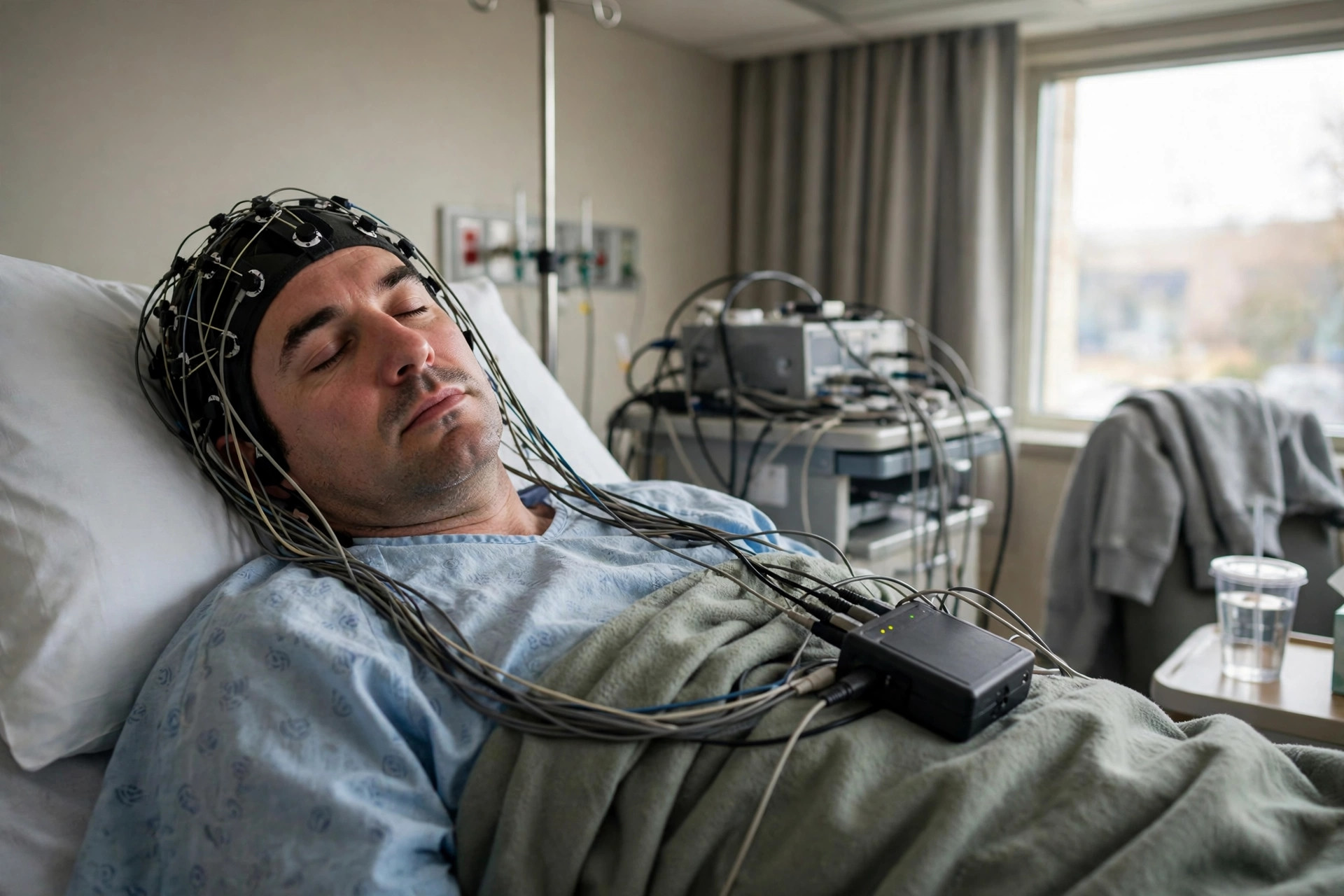
What it is
Extended EEG monitoring records brain activity over many hours or days — as an ambulatory recorder worn at home, or as inpatient video-telemetry where EEG and video run together so events can be matched to brain activity. Sleep-deprived EEG is a shorter study after reduced sleep to increase diagnostic yield.
Why it is done
It investigates frequent blackouts or episodes where routine EEG was normal, distinguishes epileptic seizures from non-epileptic attacks and fainting, classifies seizure types before treatment changes, and maps seizure onset in epilepsy surgery assessment.
How to prepare
Instructions vary: some admissions deliberately reduce anti-seizure medicines (only in monitored units), and sleep deprivation may be used as a trigger. Tell the team what your typical events look like and bring a witness description or phone videos of events if you have them.
What happens during the procedure
Electrodes are glued on for durability; ambulatory patients carry a small recorder and keep an event diary, pressing a button during episodes. Inpatients stay in a monitored room with continuous video; staff respond to events and may use activation procedures. Studies last from a day to over a week for surgical work-up.
Afterwards — recovery & results
After electrode removal (glue dissolved; hair washing advised) you return to normal life or await results. Captured events are reviewed frame by frame with the EEG by specialists; reports take days to weeks depending on study length.
Risks & considerations
Risks are low. Inpatient medication reduction is balanced against seizure risk and only done with continuous supervision and rescue medication available. Skin can be sore under electrodes after long recordings.
Related guides on MedicalVideos.com
Frequently asked questions
Why record my funny turns on video?
Many episodes that look like seizures are not epileptic — and vice versa. Matching the event to the EEG at the same moment is the most reliable way to tell.
Will I definitely have an event during monitoring?
Not guaranteed, which is why triggers and longer durations are used. Even without a full event, interictal (between-seizure) patterns can be informative.
Related procedures — Brain, Nerve & Sleep Tests
Browse the S section of the A–Z list or return to the Procedures & Tests hub.