
- Physical Examination
- Surgical Examination
- Ophthalmology
- Clinical Skills
- Orthopedics
- Surgery Videos
- Laparoscopy
- Pediatrics
- Funny Videos
- Cardiothoracic Surgery
- Nursing Videos
- Plastic Surgery
- Otorhinolaryngology
- Histology and Histopathology
- Neurosurgery
- Dermatology
- Pediatric Surgery
- Urology
- Dentistry
- Oncology and Cancers
- Anatomy Videos
- Health and Fitness
- Radiology
- Anaesthesia
- Physical Therapy
- Pharmacology
- Interventional Radiology
- Cardiology
- Endocrinology
- Gynecology
- Emergency Medicine
- Psychiatry and Psychology
- Childbirth Videos
- General Medical Videos
- Nephrology
- Physiology
- Diet and Food Health
- Diabetes Mellitus
- Neurology
- Women Health
- Osteoporosis
- Gastroenterology
- Pulmonology
- Hematology
- Rheumatology
- Toxicology
- Nuclear Medicine
- Infectious Diseases
- Vascular Disease
- Reproductive Health
- Burns and Wound Healing
- Kidney Zone Podcast
- Other
Spirometry
Category: Lung & Breathing Tests · All lung & breathing tests
What it is
Spirometry measures how much air you can breathe out and how fast, by blowing into a mouthpiece connected to a measuring device. Key numbers are FVC (total blown out) and FEV1 (blown out in the first second), whose pattern distinguishes obstructive diseases (asthma, COPD) from restrictive ones.
Why it is done
It is the core test for diagnosing and monitoring asthma and COPD, investigating breathlessness and chronic cough, and assessing lungs before surgery.
How to prepare
You may be asked to avoid inhalers for a set time before the test and avoid smoking, heavy meals, caffeine and vigorous exercise beforehand — your appointment letter specifies. Wear loose clothing. Tell the team about recent chest infection, surgery, or heart problems.
What happens during the procedure
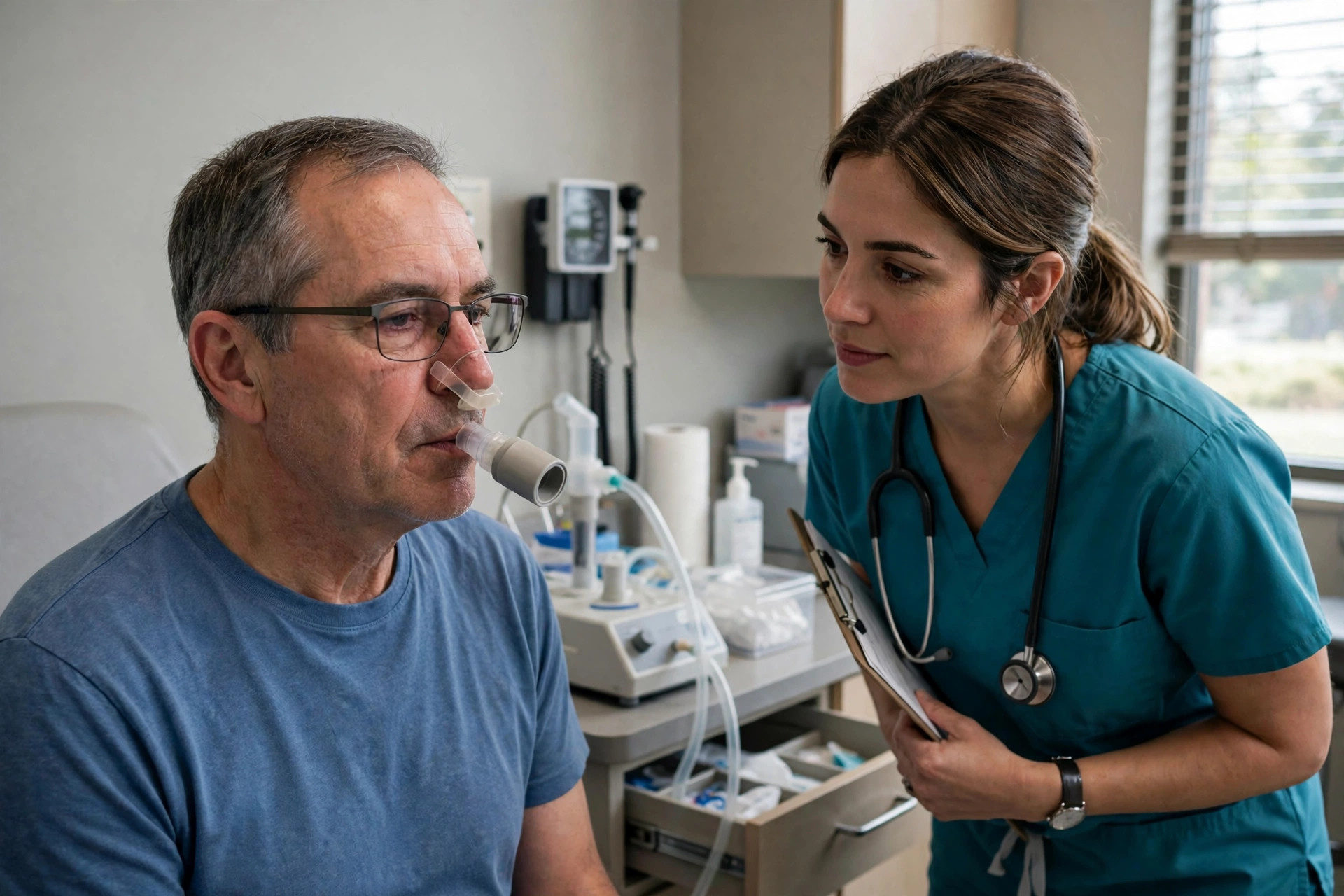
Sitting upright with a nose clip on, you breathe in fully and blast out into the mouthpiece as hard and long as possible, then in again quickly for some measurements. At least three good efforts are taken. You may then be given a bronchodilator inhaler and repeat the test to see if airways open up (reversibility). It takes about 20 to 30 minutes.
Afterwards — recovery & results
You can go straight back to normal activities. Blowing hard can make you feel briefly light-headed or cough. Results are compared with predicted values for your age, sex, height and ethnicity and are usually explained at your clinic appointment.
Risks & considerations
There are minimal risks; the test is effort-dependent, so submaximal blowing can mislead — the technician will coach you to get reliable results. It is avoided or postponed after recent eye, chest or abdominal surgery or heart attack, per your team's advice.
Related guides on MedicalVideos.com
Frequently asked questions
Why repeat after an inhaler?
If the numbers improve significantly after a bronchodilator, the airways narrowing is reversible — a pattern supporting asthma. COPD narrowing typically improves little.
Can I fail spirometry?
No — there is no pass or fail. Poor technique can make results unreliable, which is why you will be coached through several efforts.
Related procedures — Lung & Breathing Tests
Browse the S section of the A–Z list or return to the Procedures & Tests hub.