
- Physical Examination
- Surgical Examination
- Ophthalmology
- Clinical Skills
- Orthopedics
- Surgery Videos
- Laparoscopy
- Pediatrics
- Funny Videos
- Cardiothoracic Surgery
- Nursing Videos
- Plastic Surgery
- Otorhinolaryngology
- Histology and Histopathology
- Neurosurgery
- Dermatology
- Pediatric Surgery
- Urology
- Dentistry
- Oncology and Cancers
- Anatomy Videos
- Health and Fitness
- Radiology
- Anaesthesia
- Physical Therapy
- Pharmacology
- Interventional Radiology
- Cardiology
- Endocrinology
- Gynecology
- Emergency Medicine
- Psychiatry and Psychology
- Childbirth Videos
- General Medical Videos
- Nephrology
- Physiology
- Diet and Food Health
- Diabetes Mellitus
- Neurology
- Women Health
- Osteoporosis
- Gastroenterology
- Pulmonology
- Hematology
- Rheumatology
- Toxicology
- Nuclear Medicine
- Infectious Diseases
- Vascular Disease
- Reproductive Health
- Burns and Wound Healing
- Kidney Zone Podcast
- Other
Entropion / ectropion repair: What to Expect & Recovery
Entropion turns the eyelid inward so lashes rub the eye; ectropion turns it outward so the eye waters and dries. Both are fixed with a short operation under local anaesthetic, usually as a day case — stitches out in 1 to 2 weeks and a comfortable eye again.
Before surgery: how to prepare
- Tell the surgeon about blood thinners and aspirin — eyelid skin bruises easily and bleeding risk guides whether they are paused.
- If the cornea is being damaged by lashes (entropion), you may be given lubricants or a contact lens, or the lid may be taped, while awaiting surgery — keep these up; corneal protection is the priority.
- Arrange a lift home: the eye may be padded, so driving yourself is out.
- Take a list of eye drops you use (especially glaucoma drops, which can contribute to lid changes) to the appointment.
The day of surgery
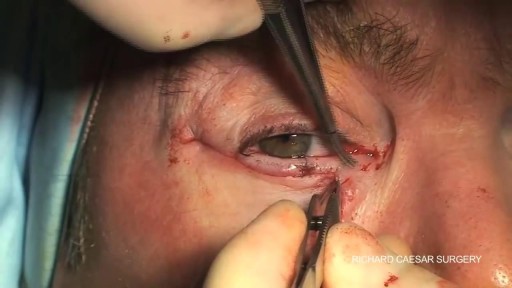
Under local anaesthetic injections (brief stinging), the surgeon tightens and repositions the lid: for entropion, the retractors are reattached and the lid rotated outward; for ectropion, the lax lid is shortened and the corner re-anchored. Stitches close the small incisions. The operation usually takes under an hour, and you go home with ointment and sometimes a pad for the first night.
In hospital
Recovery timeline
Every recovery is individual, but most follow this general arc:
Warning signs: when to get help
- Increasing pain, redness or discharge after the first days (infection)
- Bleeding that soaks the pad or a rapidly swelling, tense eyelid
- The lid turning in again with lashes touching the eye, or vision worsening
- A painful red eye with light sensitivity (corneal problem — same-day review)
- Stitches coming out in the first days
Related topics
Watch: real operation videos
From the MedicalVideos library. Some surgical videos are graphic and intended for education.
Frequently asked questions
Why did my eyelid turn in or out?
Ageing tissues are the usual cause: the tendons that hold the lid stretch and the muscles that stabilise it weaken, so the lid rotates. Scarring (from inflammation or injury) and facial nerve weakness are other causes, and the operation is tailored to which mechanism dominates in your lid.
Can it come back?
Yes, in a minority, because the ageing process continues. Modern combined techniques (tightening plus retractor repair) have lower recurrence than older single-step operations. If symptoms recur, earlier review gives simpler options.
Medically reviewed by Dr. Mohamed Ibrahim, Assistant Professor of Medicine, Transplant Nephrology, University of Maryland School of Medicine. Last reviewed: 12 November 2026.