
- Physical Examination
- Surgical Examination
- Ophthalmology
- Clinical Skills
- Orthopedics
- Surgery Videos
- Laparoscopy
- Pediatrics
- Funny Videos
- Cardiothoracic Surgery
- Nursing Videos
- Plastic Surgery
- Otorhinolaryngology
- Histology and Histopathology
- Neurosurgery
- Dermatology
- Pediatric Surgery
- Urology
- Dentistry
- Oncology and Cancers
- Anatomy Videos
- Health and Fitness
- Radiology
- Anaesthesia
- Physical Therapy
- Pharmacology
- Interventional Radiology
- Cardiology
- Endocrinology
- Gynecology
- Emergency Medicine
- Psychiatry and Psychology
- Childbirth Videos
- General Medical Videos
- Nephrology
- Physiology
- Diet and Food Health
- Diabetes Mellitus
- Neurology
- Women Health
- Osteoporosis
- Gastroenterology
- Pulmonology
- Hematology
- Rheumatology
- Toxicology
- Nuclear Medicine
- Infectious Diseases
- Vascular Disease
- Reproductive Health
- Burns and Wound Healing
- Kidney Zone Podcast
- Other
Eyelid twitching
✓ Medically reviewed by Mohamed Magdy Ibrahim, MD, PhD — Assistant Professor of Medicine, Transplant Nephrology, University of Maryland School of Medicine · Board certified in Internal Medicine (ABIM) · Last reviewed: November 2026
Category: Brain & Nerves · All brain & nerves symptoms
What it can feel like
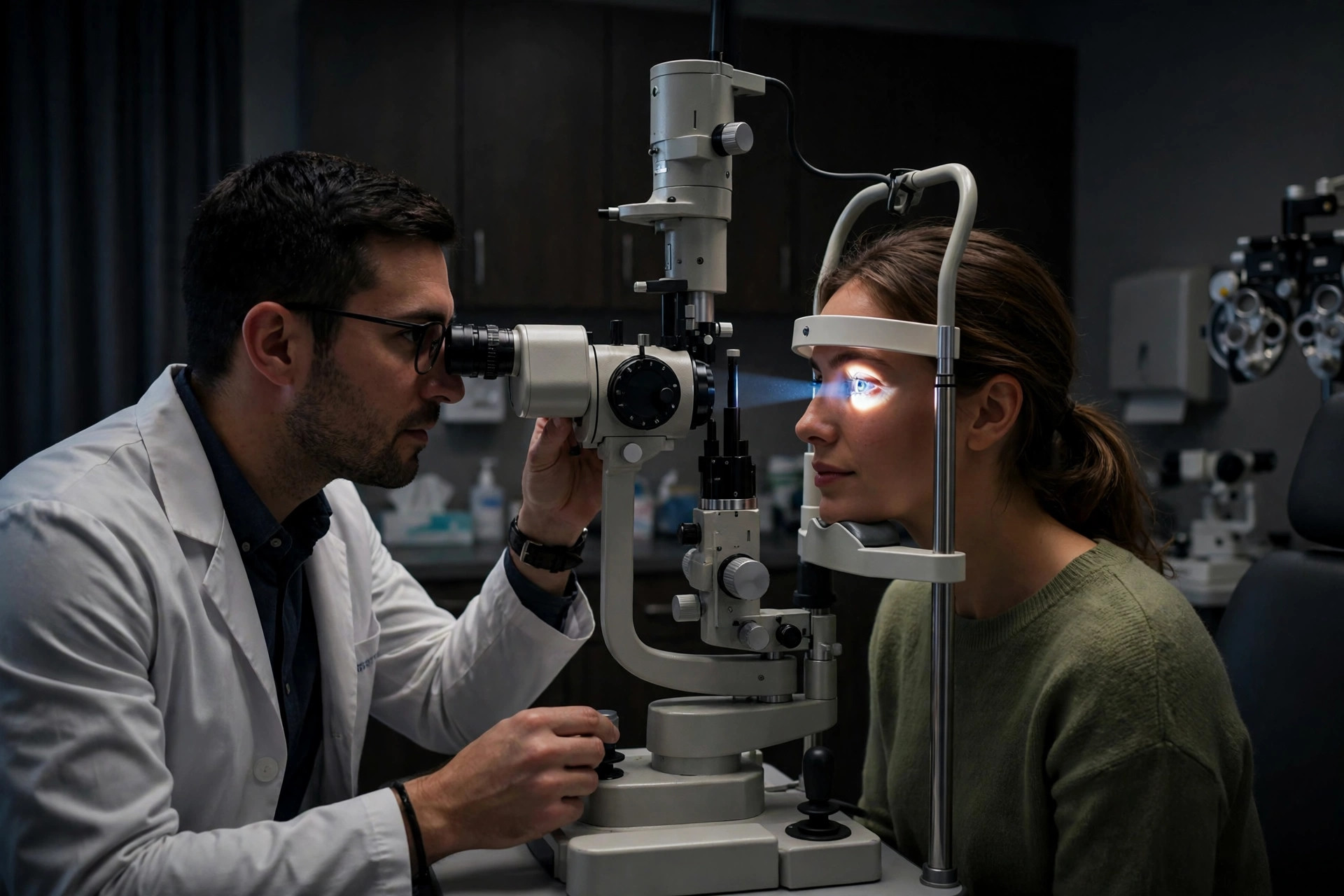
Eyelid twitching is a fine, fluttering spasm of the eyelid — usually the lower lid of one eye — that comes in bursts through the day. In the great majority of cases it is benign muscle irritability (myokymia) driven by tiredness, stress and caffeine, and it stops by itself. It is listed on this page with its rarer associations only so that the unusual patterns — spreading, forceful or persistent spasm — are not missed.
Possible causes
A symptom can have many causes, and most are not serious. The lists below group conditions this symptom can be associated with — common causes first. They are possibilities to discuss with a clinician, not a diagnosis.
Common causes
Eyelid twitching can be associated with tiredness and poor sleep, stress, caffeine, dry eyes and long screen use. These benign twitches (myokymia) affect one eyelid, come and go over days to weeks, and settle on their own.
Other possible causes
Twitching that persists can also be associated with blepharospasm (forceful closing of both eyes) and hemifacial spasm (twitching spreading across one side of the face). Occasionally, twitching alongside other neurological symptoms can be associated with nerve or brain conditions, which is why spreading or persistent spasm earns a neurological assessment — the twitch alone, without those features, is very rarely a sign of them.
Red flags — when to seek help promptly
- Twitching that closes the eye completely, or spreads to the cheek or mouth
- Twitching together with weakness, double vision, a drooping eyelid or speech change — seek prompt help
- Twitching continuously for more than a few weeks without settling
- Forceful twitching of both eyes that interferes with seeing or driving
What a clinician may do
A clinician will ask how long it has lasted, whether it spreads, and whether anything else has changed, and examine the eyes and facial movements. Most isolated eyelid twitches need no tests; an MRI scan and neurology referral follow only when the pattern is atypical — spreading, forceful or accompanied by other symptoms.
Related guides on MedicalVideos.com
Frequently asked questions
How long can an eye twitch last?
Benign eyelid twitches commonly come and go for days to a few weeks, often in bursts linked to tiredness, stress or caffeine, and then disappear. Reducing caffeine, resting the eyes and improving sleep usually shorten the run.
When is eyelid twitching not just tiredness?
When it forces the eye fully closed, spreads to the cheek or mouth, affects both eyes forcefully, lasts continuously beyond a few weeks, or arrives with weakness, double vision or speech change. Those patterns suggest spasm of the facial muscles or a neurological cause rather than simple myokymia.
Related symptoms — Brain & Nerves
Browse the E section of the A–Z list or return to the Symptoms A–Z hub.