
- Physical Examination
- Surgical Examination
- Ophthalmology
- Clinical Skills
- Orthopedics
- Surgery Videos
- Laparoscopy
- Pediatrics
- Funny Videos
- Cardiothoracic Surgery
- Nursing Videos
- Plastic Surgery
- Otorhinolaryngology
- Histology and Histopathology
- Neurosurgery
- Dermatology
- Pediatric Surgery
- Urology
- Dentistry
- Oncology and Cancers
- Anatomy Videos
- Health and Fitness
- Radiology
- Anaesthesia
- Physical Therapy
- Pharmacology
- Interventional Radiology
- Cardiology
- Endocrinology
- Gynecology
- Emergency Medicine
- Psychiatry and Psychology
- Childbirth Videos
- General Medical Videos
- Nephrology
- Physiology
- Diet and Food Health
- Diabetes Mellitus
- Neurology
- Women Health
- Osteoporosis
- Gastroenterology
- Pulmonology
- Hematology
- Rheumatology
- Toxicology
- Nuclear Medicine
- Infectious Diseases
- Vascular Disease
- Reproductive Health
- Burns and Wound Healing
- Kidney Zone Podcast
- Other
Nail changes
Category: Skin, Hair & Nails · All skin symptoms
What it can feel like
Nail changes include thickening, discolouration (yellow, white, green, black), ridging, splitting, crumbling, lifting from the bed, and shape change such as clubbing of the fingertips. Nails grow slowly — fingernails take about six months to replace — so they record health events months in the past.
Possible causes
A symptom can have many causes, and most are not serious. The lists below group conditions this symptom can be associated with — common causes first. They are possibilities to discuss with a clinician, not a diagnosis.
Common causes
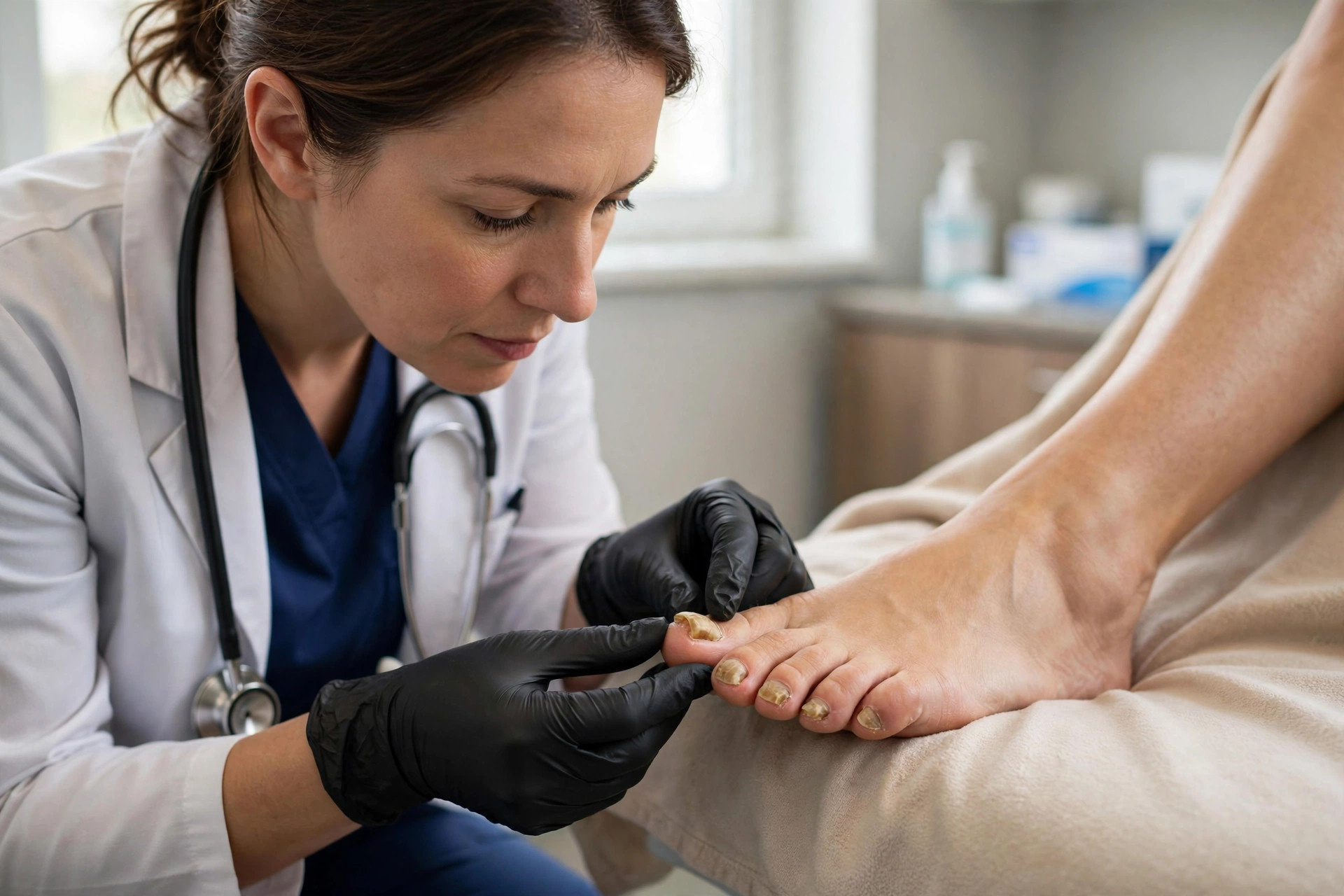
Nail changes can be associated with fungal infection (thick, yellow, crumbly toenails), trauma and ill-fitting shoes, ageing, psoriasis (pitting and lifting), eczema, and repeated wet work or chemicals damaging fingernails.
Other possible causes
Nail changes can also be associated with iron deficiency (spoon-shaped nails), thyroid disease, and clubbing — a painless bulbous swelling of the fingertips with loss of the nail angle — which can reflect lung or heart disease. A single dark streak or patch in one nail can be a melanoma under the nail.
Red flags — when to seek help promptly
- A new dark streak or patch in a single nail, especially if it widens or the cuticle darkens
- Clubbing of the fingers developing in an adult
- Nail changes with weight loss, cough or breathlessness
- A nail that lifts, bleeds or has a non-healing sore beside it
- Severe fungal-looking nails in someone with diabetes or a weakened immune system
What a clinician may do
A clinician will examine all nails, the surrounding skin and the fingertips, ask about symptoms elsewhere, and may send nail clippings for fungus testing before treatment (treatment is long, so proof matters). Clubbing triggers a chest and heart review with imaging as indicated.
Related guides on MedicalVideos.com
Frequently asked questions
Why test clippings before treating fungal nails?
Because only about half of thickened, discoloured nails are fungal — psoriasis and trauma look similar and need different care — and antifungal tablets require months of treatment with blood monitoring. A clipping that grows the fungus justifies the commitment.
What is clubbing and why does it matter?
Clubbing is a painless change where the fingertips swell and the nail curves like a watch-glass, losing its normal angle. Long-standing clubbing can be familial and harmless, but new clubbing in an adult can be the visible tip of lung or heart disease — which is why it triggers a chest examination and imaging.
Related symptoms — Skin, Hair & Nails
Browse the N section of the A–Z list or return to the Symptoms A–Z hub.