
- Physical Examination
- Surgical Examination
- Ophthalmology
- Clinical Skills
- Orthopedics
- Surgery Videos
- Laparoscopy
- Pediatrics
- Funny Videos
- Cardiothoracic Surgery
- Nursing Videos
- Plastic Surgery
- Otorhinolaryngology
- Histology and Histopathology
- Neurosurgery
- Dermatology
- Pediatric Surgery
- Urology
- Dentistry
- Oncology and Cancers
- Anatomy Videos
- Health and Fitness
- Radiology
- Anaesthesia
- Physical Therapy
- Pharmacology
- Interventional Radiology
- Cardiology
- Endocrinology
- Gynecology
- Emergency Medicine
- Psychiatry and Psychology
- Childbirth Videos
- General Medical Videos
- Nephrology
- Physiology
- Diet and Food Health
- Diabetes Mellitus
- Neurology
- Women Health
- Osteoporosis
- Gastroenterology
- Pulmonology
- Hematology
- Rheumatology
- Toxicology
- Nuclear Medicine
- Infectious Diseases
- Vascular Disease
- Reproductive Health
- Burns and Wound Healing
- Kidney Zone Podcast
- Other
Swollen ankles
Category: Chest, Heart & Circulation · All chest & heart symptoms
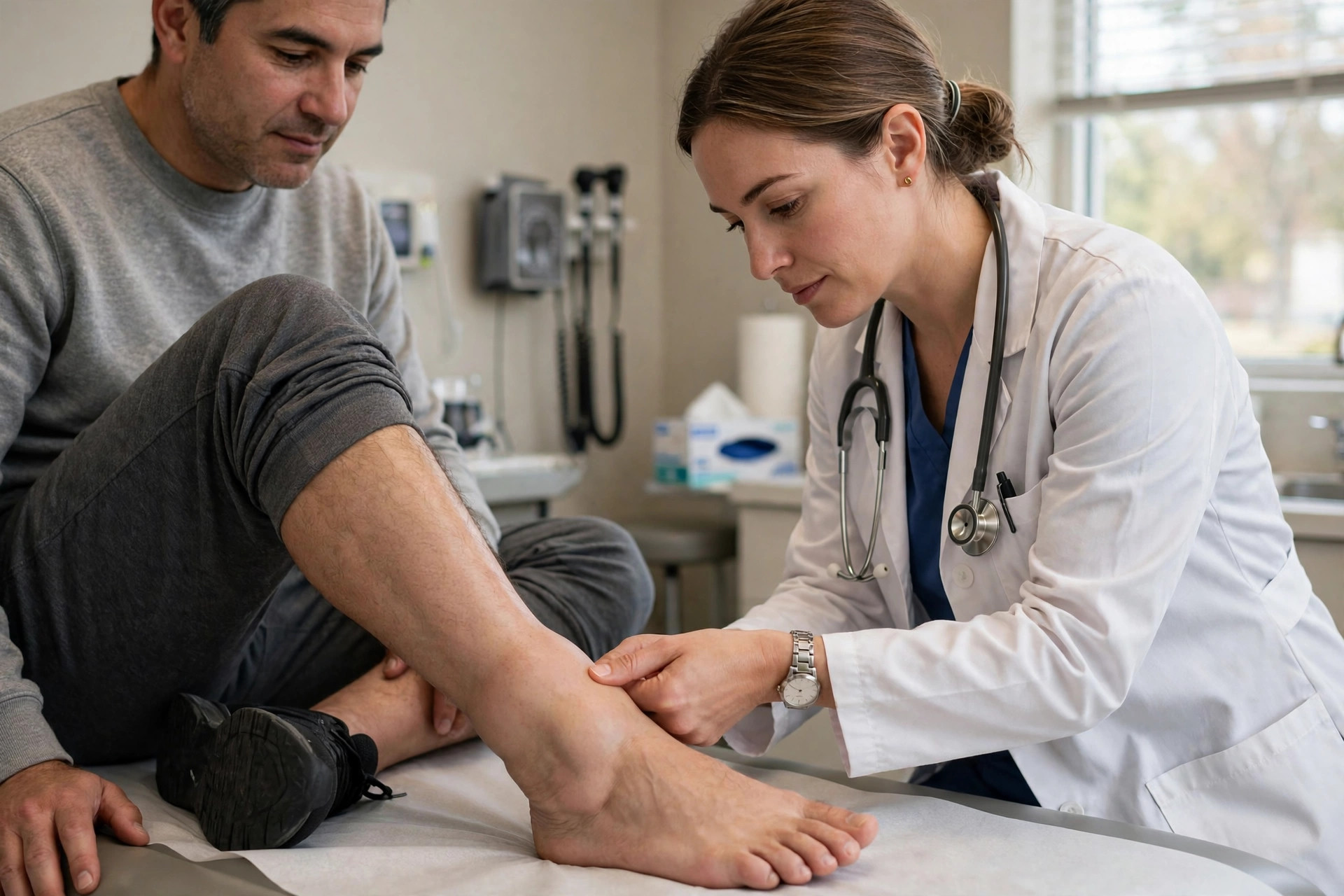
What it can feel like
Swollen ankles mean fluid has collected in the tissues around the ankles and feet, making shoes tight and sometimes leaving a pit when the skin is pressed. Ankles that swell during the day and settle overnight are common; persistent or one-sided swelling deserves a look.
Possible causes
A symptom can have many causes, and most are not serious. The lists below group conditions this symptom can be associated with — common causes first. They are possibilities to discuss with a clinician, not a diagnosis.
Common causes
Swollen ankles can be associated with standing or sitting for long periods, hot weather, pregnancy, being overweight, varicose veins, and medicines such as some blood pressure tablets.
Other possible causes
Persistent swelling can be associated with heart failure, kidney or liver problems, an underactive thyroid, or a problem with the veins or lymph drainage in the leg. Swelling in one leg only needs prompt assessment for a possible clot.
Red flags — when to seek help promptly
- Swelling in one leg only, especially with calf pain or redness
- Swollen ankles with breathlessness, especially lying flat or waking you at night
- Rapid swelling over days with weight gain
- Swelling with reduced urine output or frothy urine
What a clinician may do
A clinician will examine your legs, heart and lungs, check blood pressure, and usually arrange blood tests for kidney, liver and thyroid function, a urine test, and sometimes a heart tracing or ultrasound scan of the heart or leg veins.
Related guides on MedicalVideos.com
Frequently asked questions
Why do my ankles swell by evening and settle by morning?
Gravity pulls fluid down during the day, and lying flat redistributes it overnight. That daily pattern usually points to veins and posture rather than heart or kidney disease — but if the swelling stops settling, or breathlessness joins it, have it checked.
When is one swollen leg urgent?
A single newly swollen leg — particularly with calf ache, warmth or redness, or after a long journey, surgery or immobility — should be assessed the same day to exclude a deep vein clot.
Related symptoms — Chest, Heart & Circulation
Browse the S section of the A–Z list or return to the Symptoms A–Z hub.