
- Physical Examination
- Surgical Examination
- Ophthalmology
- Clinical Skills
- Orthopedics
- Surgery Videos
- Laparoscopy
- Pediatrics
- Funny Videos
- Cardiothoracic Surgery
- Nursing Videos
- Plastic Surgery
- Otorhinolaryngology
- Histology and Histopathology
- Neurosurgery
- Dermatology
- Pediatric Surgery
- Urology
- Dentistry
- Oncology and Cancers
- Anatomy Videos
- Health and Fitness
- Radiology
- Anaesthesia
- Physical Therapy
- Pharmacology
- Interventional Radiology
- Cardiology
- Endocrinology
- Gynecology
- Emergency Medicine
- Psychiatry and Psychology
- Childbirth Videos
- General Medical Videos
- Nephrology
- Physiology
- Diet and Food Health
- Diabetes Mellitus
- Neurology
- Women Health
- Osteoporosis
- Gastroenterology
- Pulmonology
- Hematology
- Rheumatology
- Toxicology
- Nuclear Medicine
- Infectious Diseases
- Vascular Disease
- Reproductive Health
- Burns and Wound Healing
- Kidney Zone Podcast
- Other
Echocardiogram (heart ultrasound)
Category: Heart Tests & Procedures · All heart tests & procedures
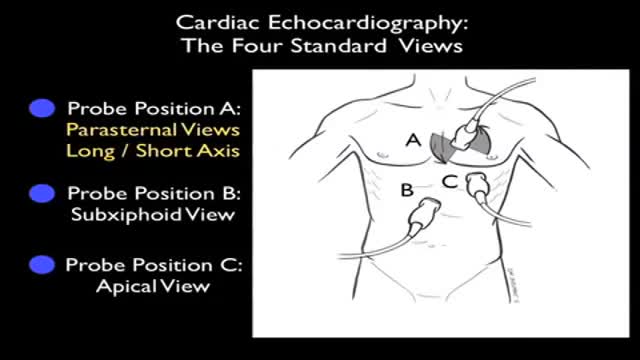
What it is
An echocardiogram is an ultrasound scan of the heart. It shows the heart chambers, valves and pumping action in motion, using sound waves only — no radiation.
Why it is done
It is used to investigate heart murmurs, breathlessness, heart failure, valve disease and the effects of high blood pressure on the heart, and to measure how strongly the heart pumps.
How to prepare
No preparation is needed. You will undress from the waist up and wear a gown. Electrodes are placed so the images can be timed to your heartbeat.
What happens during the procedure
You lie on a couch, usually on your left side, while gel and a probe are moved over the chest. The operator may ask you to hold your breath briefly or change position. Certain views check blood flow with Doppler, which adds colour pictures and sounds. It takes about 30 to 45 minutes and is painless apart from firm probe pressure.
Afterwards — recovery & results
You can go home straight away. The images are measured and reported by specialists, and the result goes to your doctor, usually within days.
Risks & considerations
There are no known risks from the ultrasound. Sometimes images are limited — for example by lung or rib shadowing — and a scan through the food pipe (transoesophageal echo) may be suggested if much more detail is needed.
Watch: Echocardiogram (heart ultrasound) videos
Real procedure videos from the MedicalVideos.com library. Some clinical footage is graphic — that is the nature of a medical video library.
Related guides on MedicalVideos.com
Frequently asked questions
What does 'ejection fraction' mean?
It is the percentage of blood the main pumping chamber pushes out with each beat — a measure of pumping strength. Your doctor will explain your number in context.
Why did the probe press so hard?
Firm pressure gives clearer pictures by bringing the probe close to the heart and reducing interference from ribs and lung tissue.
Related procedures — Heart Tests & Procedures
Browse the E section of the A–Z list or return to the Procedures & Tests hub.