
- Physical Examination
- Surgical Examination
- Ophthalmology
- Clinical Skills
- Orthopedics
- Surgery Videos
- Laparoscopy
- Pediatrics
- Funny Videos
- Cardiothoracic Surgery
- Nursing Videos
- Plastic Surgery
- Otorhinolaryngology
- Histology and Histopathology
- Neurosurgery
- Dermatology
- Pediatric Surgery
- Urology
- Dentistry
- Oncology and Cancers
- Anatomy Videos
- Health and Fitness
- Radiology
- Anaesthesia
- Physical Therapy
- Pharmacology
- Interventional Radiology
- Cardiology
- Endocrinology
- Gynecology
- Emergency Medicine
- Psychiatry and Psychology
- Childbirth Videos
- General Medical Videos
- Nephrology
- Physiology
- Diet and Food Health
- Diabetes Mellitus
- Neurology
- Women Health
- Osteoporosis
- Gastroenterology
- Pulmonology
- Hematology
- Rheumatology
- Toxicology
- Nuclear Medicine
- Infectious Diseases
- Vascular Disease
- Reproductive Health
- Burns and Wound Healing
- Other
Psychiatry and Psychology


Why Does Thinking Hard Make You Tired?
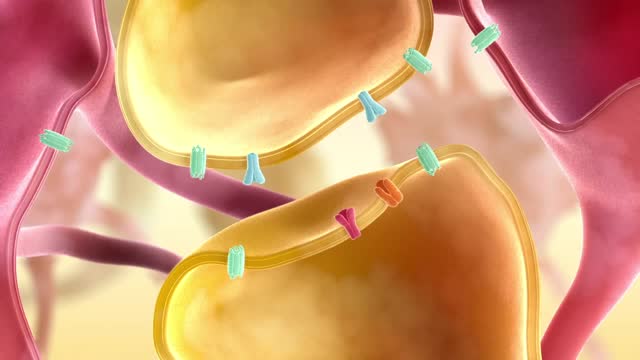
The cause of schizophrenia is still unclear. Some theories about the cause of this disease include: genetics (heredity), biology (abnormalities in the brain’s chemistry or structure); and/or possible viral infections and immune disorders.
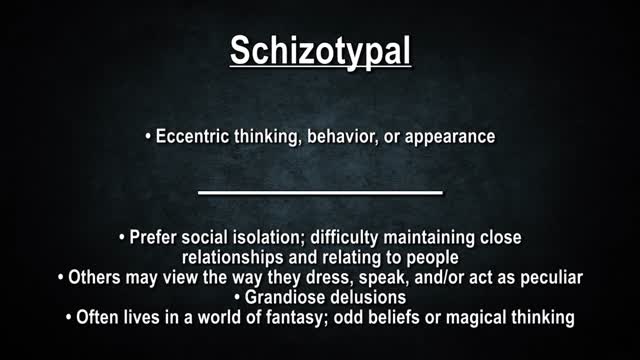
Personality disorders are a group of mental illnesses. They involve long-term patterns of thoughts and behaviors that are unhealthy and inflexible. The behaviors cause serious problems with relationships and work. People with personality disorders have trouble dealing with everyday stresses and problems. They often have stormy relationships with other people. The cause of personality disorders is unknown. However, genes and childhood experiences may play a role. The symptoms of each personality disorder are different. They can mild or severe. People with personality disorders may have trouble realizing that they have a problem. To them, their thoughts are normal, and they often blame others for their problems. They may try to get help because of their problems with relationships and work. Treatment usually includes talk therapy and sometimes medicine.
During normal sleep, you cycle through REM and four stages of non-REM (NREM) sleep numerous times a night. Stage 1 of NREM sleep is the lightest, while stage 4 is the deepest. When you're repeatedly interrupted and can't cycle normally through these types and stages of sleep, you may feel tired, fatigued, and have trouble concentrating and paying attention while you're awake. Sleepiness puts you at greater risk for car wrecks and other accidents.
What Are Sleep Disorders? Circadian Rhythm Disorders Typically, people sleep at night -- thanks not only to the conventions of the 9-to-5 workday, but also to the close interaction between our natural sleep and alertness rhythms, which are driven by an internal "clock." This clock is a small part of the brain called the suprachiasmatic nucleus of the hypothalamus. It sits just above the nerves leaving the back of our eyes. Light and exercise "reset" the clock and can move it forward or backward. Abnormalities related to this clock are called circadian rhythm disorders ("circa" means "about," and "dies" means "day"). Circadian rhythm disorders include jet lag, adjustments to shift work, delayed sleep phase syndrome (you fall asleep and wake up too late), and advanced sleep phase syndrome (you fall asleep and wake up too early).

Psychological testing refers to the administration of psychological tests. A psychological test is "an objective and standardized measure of a sample of behavior" (p. 4). The term sample of behavior refers to an individual's performance on tasks that have usually been prescribed beforehand.
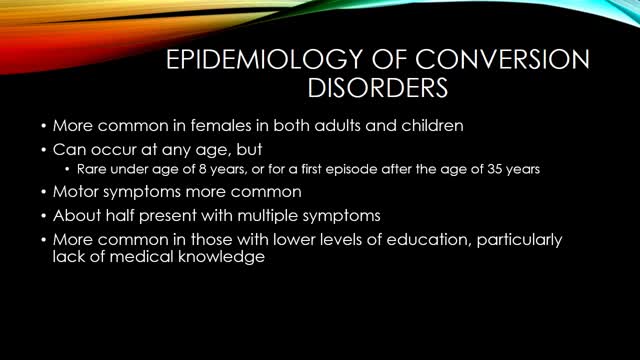
Conversion disorder, also called functional neurological symptom disorder, is a condition in which you show psychological stress in physical ways. The condition was so named to describe a health problem that starts as a mental or emotional crisis — a scary or stressful incident of some kind — and converts to a physical problem.
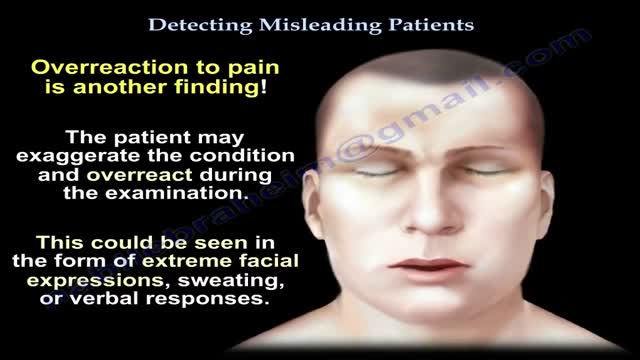
Factitious disorder is the term used to describe a pattern of behavior centered on the exaggeration or outright falsifications of one’s own health problems or health problems of others. Some people with this disorder fake or exaggerate physical problems; others fake or exaggerate psychological problems or a combination of physical and psychological problems. Factitious disorder differs from a pattern of falsified or exaggerated behavior called malingering. While malingerers make their claims out of a motivation for personal gain, people with factitious disorder have no such motivation.

Factitious disorder is the term used to describe a pattern of behavior centered on the exaggeration or outright falsifications of one’s own health problems or the health problems of others. Some people with this disorder fake or exaggerate physical problems; others fake or exaggerate psychological problems or a combination of physical and psychological problems. Factitious disorder differs from a pattern of falsified or exaggerated behavior called malingering. While malingerers make their claims out of a motivation for personal gain, people with factitious disorder have no such motivation.
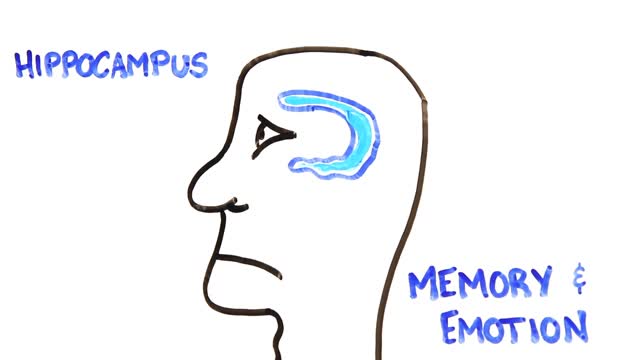
Depression (major depressive disorder or clinical depression) is a common but serious mood disorder. It causes severe symptoms that affect how you feel, think, and handle daily activities, such as sleeping, eating, or working. To be diagnosed with depression, the symptoms must be present for at least two weeks.
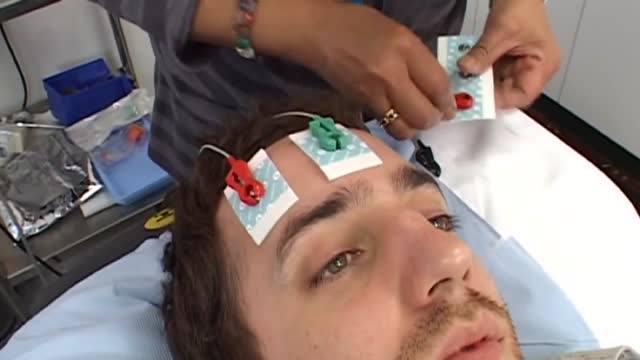
Electroconvulsive therapy (ECT) is a procedure, done under general anesthesia, in which small electric currents are passed through the brain, intentionally triggering a brief seizure. ECT seems to cause changes in brain chemistry that can quickly reverse symptoms of certain mental illnesses. It often works when other treatments are unsuccessful. Much of the stigma attached to ECT is based on early treatments in which high doses of electricity were administered without anesthesia, leading to memory loss, fractured bones and other serious side effects. ECT is much safer today. Although ECT still causes some side effects, it now uses electric currents given in a controlled setting to achieve the most benefit with the fewest possible risks.

The exact cause of schizophrenia isn't known, but genetics, environment, and imbalanced brain chemicals may play a role. Schizophrenia is characterized by abnormal social behavior. In severe cases, patients may see or hear things that aren't real. Treatment is usually lifelong and often involves a combination of medications and psychological and social therapy.

A Hundred Orgasms A Day follow the story of 3 women who were tormented every hour of everyday with the need to have orgasm. This documentary explain how Persistent Sexual Arousal Syndrome or PSAS causes this unusual condition. PSAS is a little know neurological disorder where women have symptoms of continuous uncontrollable genital arousal. This condition is unrelated to any kind of sensations of sexual desire. PSAS was initially documented by Doctor Sandra Leiblum in mid 2001, just recently recognized as a unique syndrome in medical science which has a comparable equivalent progressively more claimed by men. A few physicians makes use of the name Persistent Sexual Arousal Syndrome to reference the disorder in women; some others look at the syndrome of priapism in adult males to be a similar disorder. Most importantly, it is really not connected with hyper-sexuality, also known as nymphomania. Both hyper-sexuality, and nymphomania are not known diagnosable health conditions. Not only is it very rare, the disorder is also seldom reported by affected individual who may think it is embarrassing.

دكتور مصطفى ياقوت فى حوار على القناة الفضائية المصرية عن الطب البديل و الطب الفرعونى فى علاج الأرق
TV interview with Dr. Mostafa Yakoot about Alternative medicine
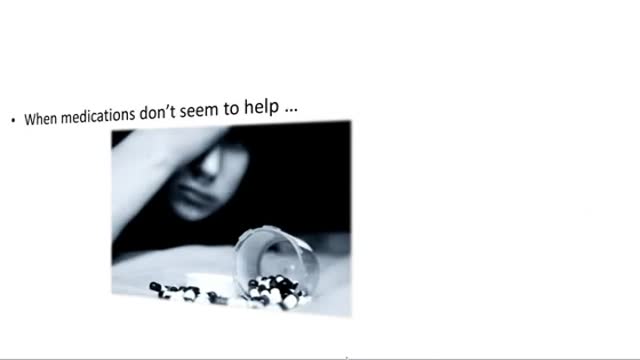
http://endyourdepression.plus101.com ---Depression Alternative Medicine Remedies. Learn more about your own, unique depression symptoms and pin-point exactly which type of depression you are suffering from. Accurately discover what is causing your depression... and why it keeps coming back no matter which drugs you take or which treatments you try. Uncover the simple methods that allow you to switch your mind away from depression and towards real happiness. Gain real insight into why most depression treatments only make your symptoms worse. Depression Alternative Medicine Remedies depressive major disorder symptoms signs medication treatment clinical causes anxiety teen help hurts self test medicine antidepression types anxiety severe
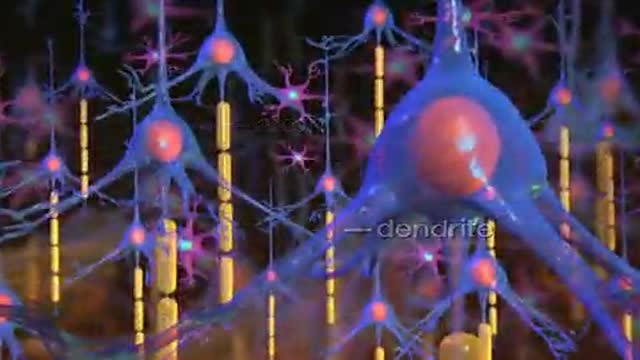
Alzheimer Disease Effects

Electroconvulsive ECT Psychiatric Therapy Information

Dependent Personality Disorder Information

Narcissistic Personality Disorder Information

Antisocial personality disorder (ASPD) is defined by the American Psychiatric Association's Axis II (personality disorders) of the Diagnostic and Statistical Manual (DSM-IV-TR) as "a pervasive pattern of disregard for, and violation of, the rights of others that begins in childhood or early adolescence and continues into adulthood." Antisocial personality disorder is sometimes wrongly referred to as psychopathy or sociopathy. Currently, neither psychopathy nor sociopathy are valid diagnoses described in the Diagnostic and Statistical Manual of Mental Disorders, and the ICD-10 of the World Health Organization also lacks psychopathy as a diagnostic disorder. Psychopathy is normally seen as a subset of the antisocial personality disorder, but Blair believes that the antisocial personality disorder and psychopathy may be separate conditions altogether.
