- Physical Examination
- Surgical Examination
- Ophthalmology
- Clinical Skills
- Orthopedics
- Surgery Videos
- Laparoscopy
- Pediatrics
- Funny Videos
- Cardiothoracic Surgery
- Nursing Videos
- Plastic Surgery
- Otorhinolaryngology
- Histology and Histopathology
- Neurosurgery
- Dermatology
- Pediatric Surgery
- Urology
- Dentistry
- Oncology and Cancers
- Anatomy Videos
- Health and Fitness
- Radiology
- Anaesthesia
- Physical Therapy
- Pharmacology
- Interventional Radiology
- Cardiology
- Endocrinology
- Gynecology
- Emergency Medicine
- Psychiatry and Psychology
- Childbirth Videos
- General Medical Videos
- Nephrology
- Physiology
- Diet and Food Health
- Diabetes Mellitus
- Neurology
- Women Health
- Osteoporosis
- Gastroenterology
- Pulmonology
- Hematology
- Rheumatology
- Toxicology
- Nuclear Medicine
- Infectious Diseases
- Vascular Disease
- Reproductive Health
- Burns and Wound Healing
- Kidney Zone Podcast
- Other
Canines
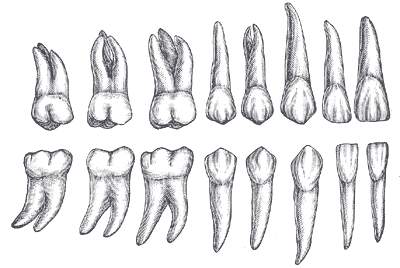
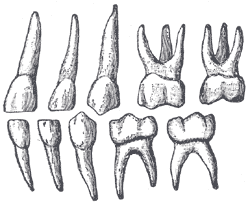
Gray's Anatomy (1918) plate, public domain
The canines are the four pointed teeth at the corners of the dental arch — sometimes called cuspids or eye teeth. With the longest roots of any teeth, they are built for tearing food and they guide the jaw's side movements. Upper canines erupt at about age 11 to 12.
Key facts
- There are four canines, one in each corner of the mouth.
- They have the longest roots of all the teeth.
- Their pointed shape is designed for gripping and tearing.
- Upper canines are the teeth most often stuck (impacted) after wisdom teeth.
- They form the visible 'corner' of the smile.
What can go wrong
Upper canines sometimes fail to erupt and remain buried in the palate or gum (impacted canines), which orthodontists monitor on X-rays during the early teens; they may need exposure and alignment with braces. Canines can also wear flat in people who grind their teeth.
Related symptoms
Frequently asked questions
Why are they called eye teeth?
The upper canines sit roughly below the eyes, and their long roots reach high towards the eye sockets — an old anatomical nickname that stuck.
What happens if a canine does not come through?
A buried canine can be left alone if it causes no trouble, monitored with X-rays, or exposed surgically and gently pulled into place with orthodontic treatment, depending on its position.
Educational information only. This atlas explains normal anatomy and describes conditions in general terms; it is not medical advice and does not replace assessment by a qualified clinician. If you have symptoms that worry you, seek medical care.