- Physical Examination
- Surgical Examination
- Ophthalmology
- Clinical Skills
- Orthopedics
- Surgery Videos
- Laparoscopy
- Pediatrics
- Funny Videos
- Cardiothoracic Surgery
- Nursing Videos
- Plastic Surgery
- Otorhinolaryngology
- Histology and Histopathology
- Neurosurgery
- Dermatology
- Pediatric Surgery
- Urology
- Dentistry
- Oncology and Cancers
- Anatomy Videos
- Health and Fitness
- Radiology
- Anaesthesia
- Physical Therapy
- Pharmacology
- Interventional Radiology
- Cardiology
- Endocrinology
- Gynecology
- Emergency Medicine
- Psychiatry and Psychology
- Childbirth Videos
- General Medical Videos
- Nephrology
- Physiology
- Diet and Food Health
- Diabetes Mellitus
- Neurology
- Women Health
- Osteoporosis
- Gastroenterology
- Pulmonology
- Hematology
- Rheumatology
- Toxicology
- Nuclear Medicine
- Infectious Diseases
- Vascular Disease
- Reproductive Health
- Burns and Wound Healing
- Kidney Zone Podcast
- Other
Fontanelles
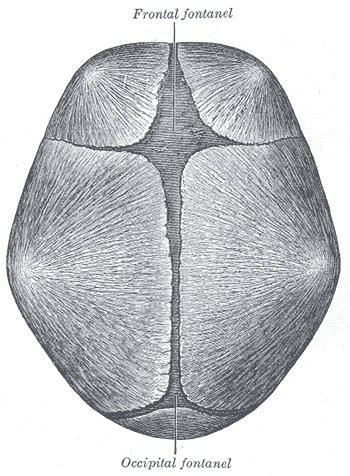
Gray's Anatomy (1918) plate, public domain
Fontanelles are the soft gaps between a baby's skull bones, where the sutures meet. The large diamond-shaped anterior fontanelle on top of the head and the smaller posterior one at the back allow the head to mould during birth and the skull to expand as the brain triples in size in the first years.
Key facts
- There are six fontanelles at birth; two are easily felt.
- The anterior fontanelle usually closes between about 9 and 18 months.
- The posterior fontanelle closes much earlier, by about 2 months.
- They let the skull mould during delivery and grow with the brain.
- The soft spot normally feels flat and may gently pulsate.
What can go wrong
A fontanelle that is sunken can be a sign of dehydration, and one that bulges persistently can reflect raised pressure inside the skull — both are reasons babies are assessed promptly. Closing very early or very late, or a head growing off its expected curve, prompts a specialist review.
Frequently asked questions
When should the soft spot close?
The back fontanelle closes by about 2 months and the front one typically between 9 and 18 months, with a wide normal range. Health visitors track head size on growth charts at the same time, which is the more important measure.
Is it safe to touch the soft spot?
Yes — normal washing and gentle touching do no harm. Although there is no bone there yet, the brain is covered by a tough membrane and skin, so everyday handling is perfectly safe.
Educational information only. This atlas explains normal anatomy and describes conditions in general terms; it is not medical advice and does not replace assessment by a qualified clinician. If you have symptoms that worry you, seek medical care.