- Physical Examination
- Surgical Examination
- Ophthalmology
- Clinical Skills
- Orthopedics
- Surgery Videos
- Laparoscopy
- Pediatrics
- Funny Videos
- Cardiothoracic Surgery
- Nursing Videos
- Plastic Surgery
- Otorhinolaryngology
- Histology and Histopathology
- Neurosurgery
- Dermatology
- Pediatric Surgery
- Urology
- Dentistry
- Oncology and Cancers
- Anatomy Videos
- Health and Fitness
- Radiology
- Anaesthesia
- Physical Therapy
- Pharmacology
- Interventional Radiology
- Cardiology
- Endocrinology
- Gynecology
- Emergency Medicine
- Psychiatry and Psychology
- Childbirth Videos
- General Medical Videos
- Nephrology
- Physiology
- Diet and Food Health
- Diabetes Mellitus
- Neurology
- Women Health
- Osteoporosis
- Gastroenterology
- Pulmonology
- Hematology
- Rheumatology
- Toxicology
- Nuclear Medicine
- Infectious Diseases
- Vascular Disease
- Reproductive Health
- Burns and Wound Healing
- Kidney Zone Podcast
- Other
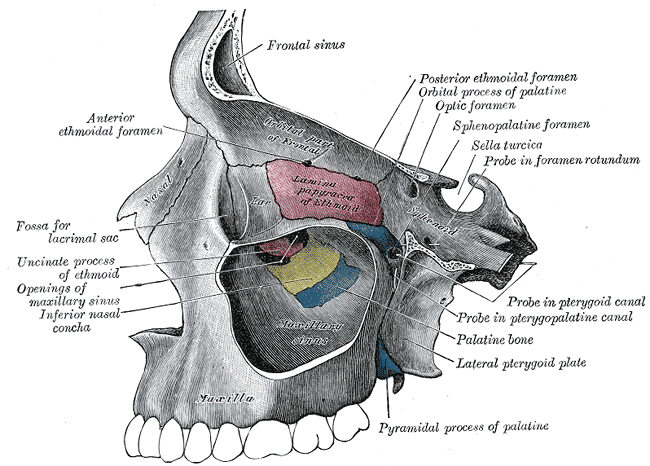
Ethmoid Bone
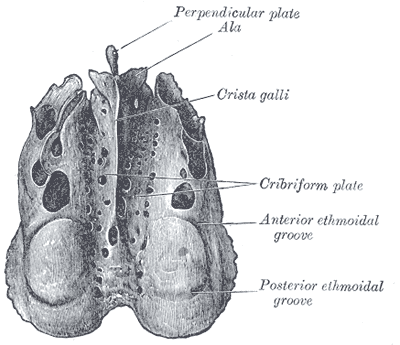
Gray's Anatomy (1918) plate, public domain
The ethmoid is a light, spongy cube of bone between the eye sockets, at the roof of the nose. It forms much of the nasal cavity's walls, holds scroll-like shelves (conchae) that warm inhaled air, and its perforated top plate lets the fine fibres of the smell nerves reach the nose.
Key facts
- The ethmoid's cribriform plate forms the roof of the nose and carries the smell nerve fibres.
- Its conchae are curled bony shelves that increase the nose's inner surface area.
- Paper-thin plates of ethmoid form the inner walls of the eye sockets.
- The ethmoid sinuses are a honeycomb of small air cells between the eyes.
- Its perpendicular plate forms the upper part of the nasal septum.
What can go wrong
The ethmoid sinuses are a frequent site of sinusitis, felt as pressure between the eyes. Because its plate towards the eye socket is paper-thin, infections occasionally spread from these sinuses towards the eye. The delicate roof of the ethmoid can be injured in nasal trauma, rarely leaking the fluid that surrounds the brain.
Related procedures & tests
Related symptoms
Frequently asked questions
Why is the ethmoid bone so light?
It is mostly a lattice of paper-thin bone around air cells rather than a solid block. That design keeps the skull light while still providing a large surface for the lining of the nose and sinuses.
How does smell reach the brain through this bone?
Tiny fibres from the smell-sensing cells in the top of the nose pass through the holes of the cribriform plate — the perforated roof of the ethmoid — to reach the olfactory bulbs of the brain.
Educational information only. This atlas explains normal anatomy and describes conditions in general terms; it is not medical advice and does not replace assessment by a qualified clinician. If you have symptoms that worry you, seek medical care.