- Physical Examination
- Surgical Examination
- Ophthalmology
- Clinical Skills
- Orthopedics
- Surgery Videos
- Laparoscopy
- Pediatrics
- Funny Videos
- Cardiothoracic Surgery
- Nursing Videos
- Plastic Surgery
- Otorhinolaryngology
- Histology and Histopathology
- Neurosurgery
- Dermatology
- Pediatric Surgery
- Urology
- Dentistry
- Oncology and Cancers
- Anatomy Videos
- Health and Fitness
- Radiology
- Anaesthesia
- Physical Therapy
- Pharmacology
- Interventional Radiology
- Cardiology
- Endocrinology
- Gynecology
- Emergency Medicine
- Psychiatry and Psychology
- Childbirth Videos
- General Medical Videos
- Nephrology
- Physiology
- Diet and Food Health
- Diabetes Mellitus
- Neurology
- Women Health
- Osteoporosis
- Gastroenterology
- Pulmonology
- Hematology
- Rheumatology
- Toxicology
- Nuclear Medicine
- Infectious Diseases
- Vascular Disease
- Reproductive Health
- Burns and Wound Healing
- Kidney Zone Podcast
- Other
Cranium
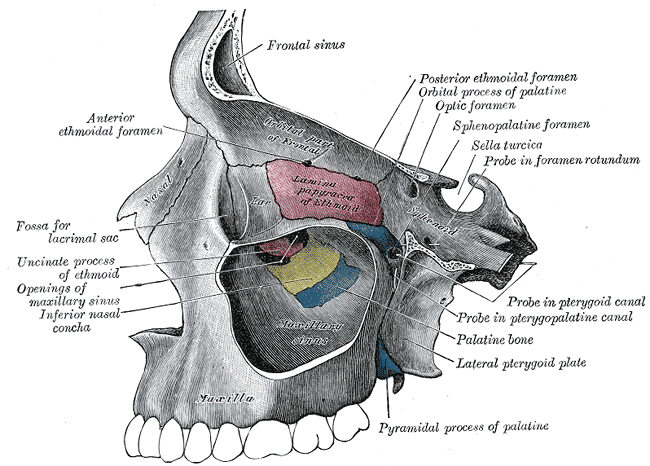
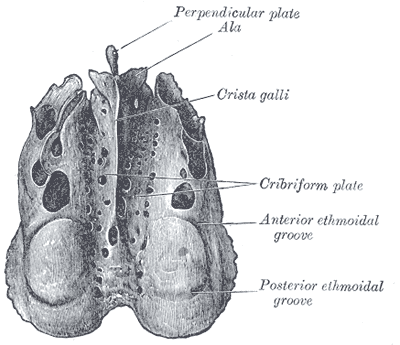
Gray's Anatomy (1918) plate, public domain
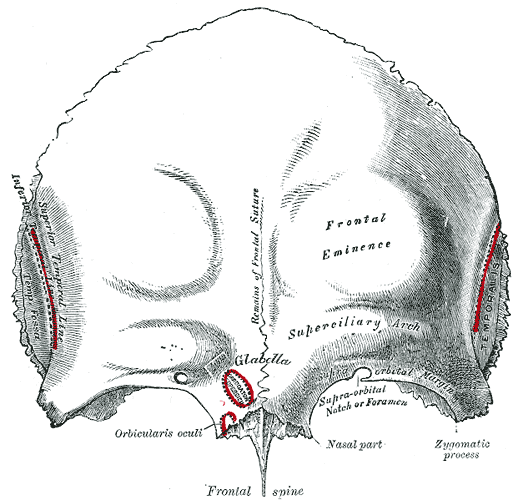
The cranium is the part of the skull that surrounds and protects the brain. It has a domed top (the skull vault or calvaria), a floor on which the brain rests, and it is formed from eight bones: the frontal, two parietal, two temporal, occipital, sphenoid and ethmoid bones.
Key facts
- The cranium's floor has three stepped levels (fossae) that cradle the lobes of the brain.
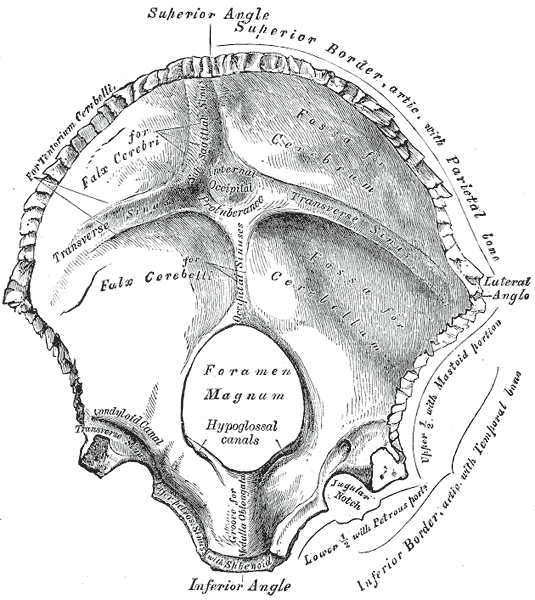
- Its inner surface carries grooves for the brain's blood vessels and venous sinuses.
- The vault bones have a spongy middle layer (diploë) between two dense outer layers.
- The foramen magnum, the large hole in its base, is where the spinal cord joins the brain.
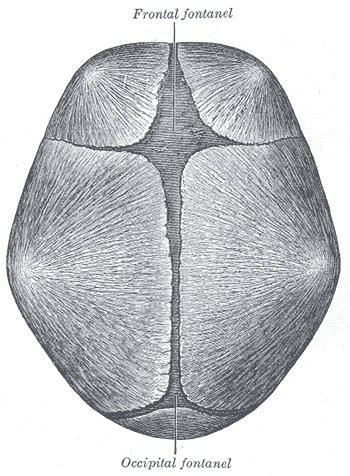
- In babies the vault bones are separated by soft fontanelles that close as the child grows.
What can go wrong
Fractures of the cranium can involve the vault or the skull base; base fractures are the more serious because of the nerves and vessels passing nearby. Raised pressure inside the cranium — from bleeding, swelling or a tumour — is an emergency, because the rigid box leaves the brain no room to expand.
Related procedures & tests
Related symptoms
Watch: related videos
Frequently asked questions
What is the difference between the skull and the cranium?
The skull is the whole bony head, face included. The cranium is only the part that encloses the brain — the domed braincase — and does not include the facial bones or the lower jaw.
How strong is the cranium?
The cranium is remarkably strong for its weight, thanks to its curved, layered construction, but it is not unbreakable: a focused blow can crack it, and the thin bones of the temple region are the most vulnerable part.
Educational information only. This atlas explains normal anatomy and describes conditions in general terms; it is not medical advice and does not replace assessment by a qualified clinician. If you have symptoms that worry you, seek medical care.