- Physical Examination
- Surgical Examination
- Ophthalmology
- Clinical Skills
- Orthopedics
- Surgery Videos
- Laparoscopy
- Pediatrics
- Funny Videos
- Cardiothoracic Surgery
- Nursing Videos
- Plastic Surgery
- Otorhinolaryngology
- Histology and Histopathology
- Neurosurgery
- Dermatology
- Pediatric Surgery
- Urology
- Dentistry
- Oncology and Cancers
- Anatomy Videos
- Health and Fitness
- Radiology
- Anaesthesia
- Physical Therapy
- Pharmacology
- Interventional Radiology
- Cardiology
- Endocrinology
- Gynecology
- Emergency Medicine
- Psychiatry and Psychology
- Childbirth Videos
- General Medical Videos
- Nephrology
- Physiology
- Diet and Food Health
- Diabetes Mellitus
- Neurology
- Women Health
- Osteoporosis
- Gastroenterology
- Pulmonology
- Hematology
- Rheumatology
- Toxicology
- Nuclear Medicine
- Infectious Diseases
- Vascular Disease
- Reproductive Health
- Burns and Wound Healing
- Kidney Zone Podcast
- Other
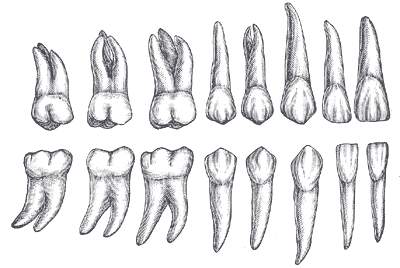
Deciduous Teeth
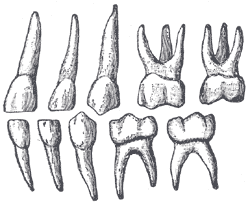
Gray's Anatomy (1918) plate, public domain
Deciduous teeth — baby teeth, milk teeth or primary teeth — are the first set of 20 teeth. They start appearing at about 6 months, are complete by about age 3, and are shed between about 6 and 12 years as the permanent teeth push them out. They hold space for the adult teeth and help speech and chewing develop.
Key facts
- There are 20 deciduous teeth: 8 incisors, 4 canines and 8 molars.
- They have no premolars — those arrive only in the permanent set.
- Their enamel is thinner and whiter than adult teeth, hence 'milk teeth'.
- The roots dissolve (resorb) as the permanent tooth develops beneath.
- They act as natural space-holders for the permanent teeth.
What can go wrong
Decay spreads quickly in baby teeth because their enamel is thin, and early loss of a baby molar can let other teeth drift into the gap, crowding the permanent tooth. Teething itself causes sore gums and irritability in many infants. Baby teeth knocked out in falls are not re-implanted, unlike adult teeth.
Related symptoms
Frequently asked questions
Why do baby teeth matter if they fall out anyway?
They hold the space and guide the permanent teeth into place, and they are essential for chewing and clear speech during childhood. Losing them too early to decay can cause crowding problems later.
When do baby teeth fall out?
Usually from about age 6, starting with the lower front teeth, and continuing until about age 12 when the last baby molars are shed.
Educational information only. This atlas explains normal anatomy and describes conditions in general terms; it is not medical advice and does not replace assessment by a qualified clinician. If you have symptoms that worry you, seek medical care.