- Physical Examination
- Surgical Examination
- Ophthalmology
- Clinical Skills
- Orthopedics
- Surgery Videos
- Laparoscopy
- Pediatrics
- Funny Videos
- Cardiothoracic Surgery
- Nursing Videos
- Plastic Surgery
- Otorhinolaryngology
- Histology and Histopathology
- Neurosurgery
- Dermatology
- Pediatric Surgery
- Urology
- Dentistry
- Oncology and Cancers
- Anatomy Videos
- Health and Fitness
- Radiology
- Anaesthesia
- Physical Therapy
- Pharmacology
- Interventional Radiology
- Cardiology
- Endocrinology
- Gynecology
- Emergency Medicine
- Psychiatry and Psychology
- Childbirth Videos
- General Medical Videos
- Nephrology
- Physiology
- Diet and Food Health
- Diabetes Mellitus
- Neurology
- Women Health
- Osteoporosis
- Gastroenterology
- Pulmonology
- Hematology
- Rheumatology
- Toxicology
- Nuclear Medicine
- Infectious Diseases
- Vascular Disease
- Reproductive Health
- Burns and Wound Healing
- Kidney Zone Podcast
- Other
Epiglottis
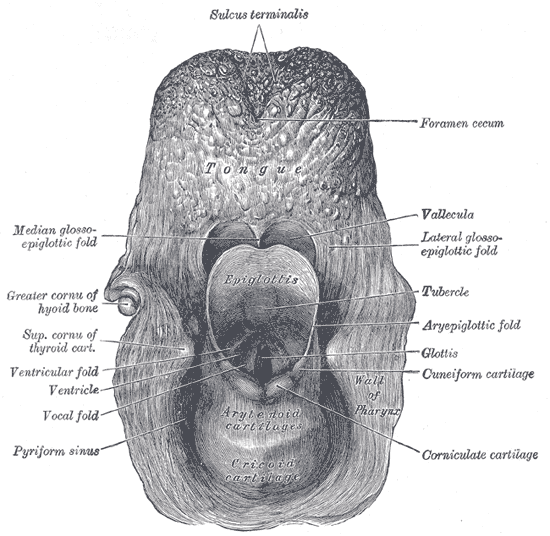
Gray's Anatomy (1918) plate, public domain
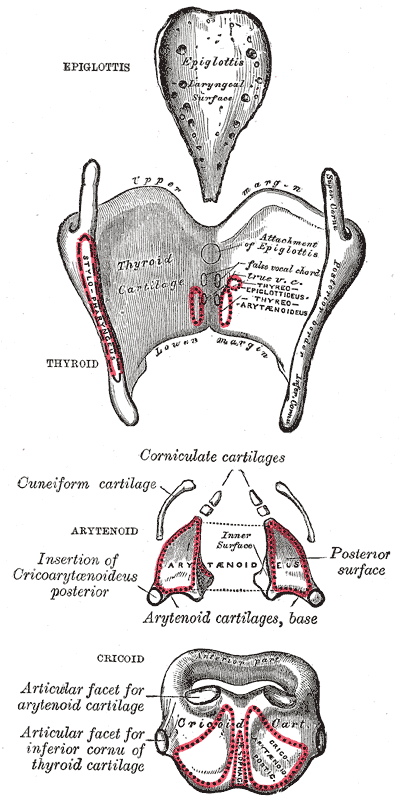
The epiglottis is a leaf-shaped flap of elastic cartilage at the root of the tongue, standing guard over the entrance to the voice box. At rest it points upwards so air flows past it into the larynx. During swallowing it folds backwards to cover the airway entrance, diverting food and drink into the esophagus behind it.
Key facts
- The epiglottis is made of elastic cartilage, so it can flex thousands of times a day without wearing out.
- It is anchored to the thyroid cartilage and the tongue base, moving with both during swallowing.
- Taste buds on its surface help trigger protective reflexes if stray material approaches the airway.
- Its underside is a landmark during intubation, when a tube is guided into the windpipe.
What can go wrong
Inflammation of the epiglottis (epiglottitis) causes rapid, dangerous swelling that can obstruct the airway — classically with drooling, a sore throat and difficulty breathing, and it is treated as an emergency. Swallowing disorders that mistime the epiglottis fold can let material enter the airway (aspiration). Reflux irritation can also inflame the tissues around it.
Related procedures & tests
Related symptoms
Watch: related videos
Frequently asked questions
What happens if food 'goes down the wrong way'?
Material that slips past the epiglottis into the airway triggers a forceful cough reflex that usually expels it; repeated episodes can signal a swallowing problem worth assessing.
Can you see the epiglottis?
Not normally in a mirror, but it is readily seen with a laryngoscope or flexible camera during an ENT examination of the throat.
Educational information only. This atlas explains normal anatomy and describes conditions in general terms; it is not medical advice and does not replace assessment by a qualified clinician. If you have symptoms that worry you, seek medical care.