- Physical Examination
- Surgical Examination
- Ophthalmology
- Clinical Skills
- Orthopedics
- Surgery Videos
- Laparoscopy
- Pediatrics
- Funny Videos
- Cardiothoracic Surgery
- Nursing Videos
- Plastic Surgery
- Otorhinolaryngology
- Histology and Histopathology
- Neurosurgery
- Dermatology
- Pediatric Surgery
- Urology
- Dentistry
- Oncology and Cancers
- Anatomy Videos
- Health and Fitness
- Radiology
- Anaesthesia
- Physical Therapy
- Pharmacology
- Interventional Radiology
- Cardiology
- Endocrinology
- Gynecology
- Emergency Medicine
- Psychiatry and Psychology
- Childbirth Videos
- General Medical Videos
- Nephrology
- Physiology
- Diet and Food Health
- Diabetes Mellitus
- Neurology
- Women Health
- Osteoporosis
- Gastroenterology
- Pulmonology
- Hematology
- Rheumatology
- Toxicology
- Nuclear Medicine
- Infectious Diseases
- Vascular Disease
- Reproductive Health
- Burns and Wound Healing
- Kidney Zone Podcast
- Other
Larynx
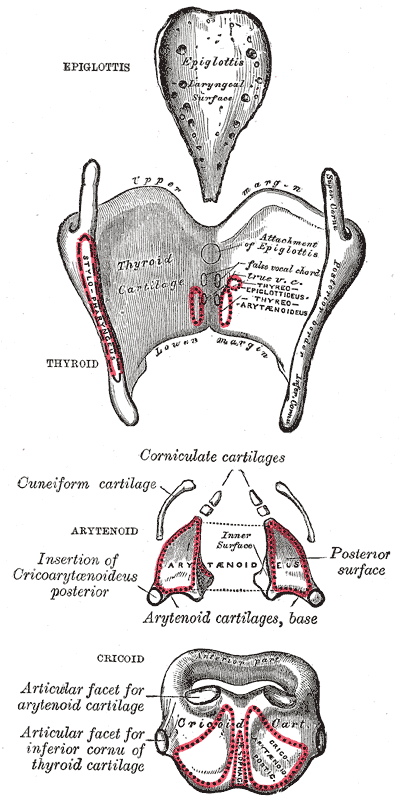
Gray's Anatomy (1918) plate, public domain
The larynx, or voice box, sits in the front of the neck at the top of the windpipe. It is a framework of cartilages — including the thyroid cartilage that forms the Adam's apple — housing the vocal cords. The larynx has three jobs: it produces voice as air vibrates the cords, it protects the airway by closing during swallowing, and it helps build pressure for coughing and lifting.
Key facts
- The vocal cords are two folds of tissue that open for breathing and come together to vibrate for speech.
- The thyroid cartilage shields the front of the larynx; its notch is the visible Adam's apple, larger in men after puberty.
- The epiglottis, a leaf-shaped cartilage, folds down over the larynx entrance during swallowing.
- Fine muscles adjust cord tension, changing pitch — the basis of singing and voice training.
What can go wrong
Inflammation (laryngitis) causes hoarseness that usually settles as the infection clears. Persistent hoarseness can come from overuse, reflux reaching the cords, smoking-related changes or growths on the cords such as nodules and polyps. Because the larynx guards the airway, swelling here is taken seriously — severe swelling can narrow the airway, especially in children.
Related conditions
Related procedures & tests
Related symptoms
Related muscles
Watch: related videos
Frequently asked questions
Why does the voice deepen at puberty?
Hormones enlarge the larynx and lengthen the vocal cords, more so in boys, so the cords vibrate at a lower frequency and the voice drops in pitch.
How do doctors look at the vocal cords?
With laryngoscopy — a thin flexible camera passed through the nose, or a small mirror or rigid scope through the mouth — while the person makes sounds so cord movement can be judged.
Educational information only. This atlas explains normal anatomy and describes conditions in general terms; it is not medical advice and does not replace assessment by a qualified clinician. If you have symptoms that worry you, seek medical care.