- Physical Examination
- Surgical Examination
- Ophthalmology
- Clinical Skills
- Orthopedics
- Surgery Videos
- Laparoscopy
- Pediatrics
- Funny Videos
- Cardiothoracic Surgery
- Nursing Videos
- Plastic Surgery
- Otorhinolaryngology
- Histology and Histopathology
- Neurosurgery
- Dermatology
- Pediatric Surgery
- Urology
- Dentistry
- Oncology and Cancers
- Anatomy Videos
- Health and Fitness
- Radiology
- Anaesthesia
- Physical Therapy
- Pharmacology
- Interventional Radiology
- Cardiology
- Endocrinology
- Gynecology
- Emergency Medicine
- Psychiatry and Psychology
- Childbirth Videos
- General Medical Videos
- Nephrology
- Physiology
- Diet and Food Health
- Diabetes Mellitus
- Neurology
- Women Health
- Osteoporosis
- Gastroenterology
- Pulmonology
- Hematology
- Rheumatology
- Toxicology
- Nuclear Medicine
- Infectious Diseases
- Vascular Disease
- Reproductive Health
- Burns and Wound Healing
- Kidney Zone Podcast
- Other
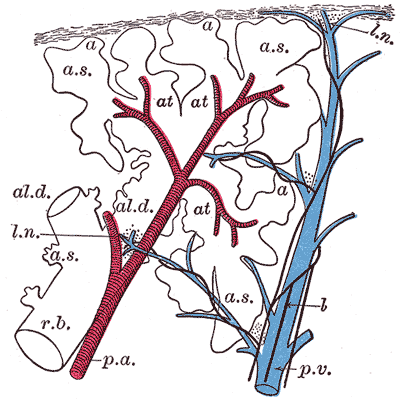
Bronchioles
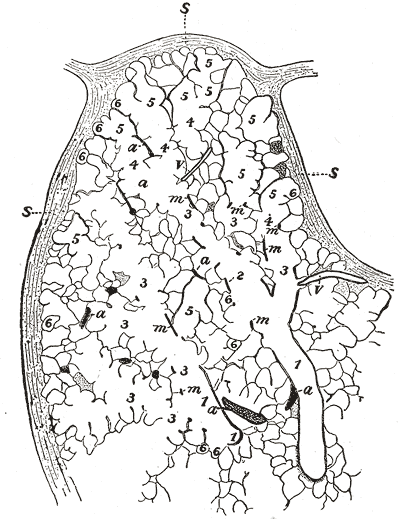
Gray's Anatomy (1918) plate, public domain
The bronchioles are the smallest conducting airways, each less than a millimetre across, formed by the final divisions of the bronchial tree. They have no cartilage; their calibre is set by a spiral of smooth muscle. Terminal bronchioles end in respiratory bronchioles whose walls sprout the first air sacs, marking where conduction ends and gas exchange begins.
Key facts
- There are tens of thousands of bronchioles, yet together they normally offer little resistance because so many run in parallel.
- Their muscle responds to nerves and inhaled substances, widening or narrowing airflow to different lung regions.
- Specialised Clara (club) cells in their lining help detoxify inhaled chemicals and repair the surface.
- Because they are so numerous, disease can damage many before breathing tests turn abnormal — they are called the lung's quiet zone.
What can go wrong
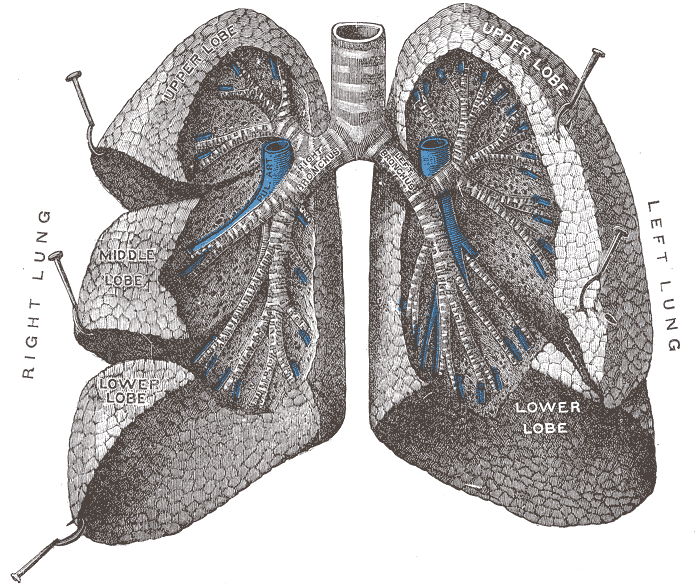
Inflammation of the bronchioles (bronchiolitis) is best known in infants with viral infections, causing wheeze and feeding difficulty. In adults, bronchioles are central to asthma and to the small-airway component of COPD; inhaled dusts and chemicals can also scar them (constrictive bronchiolitis). Their involvement explains some breathlessness even when larger airways look normal on scans.
Related conditions
Related procedures & tests
Related symptoms
Watch: related videos
Frequently asked questions
Why are bronchioles important in asthma?
Their muscle can contract and their lining swell, narrowing thousands of small passages at once and trapping air in the lungs during an attack.
Can bronchioles be seen on a chest X-ray?
Individually they are too small, but the effects of their disease — air trapping and hazy shadowing — can be inferred on scans, especially CT.
Educational information only. This atlas explains normal anatomy and describes conditions in general terms; it is not medical advice and does not replace assessment by a qualified clinician. If you have symptoms that worry you, seek medical care.